Joshi Highlights India's Clean Energy Push Under PM Modi
Synopsis
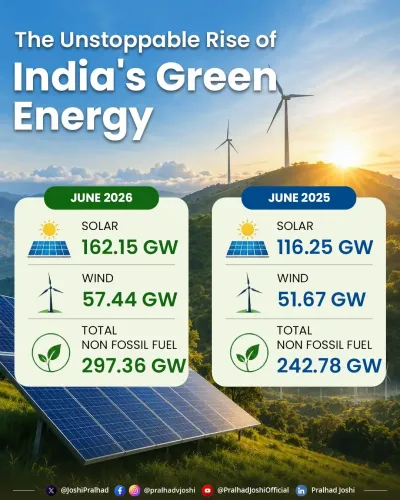
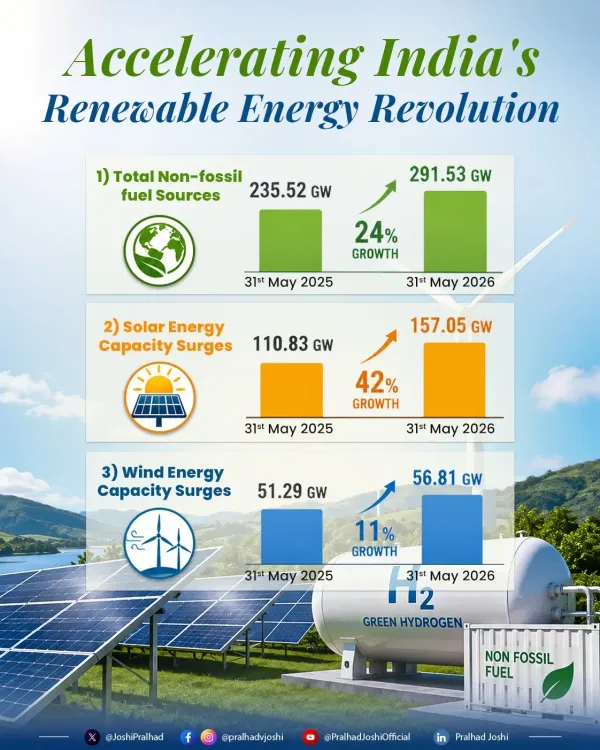
Union Minister Pralhad Joshi on June 9, 2026 highlighted India's accelerating clean energy transition under PM Modi, pointing to steady solar and wind capacity growth as the country works toward its 500 GW non-fossil fuel target by 2030.
Key Takeaways
Union Minister Pralhad Joshi on June 9, 2026 credited PM Modi's leadership for India's accelerating clean energy transition.
India's Panchamrit strategy (announced at COP26, 2021 ) commits to 500 GW non-fossil fuel capacity and net-zero by 2070 .
India's updated NDCs ( 2022 ) target 50 percent of electricity from non-fossil sources by 2030 .
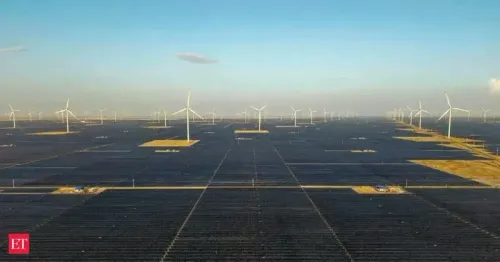
Solar and wind energy are the primary drivers of India's non-fossil capacity expansion.
Upcoming COP30 and quarterly capacity reports will be key milestones to gauge India's progress toward its 2030 goals.
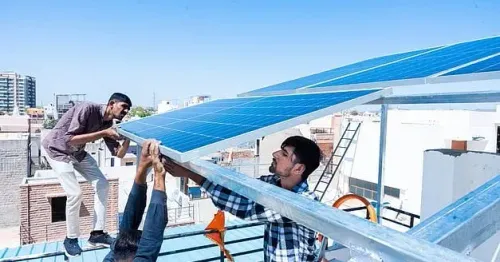
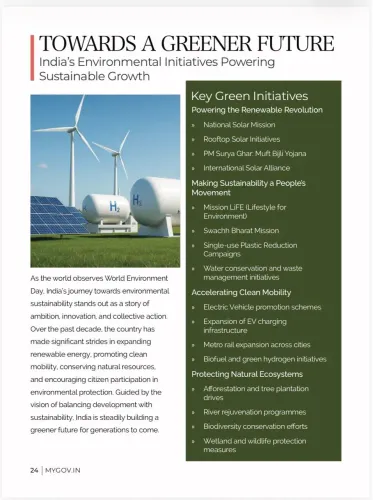
Rooftop solar schemes such as PM Surya Ghar form a critical part of the grassroots energy transition strategy.
Union Consumer Affairs and New and Renewable Energy Minister Pralhad Joshi on Tuesday, June 9, 2026, underscored India's accelerating transition to clean energy, attributing the momentum to the leadership of Prime Minister Narendra Modi. The minister pointed to steady growth in solar and wind energy capacity as evidence of the country's commitment to energy security, sustainable development, and a greener future.
Context
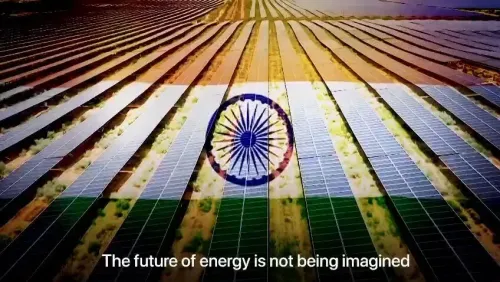
Posting on X, Minister Joshi stated that India 'continues to accelerate its clean energy transition' under PM Modi, noting that 'significant growth in solar and wind energy' is driving the expansion of non-fossil fuel capacity. He framed this progress as reflecting 'the nation's commitment to achieving energy security, sustainable development and a greener future for generations to come.' The post was accompanied by an image and carried hashtags including #CleanEnergy, #RenewableEnergy, #SolarEnergy, #WindEnergy, and #EnergyTransition.Policy Backdrop
India's renewable energy ambitions have been built on a long policy arc. The Jawaharlal Nehru National Solar Mission, launched in 2010, set an initial solar target of 20 GW by 2022, later revised upward to 100 GW. At the 2015 Paris COP, India pledged to achieve 40 percent cumulative electric power capacity from non-fossil sources by 2030. The ambition was significantly scaled up when PM Modi announced the Panchamrit strategy at COP26 in 2021, committing India to 500 GW of non-fossil fuel capacity and net-zero emissions by 2070. India's updated Nationally Determined Contributions, submitted in 2022, reinforced a 50 percent non-fossil electricity target by 2030. India is also a co-founder of the International Solar Alliance, the India-France led global platform launched in 2015 to accelerate solar deployment among member nations, which has further cemented the country's positioning as a leader in the global clean energy movement.Stakeholders and Impact
The renewable energy push touches a broad range of stakeholders. Private and public renewable energy developers are scaling up project pipelines in response to central targets, while state electricity boards manage the critical challenge of grid integration. For rural households, expanded renewable capacity promises more reliable and affordable electricity access. Schemes such as PM Surya Ghar aim to bring rooftop solar to millions of homes, with state-level tenders forming the implementation backbone. The transition also carries strategic weight: reducing dependence on imported fossil fuels strengthens India's energy security, a concern that has grown more acute against the backdrop of global commodity price volatility.What's Next
Attention will now turn to quarterly renewable capacity addition reports that will indicate whether India is on track to meet its 2030 targets. Any upward revision of those targets — particularly ahead of COP30 — will be closely watched by both domestic industry and international climate observers. The rollout pace of rooftop solar and associated state-level programmes will serve as a near-term barometer of execution momentum.Point of View
Reinforcing the BJP's positioning on climate ahead of international scrutiny at COP30. By attributing progress explicitly to PM Modi's leadership, the statement serves dual purposes: policy communication and political branding within the ruling party's broader development messaging. The emphasis on 'energy security' alongside 'sustainability' signals that the government is framing renewables not merely as a climate obligation but as a strategic and economic imperative — a distinction that resonates with a domestic audience wary of energy costs. The absence of specific capacity figures keeps the statement aspirational rather than accountable, which is a common feature of ministerial social media communications on long-horizon targets.
NationPress
24 Oct 2026
Frequently Asked Questions
What is India's renewable energy target for 2030?
India has committed to achieving 500 GW of non-fossil fuel-based energy capacity by 2030 under the Panchamrit strategy announced by PM Modi at COP26 in 2021, alongside a target of sourcing 50 percent of its electricity from non-fossil sources.
What did Pralhad Joshi say about India's clean energy progress?
Minister Pralhad Joshi stated on June 9, 2026 that India 'continues to accelerate its clean energy transition' under PM Modi, driven by 'significant growth in solar and wind energy,' reflecting the nation's commitment to energy security and sustainable development.
What is the Panchamrit strategy?
The Panchamrit strategy is a five-point climate commitment announced by PM Modi at COP26 in Glasgow in 2021 , which includes achieving 500 GW non-fossil energy capacity, sourcing 50 percent of energy from renewables, reducing carbon emissions by one billion tonnes, cutting carbon intensity of the economy by 45 percent — all by 2030 — and reaching net-zero by 2070.
What is India's role in the International Solar Alliance?
India is a co-founder of the International Solar Alliance , a global platform launched jointly by India and France in 2015 to accelerate solar energy deployment in member countries, cementing India's leadership in international clean energy diplomacy.
What is PM Surya Ghar scheme?
PM Surya Ghar is a central government rooftop solar scheme aimed at bringing solar power to millions of Indian households, with implementation driven through state-level tenders and subsidies to reduce the cost burden on residential consumers.