Joshi Highlights India's 12-Year Renewable Energy Journey
Synopsis
Union Minister Pralhad Joshi shared the latest MyGovPulse edition on June 25, 2026, spotlighting India's 12-year renewable energy journey under PM Modi, covering policy reforms, capacity additions, and India's global clean energy leadership.
Key Takeaways
Union Minister Pralhad Joshi shared the MyGovPulse renewable energy edition on June 25, 2026 .
The edition covers 12 years of renewable energy progress under Prime Minister Narendra Modi .
India co-founded the International Solar Alliance in 2015 and has been a leading annual installer of solar and wind capacity since 2014 .
At COP26 in 2021 , India pledged 500 GW of non-fossil fuel capacity by 2030 and net-zero by 2070 .
The MyGovPulse edition frames India's clean energy push as both an environmental and economic priority, with implications for developers, discoms, and consumers.
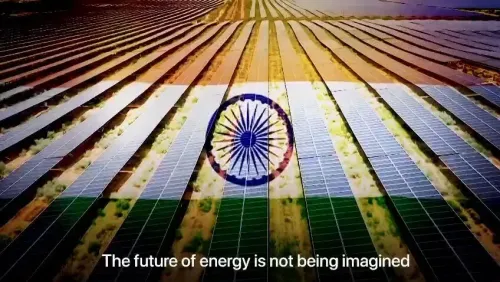
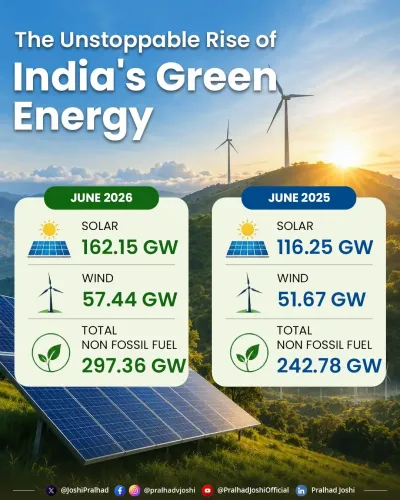
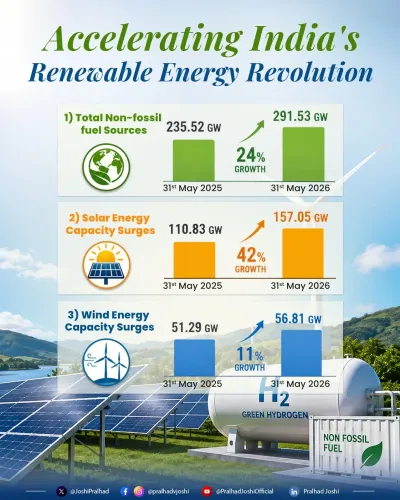
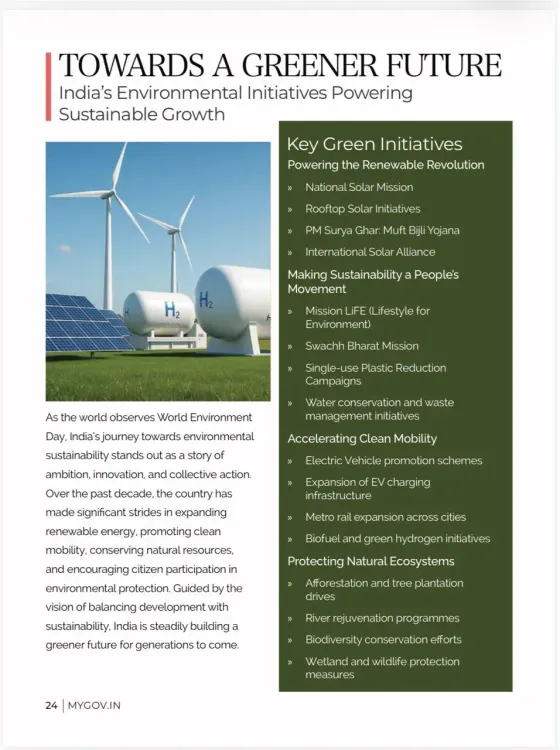
Union Consumer Affairs and New and Renewable Energy Minister Pralhad Joshi on Thursday, June 25, 2026, shared the latest edition of MyGovPulse, the government's citizen engagement platform editorial, spotlighting India's renewable energy progress over 12 years under Prime Minister Narendra Modi. The edition, according to Joshi, covers pioneering initiatives, policy reforms, record capacity additions, and India's growing stature in global clean energy leadership.
Context
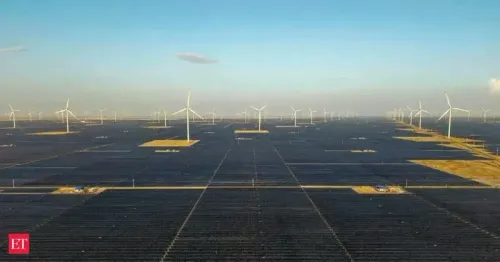
In his post, Minister Joshi described the MyGovPulse edition as a showcase of India's 'transformative renewable energy journey' under PM Modi's leadership. He noted that the editorial highlights how India is 'powering growth while advancing towards a sustainable and energy-secure future.' The post was accompanied by two images and directed followers to the MyGovPulse publication.
MyGov is the Government of India's official citizen engagement platform, which regularly publishes editorial content on flagship policy initiatives. The Pulse series functions as a curated digest of government achievements across sectors, with this edition focused squarely on the clean energy transition.
Policy Backdrop
India's renewable energy push has deep policy roots. The Jawaharlal Nehru National Solar Mission, launched in 2010, was significantly scaled after 2014 to accelerate solar capacity. India co-founded the International Solar Alliance in 2015, a multilateral body aimed at promoting solar deployment among member nations, cementing its role as a global clean energy advocate.
At the COP26 climate summit in Glasgow in 2021, India committed to achieving 500 GW of non-fossil fuel capacity by 2030 and reaching net-zero emissions by 2070. Since 2014, India has consistently ranked among the world's top annual installers of solar and wind capacity, backed by a combination of domestic manufacturing incentives and international partnerships.
The Ministry of New and Renewable Energy, which Joshi currently heads, has been the nodal agency overseeing this buildout, coordinating policy across grid integration, tariff design, and production-linked incentives for equipment manufacturers.
Stakeholders and Impact
The renewable energy expansion directly affects a wide range of actors: independent power producers and large renewable energy developers depend on consistent policy signals and land acquisition frameworks, while electricity distribution companies — often state-owned — must integrate rising shares of variable solar and wind power into the grid.
For consumers, the shift toward renewables carries implications for long-term electricity pricing and energy security, reducing India's dependence on imported fossil fuels. The government has framed the clean energy transition as both an environmental and an economic imperative, citing job creation in manufacturing and project development.
What's Next
Parliamentary discussions on renewable energy budget allocations and periodic progress reports against the 2030 non-fossil capacity target of 500 GW will be closely watched by industry and climate observers. The MyGovPulse edition shared by Minister Joshi serves as an official government narrative checkpoint, likely ahead of further policy announcements or international climate engagements.
As India moves deeper into its clean energy decade, the government's ability to align grid infrastructure, financing, and domestic manufacturing with its stated targets will determine whether the ambitions outlined in publications like MyGovPulse translate into verified capacity on the ground.
Point of View
Positioning India's global clean energy standing as a governance achievement. The use of the government's own MyGov platform as the primary content vehicle — rather than independent assessments — signals an intent to control the narrative around targets and timelines. As the 2030 non-fossil capacity deadline approaches, such communications will intensify, making it increasingly important to track verified capacity data against stated ambitions.
NationPress
23 Sept 2026
Frequently Asked Questions
What is MyGovPulse and why did Pralhad Joshi share it?
MyGovPulse is an editorial publication by MyGov, the Government of India's citizen engagement platform. Minister Pralhad Joshi shared its latest edition on June 25, 2026, because it focuses on India's renewable energy achievements over the past 12 years under PM Modi.
What is India's renewable energy target for 2030?
India has committed to achieving 500 GW of non-fossil fuel capacity by 2030, a pledge made at the COP26 climate summit in Glasgow in 2021, alongside a net-zero emissions target by 2070.
What is the International Solar Alliance and India's role in it?
The International Solar Alliance is a multilateral body co-founded by India in 2015 to promote solar energy deployment among member countries. It reflects India's ambition to lead global clean energy cooperation.
What policies has India used to expand renewable energy since 2014?
India has used a combination of the scaled-up Jawaharlal Nehru National Solar Mission, production-linked incentives for domestic equipment manufacturing, tariff reforms, and international partnerships to drive solar and wind capacity additions since 2014.
Who is Pralhad Joshi and which ministry does he head?
Pralhad Joshi is a senior BJP leader from Karnataka and currently serves as Union Minister of Consumer Affairs, Food and Public Distribution, and Minister of New and Renewable Energy in the Government of India.