Pralhad Joshi: Clean Energy Hits 50% of India's Power Supply
Synopsis
Union Minister Pralhad Joshi announced on 10 July 2026 that renewable sources met 50.2% of India's electricity demand on 6 July — the second time clean energy has crossed the 50% mark — underscoring the country's accelerating progress toward its 500 GW non-fossil fuel target by 2030.
Key Takeaways
Renewable sources contributed 50.2% of India's total electricity supply on 6 July 2026 , the second such occurrence in the country's history.
Union Minister Pralhad Joshi made the announcement on 10 July 2026 , attributing the milestone to PM Modi's leadership.
India has committed to 500 GW of non-fossil fuel energy capacity by 2030 , as announced at COP26 in Glasgow in 2021 .
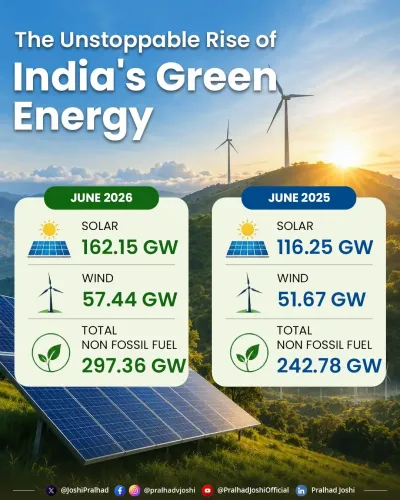
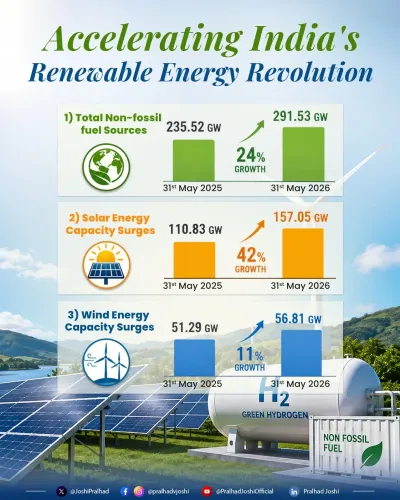
Installed renewable capacity in India crossed 170 GW by early 2024 , driven by large-scale solar and wind projects.
The PLI scheme for solar PV modules (2022) and the National Green Hydrogen Mission (2023) are key policy pillars supporting the energy transition.
Sustained high renewable penetration will require accelerated investment in grid storage and transmission infrastructure .
Union Consumer Affairs and New and Renewable Energy Minister Pralhad Joshi announced on Friday, 10 July 2026 that India has crossed a significant clean energy threshold for the second time, with renewable sources meeting 50.2 percent of the country's electricity demand on 6 July 2026.
Context
Posting on X, Minister Joshi described the development as 'yet another landmark in India's clean energy journey,' noting that renewable sources contributed 50.2% of the nation's power supply on 6 July — the second occasion on which clean energy has surpassed the half-way mark in the country's daily electricity mix. He credited the achievement to the leadership of Prime Minister Narendra Modi, saying India 'continues to power sustainable growth with speed and determination.'
The milestone reflects both a rapid expansion of installed renewable capacity and favourable generation conditions — typically driven by strong solar irradiance and wind output — that allow intermittent sources to dominate the grid for sustained periods during the day.
Policy Backdrop
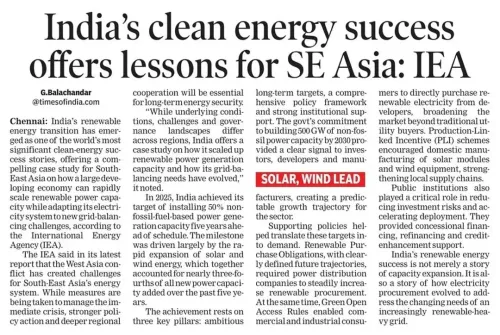
India's clean energy ambitions are anchored in international commitments made under the Paris Agreement, where the country's Nationally Determined Contribution (NDC) originally targeted 40 percent of cumulative electric power capacity from non-fossil sources by 2030. That target was significantly raised when Prime Minister Modi announced at COP26 in Glasgow in November 2021 a goal of 500 GW of non-fossil fuel energy capacity by 2030, alongside a net-zero emissions commitment by 2070.
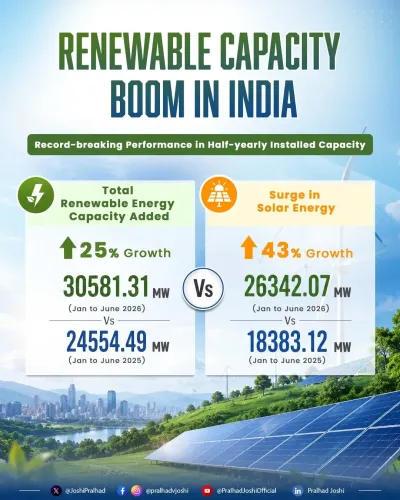
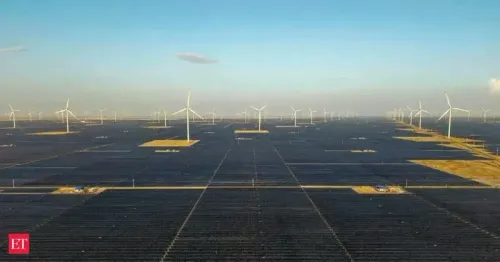
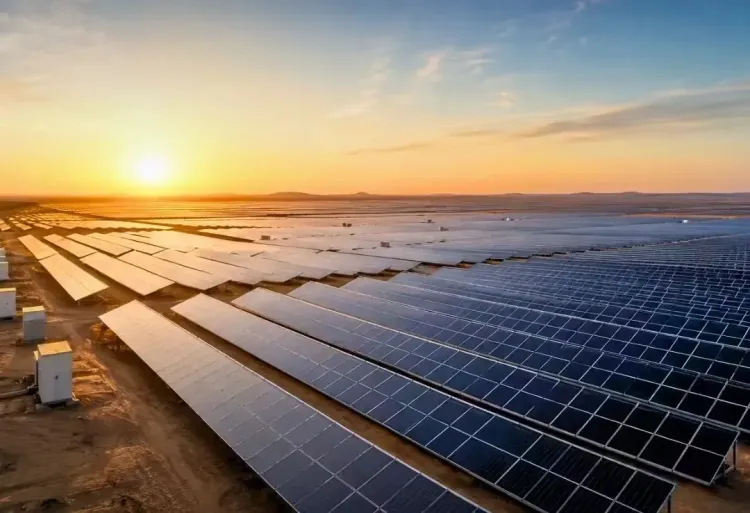
Supporting policies have included the Production Linked Incentive (PLI) scheme for high-efficiency solar photovoltaic modules, notified in 2022 to scale domestic manufacturing, and the National Green Hydrogen Mission, approved in 2023, to promote hydrogen production using renewable electricity. India's installed renewable capacity crossed 170 GW by early 2024, with large-scale solar parks and wind projects driving the bulk of additions.
Stakeholders and Impact
The crossing of the 50 percent threshold carries direct implications for state power utilities, which must balance grids with higher shares of variable generation, and for renewable energy developers who see the milestone as validation of long-term investment. For electricity consumers, sustained high renewable penetration can moderate fuel-cost pressures on tariffs, though grid stability investments in storage and transmission remain essential.
The Ministry of New and Renewable Energy, which Minister Joshi heads, is the nodal body responsible for translating these targets into policy, project approvals and inter-ministerial coordination. Single-day peaks above 50 percent are also significant signals to global investors and climate negotiators tracking India's energy transition credibility.
What's Next
Sustaining and extending high renewable penetration beyond single-day peaks will require accelerated investment in grid-scale battery storage, pumped hydro, and transmission infrastructure to manage variability across seasons and geographies. The Central Electricity Authority's monthly generation reports will be closely watched for whether the 50 percent threshold becomes a recurring feature rather than an isolated milestone.
With 2030 as the horizon for India's 500 GW non-fossil target, the pace of capacity addition and grid modernisation over the next four years will determine whether landmark single-day achievements translate into a structurally transformed electricity system.
Point of View
While technically significant, are distinct from average generation share — and the government's choice to highlight them reflects both genuine progress and a desire to frame India as a credible climate actor. The milestone also serves to deflect persistent criticism that coal remains the backbone of India's baseload power. The real test of the transition will come when storage and transmission investments make such peaks routine rather than exceptional.
NationPress
8 Oct 2026
Frequently Asked Questions
What milestone did India's clean energy sector achieve in July 2026?
On 6 July 2026 , renewable energy sources met 50.2 percent of India's total electricity demand in a single day — the second time clean energy has crossed the 50 percent threshold in the country's electricity mix.
Who announced India's clean energy 50% milestone?
Union Minister Pralhad Joshi , who holds the portfolios of New and Renewable Energy as well as Consumer Affairs, Food and Public Distribution, announced the milestone on 10 July 2026 via a post on X.
What is India's renewable energy target for 2030?
India has committed to achieving 500 GW of non-fossil fuel energy capacity by 2030 , a target announced by Prime Minister Narendra Modi at the COP26 climate summit in Glasgow in November 2021 .
How much renewable energy capacity has India installed so far?
India's installed renewable energy capacity crossed 170 GW by early 2024 , with large-scale solar parks and wind projects contributing the majority of additions under the Ministry of New and Renewable Energy's programmes.
What policies are driving India's clean energy growth?
Key policies include the Production Linked Incentive (PLI) scheme for high-efficiency solar PV modules (notified in 2022 ), the National Green Hydrogen Mission (approved in 2023 ), and India's enhanced Nationally Determined Contribution under the Paris Agreement targeting 40 percent non-fossil capacity by 2030.