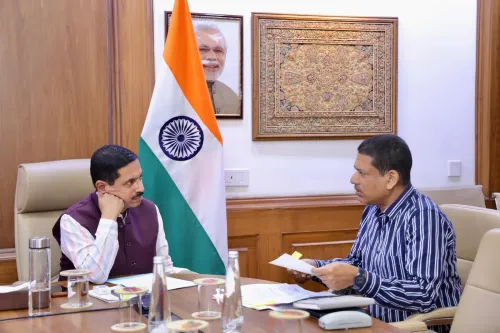
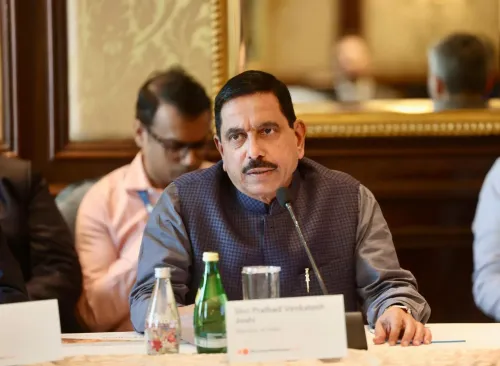
Joshi at Bharat Renewable Energy Summit 2026
Synopsis
Union Minister Pralhad Joshi addressed the Bharat Renewable Energy Summit and Expo 2026 alongside PM Modi on 2 November, highlighting 110 GW of renewable capacity added in two years, progress on Green Energy Corridor 3.0, green hydrogen, and framing India's clean-energy drive through the principles of Urja Swaraj and Vishwa Kalyan.
Key Takeaways
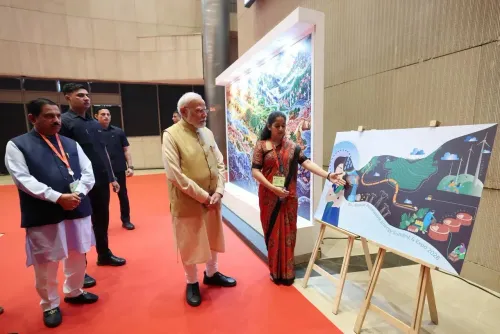
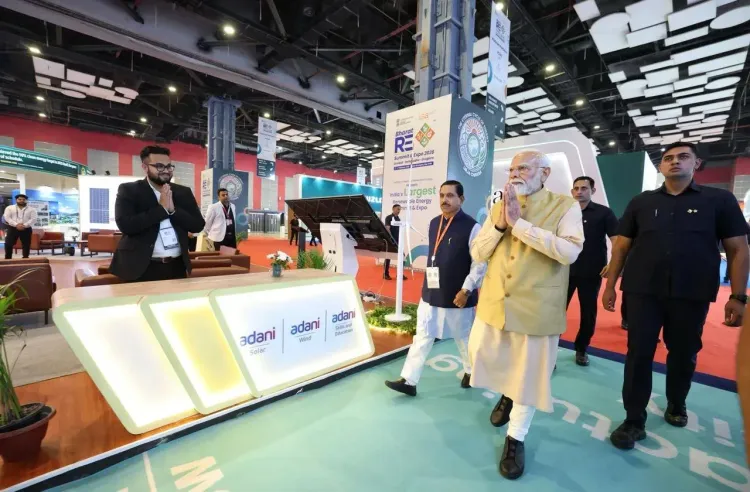
Union Minister Pralhad Joshi addressed the inaugural session of the Bharat Renewable Energy Summit and Expo 2026 on 2 November 2026 in the presence of PM Narendra Modi .
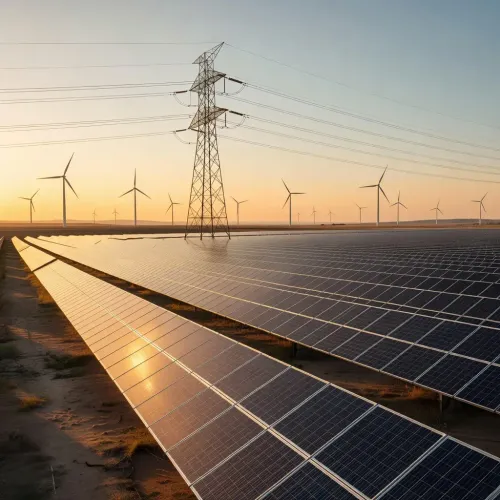
India has added over 110 GW of renewable energy capacity in two years , according to Joshi's address.
One lakh homes are being powered with solar energy every six days , the minister stated.
Green Energy Corridor 3.0 and the Surya Sarovar Yojana were cited as key active initiatives.
Progress in green hydrogen and domestic manufacturing of clean-energy components was also highlighted.
Joshi framed the drive under the principles of Urja Swaraj , Jan Kalyan , and Vishwa Kalyan .
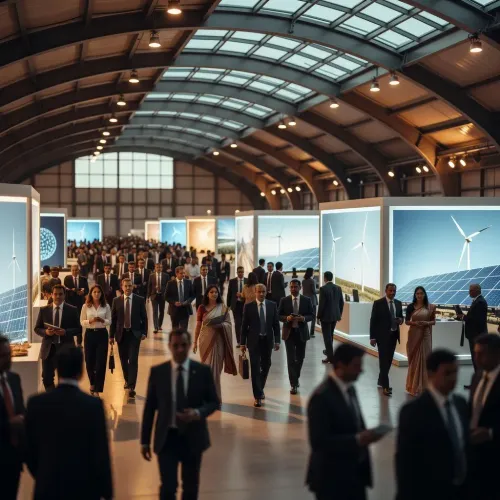
With Prime Minister Narendra Modi in the chair and chief ministers, cabinet colleagues, and international delegates filling the hall, Union Minister for New and Renewable Energy Pralhad Joshi addressed the inaugural session of the Bharat Renewable Energy Summit and Expo 2026 on Monday, 2 November — using the platform to lay out the scale of India's clean-energy sprint in vivid, concrete terms.
110 GW in two years — the headline number driving the pitch
Joshi placed one figure at the centre of his address: India has added more than 110 GW of renewable energy capacity in just two years under the Modi government. To make the pace tangible, he offered a second data point — one lakh (100,000) homes are being powered with solar energy every six days. Whether taken as an aggregate deployment rate or a grid-connection metric, both numbers frame an acceleration that few large economies have matched.
The minister also cited progress on the Surya Sarovar Yojana, a solar-storage initiative, and the launch of Green Energy Corridor 3.0 — the latest phase of the transmission-infrastructure programme designed to move renewable power from generation clusters to consumption centres. The first two phases of the Green Energy Corridor were approved in 2015 and 2017 respectively; the third marks a further deepening of that grid-integration bet.
Green hydrogen and domestic manufacturing enter the frame
Beyond solar, Joshi flagged momentum in green hydrogen — a priority under India's National Green Hydrogen Mission — and in domestic manufacturing of clean-energy components, a strand of policy aimed at reducing import dependency while building an export-capable industry base. The combination maps directly onto India's 500 GW non-fossil-fuel target committed at COP26 in Glasgow in 2021, a pledge that requires not just generation capacity but the grid, the storage, and the supply chain to back it.
The PM Surya Ghar Muft Bijli Yojana — the flagship rooftop-solar scheme providing subsidised electricity to households — sits at the retail end of the same chain, converting macro capacity numbers into something a family in a tier-2 town can feel on its electricity bill.
'Urja Swaraj' frames the civilisational argument
Joshi anchored his address in three Sanskrit-rooted concepts: Urja Swaraj (energy self-rule), Jan Kalyan (people's welfare), and Vishwa Kalyan (global well-being). The framing is deliberate — it ties India's clean-energy drive not merely to climate compliance or economic strategy but to a deeper civilisational narrative of self-reliance and global responsibility. It is the same rhetorical architecture that PM Modi has used at international forums from the International Solar Alliance to successive G20 presidencies.
With a room full of international delegates at the Bharat Renewable Energy Summit, the message carries a second audience: that India is not a passive recipient of green-finance flows but an active shaper of the global energy transition.
The policy machinery now has a public showcase. The real test — detailed rollout timelines for Green Energy Corridor 3.0, funding disbursements, and state-level execution — will determine whether the summit's momentum translates into gigawatts on the ground.
Point of View
Vishwa Kalyan — the government is signalling that India's energy transition is driven by sovereign conviction rather than external pressure, a posture with clear diplomatic utility. The invocation of Green Energy Corridor 3.0 and green hydrogen in the same breath as rooftop solar suggests an effort to show the transition is systemic, not siloed. The real political test, however, will come in parliamentary budget debates and state-level execution, where the gap between summit rhetoric and ground reality tends to surface.
NationPress
2 Nov 2026
Frequently Asked Questions
What is the Bharat Renewable Energy Summit 2026?
The Bharat Renewable Energy Summit and Expo 2026 is a national-level conference inaugurated on 2 November 2026 in the presence of Prime Minister Narendra Modi to showcase India's progress and future plans in the renewable energy sector, bringing together chief ministers, ministers, and international delegates.
What is Green Energy Corridor 3.0?
Green Energy Corridor 3.0 is the latest phase of India's power transmission infrastructure programme designed to evacuate renewable energy from large generation sites and connect it to demand centres across the national grid; earlier phases were approved in 2015 and 2017.
What is the PM Surya Ghar Muft Bijli Yojana?
PM Surya Ghar Muft Bijli Yojana is a central government scheme that promotes rooftop solar installations to provide subsidised or free electricity to Indian households, forming a key retail-facing pillar of India's solar expansion.
What is India's renewable energy target by 2030?
India committed at the COP26 summit in Glasgow in 2021 to achieve 500 GW of non-fossil-fuel electricity capacity by 2030, a target that underpins schemes like the Green Energy Corridor and the National Green Hydrogen Mission.
What is the National Green Hydrogen Mission?
The National Green Hydrogen Mission is an Indian government programme aimed at scaling domestic production and use of green hydrogen for industrial decarbonisation and potential exports, referenced by Minister Joshi at the 2026 summit as a key pillar of the clean-energy push.