Pralhad Joshi Addresses Bharat Renewable Energy Summit 2026
Synopsis
Union Minister Pralhad Joshi addressed the Bharat Renewable Energy Summit and Expo 2026 inauguration in PM Modi's presence, citing over 110 GW of capacity added in two years, 1 lakh solar homes built every six days, and progress under PM Surya Ghar, Surya Sarovar Yojana, Green Energy Corridor 3.0, and the Green Hydrogen Mission.
Key Takeaways
Bharat Renewable Energy Summit and Expo 2026 was inaugurated with PM Narendra Modi presiding over the opening session on November 2, 2026 .
Minister Pralhad Joshi cited an addition of more than 110 GW of renewable energy capacity over the past two years.
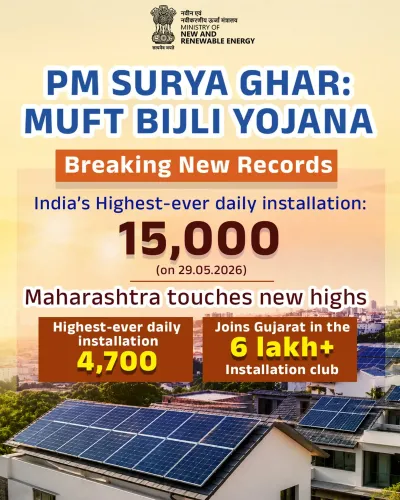
India is currently building 1 lakh (100,000) solar-powered homes every six days under the PM Surya Ghar Muft Bijli Yojana.
Key programmes highlighted include Surya Sarovar Yojana , Green Energy Corridor 3.0 , and the National Green Hydrogen Mission (approved January 2023, Rs 19,744 crore outlay).
India's stated target under COP26 Panchamrit commitments is 500 GW of non-fossil capacity by 2030 .
The minister framed the push under the principles of 'Urja Swaraj' (energy self-reliance) and both national and global welfare.
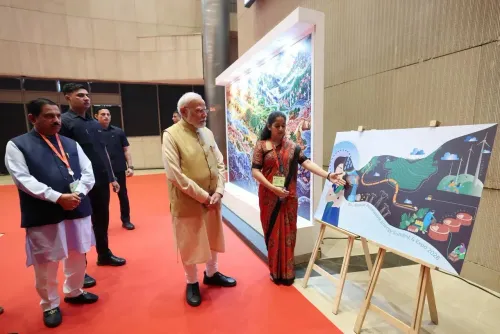
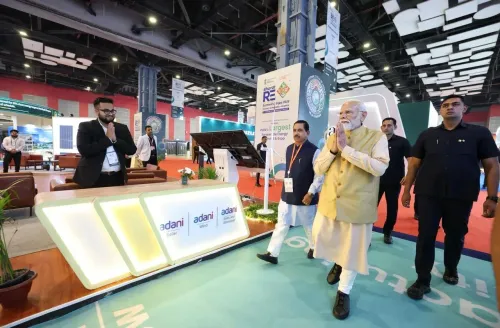
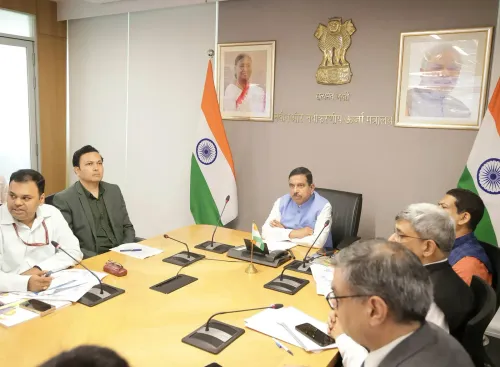
With Prime Minister Narendra Modi presiding over the inaugural session, the Bharat Renewable Energy Summit and Expo 2026 opened on Monday, November 2 — a gathering that brought together chief ministers, union ministers, international delegates, and industry leaders under one roof to take stock of India's clean-energy transformation. Union Minister of New and Renewable Energy Pralhad Joshi addressed the summit's opening session, laying out a series of headline figures that frame just how fast India's renewable sector is moving.
Joshi, posting in Hindi, described addressing the inaugural session 'माननीय प्रधानमंत्री श्री नरेंद्र मोदी जी की गरिमामयी उपस्थिति में' — 'in the dignified presence of the honourable Prime Minister.' The minister cited an addition of more than 110 GW of renewable energy capacity over the past two years and pointed to a striking on-the-ground metric: one lakh (100,000) solar-powered homes being commissioned every six days across the country.
PM Surya Ghar, Surya Sarovar, and the Grid Upgrade
Three programmes formed the backbone of Joshi's address. The PM Surya Ghar Muft Bijli Yojana — launched in 2024 and targeting one crore rooftop solar installations — is the engine behind that 'one lakh homes every six days' figure. Alongside it, Joshi flagged the Surya Sarovar Yojana, a floating and reservoir-based solar initiative, and Green Energy Corridor 3.0, the latest phase of the transmission infrastructure project designed to carry renewable power from generation hubs into the national grid without bottlenecks.
The Green Energy Corridor programme has run across multiple phases, each targeting inter-state and intra-state transmission upgrades. Phase 3.0 signals the government's acknowledgement that generation alone is insufficient — the wires have to keep pace with the panels and turbines.
Green Hydrogen and Domestic Manufacturing Enter the Frame
Joshi also highlighted progress in Green Hydrogen and domestic manufacturing — two pillars of India's longer-term energy strategy. The National Green Hydrogen Mission, approved in January 2023 with an outlay of Rs 19,744 crore, aims to scale domestic production and position India as a global green hydrogen exporter. The minister's reference to 'progress in domestic manufacturing' points to the broader PLI (Production-Linked Incentive) push to indigenise solar module and electrolyser supply chains.
Together these moves reflect a deliberate shift: India is no longer content to install capacity — it wants to build the equipment, move the electrons, and eventually export the molecule.
India's 2030 Targets and the COP26 Pledge in the Background
The summit sits against a well-established policy lineage. At COP26 in 2021, India tabled its 'Panchamrit' commitments, including reaching 500 GW of non-fossil electricity capacity by 2030 — a target that makes every GW added a measurable step. With the minister citing over 110 GW added in two years, the pace of addition has clearly accelerated, though India's overall installed renewable capacity base and the precise gap to 500 GW will be closely watched by analysts after the summit.
Joshi framed the entire effort in terms of 'ऊर्जा स्वराज, जन कल्याण एवं विश्व कल्याण' — 'energy self-reliance, public welfare, and global welfare' — invoking India's civilisational heritage as a moral anchor for the energy transition. The language is deliberate: it positions India's renewable push not as compliance with Western-led climate frameworks, but as an expression of sovereign choice and ancient stewardship of nature.
India's clean-energy story has been told in GW and gigawatt-hours for a decade. What the Bharat Renewable Energy Summit 2026 signals is that the country now intends to tell it in supply chains, green molecules, and energy independence — and it wants the world watching.
Frequently Asked Questions
What is the Bharat Renewable Energy Summit 2026?
The Bharat Renewable Energy Summit and Expo 2026 is a flagship national event inaugurated with Prime Minister Narendra Modi and Union Minister Pralhad Joshi on November 2, 2026, bringing together state chief ministers, central ministers, international delegates, and industry leaders to showcase and discuss India's renewable energy progress.
How much renewable energy capacity has India added recently?
Union Minister Pralhad Joshi stated at the summit that India has added more than 110 GW of renewable energy capacity over the past two years, though this figure has not been independently verified.
What is PM Surya Ghar Muft Bijli Yojana?
PM Surya Ghar Muft Bijli Yojana is a central government scheme launched in 2024 to install rooftop solar systems on one crore households, providing free electricity. Joshi cited a rollout rate of 1 lakh solar-powered homes every six days under this programme.
What is the National Green Hydrogen Mission?
The National Green Hydrogen Mission was approved in January 2023 with a government outlay of Rs 19,744 crore. It aims to scale domestic green hydrogen production, develop export potential, and build an indigenous electrolyser manufacturing base.
What is India's renewable energy target by 2030?
Under its 'Panchamrit' commitments announced at COP26 in 2021, India has pledged to achieve 500 GW of non-fossil fuel electricity capacity by 2030, alongside net-zero emissions by 2070.