Pralhad Joshi Flags 57-Fold Solar Surge, 50 Lakh PM Surya Ghar Homes
Synopsis
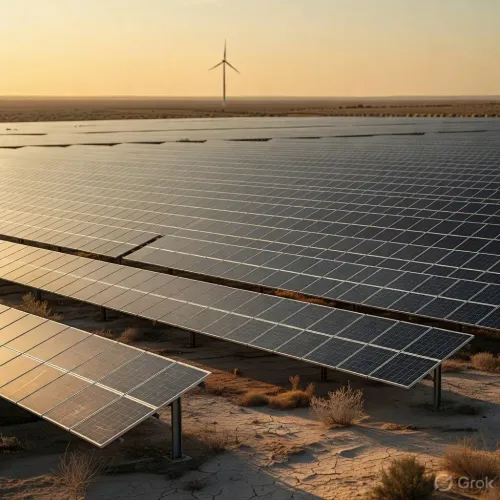
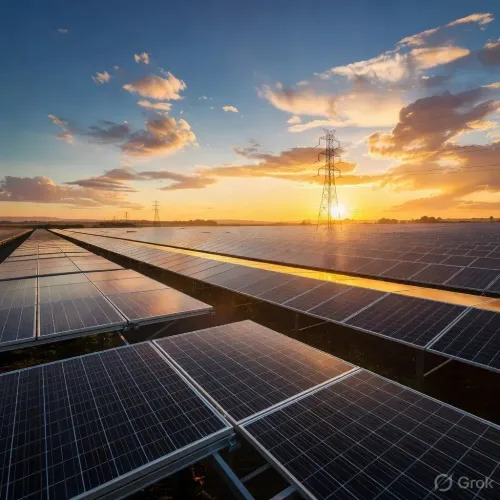
Union Minister Pralhad Joshi announced India's installed solar capacity has risen 57-fold to 162.15 GW, with over 50 lakh households now benefiting from PM Surya Ghar: Muft Bijli Yojana, marking a major milestone in India's clean energy push toward 500 GW by 2030.
Key Takeaways
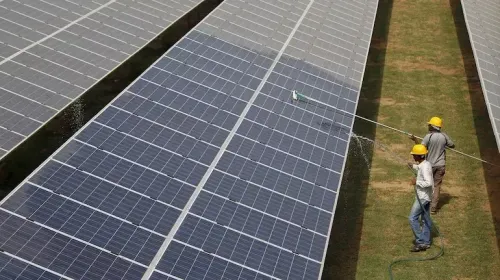
India's installed solar capacity has grown 57-fold to 162.15 GW , according to Union Minister Pralhad Joshi .
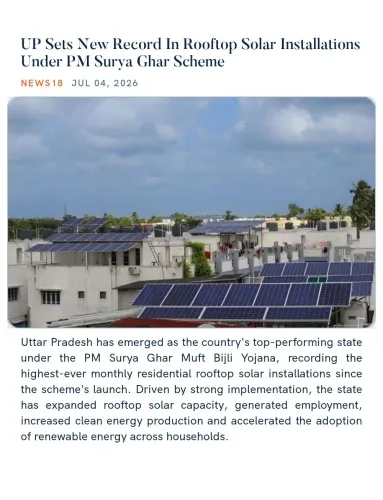
Over 50 lakh households are now enrolled under PM Surya Ghar: Muft Bijli Yojana , which offers up to 300 units of free electricity per month .
The scheme, launched in 2024 , targets rooftop solar installation in one crore homes — the 50 lakh figure marks the halfway point on household count.
India's solar journey traces back to the Jawaharlal Nehru National Solar Mission (2010) and a 100 GW solar target set in 2015 .
India's overarching goal is 500 GW of non-fossil fuel capacity by 2030 , with solar as the primary driver.
India co-founded the International Solar Alliance in 2015 , giving its domestic capacity milestones a global diplomatic weight.
India's solar story has hit a number that stops you cold: a 57-fold rise in installed capacity to 162.15 GW — and more than 50 lakh households now drawing free electricity through a single central scheme. Union Minister of New and Renewable Energy Pralhad Joshi put those figures on record on Thursday, 6 August 2026, framing them as proof that India's clean-energy transformation has moved from ambition to arithmetic.
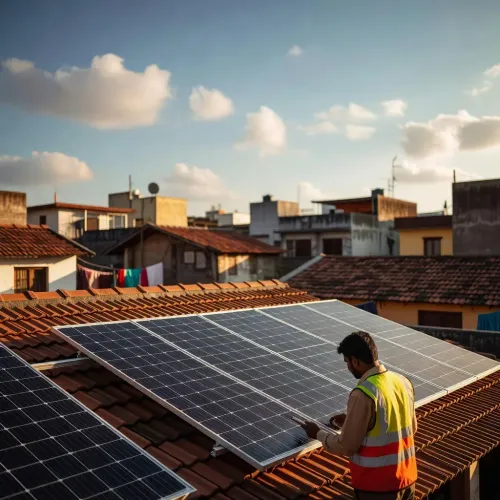
Joshi cited the milestone in the context of PM Surya Ghar: Muft Bijli Yojana, the rooftop solar scheme that promises up to 300 units of free electricity per month to enrolled households. Launched in 2024 with a target of rooftop installations across one crore homes, the scheme has now crossed the halfway mark on household count, according to the minister's post.
From 2010's Vision to 162 GW of Reality
India's solar arc did not begin with one government or one scheme. The Jawaharlal Nehru National Solar Mission, launched in 2010, first put grid-connected solar on the national map. By 2015, India had announced a 175 GW renewable energy target — with 100 GW earmarked for solar alone by 2022. That target was missed on schedule but the capacity kept climbing, and the 162.15 GW figure Joshi cited suggests India has now well exceeded it. The broader goal is steeper still: 500 GW of non-fossil fuel capacity by 2030, a commitment India has anchored to its international climate pledges. Solar is expected to carry the heaviest load in reaching that number.PM Surya Ghar and the Household-Level Bet
What makes the current phase distinct is the deliberate push down to the residential level. Previous solar scaling was largely utility-driven — large parks, grid injection, industrial offtake. PM Surya Ghar: Muft Bijli Yojana bets instead on distributed rooftop generation, turning ordinary households into micro-producers. The scheme pairs panel installation with a subsidy structure designed to reduce upfront cost, the single biggest barrier to residential solar adoption. With 50 lakh households now enrolled, the scheme has demonstrated demand. Whether installation quality, grid-integration, and post-installation support can keep pace with that enrolment rate is the operational question that will define the scheme's long-term impact. Joshi tied both milestones to the Viksit Bharat framework — the government's overarching vision for a developed India — and to Prime Minister Narendra Modi's leadership on energy security. India's parallel role in the International Solar Alliance, co-founded in 2015, gives these domestic numbers a diplomatic dimension: every gigawatt added strengthens India's standing as the alliance's anchor nation. Fifty lakh homes running on sunlight is not the finish line — it is the proof-of-concept for the crore-home target still ahead.Point of View
Which voters rarely feel directly, to kitchen-table economics: free electricity. Whether the numbers hold up to independent audit will matter, but the political architecture of the message — household benefit plus national pride plus Viksit Bharat framing — is precisely calibrated for the BJP's 2026 communications playbook.
NationPress
20 Sept 2026
Frequently Asked Questions
What is PM Surya Ghar Muft Bijli Yojana?
PM Surya Ghar: Muft Bijli Yojana is a central government scheme launched in 2024 that installs rooftop solar panels in households and provides up to 300 units of free electricity per month. It targets one crore households across India.
How much solar capacity has India installed as of 2026?
Union Minister Pralhad Joshi stated on 6 August 2026 that India's installed solar capacity has reached 162.15 GW, reflecting a 57-fold increase from earlier levels.
How many households have benefited from PM Surya Ghar scheme?
According to Minister Pralhad Joshi, over 50 lakh (5 million) households have benefited from the PM Surya Ghar: Muft Bijli Yojana as of August 2026.
What is India's renewable energy target for 2030?
India has committed to achieving 500 GW of non-fossil fuel electricity capacity by 2030 as part of its international climate pledges, with solar energy expected to contribute the largest share.
What is the International Solar Alliance and India's role in it?
The International Solar Alliance is a treaty-based intergovernmental organisation co-founded by India and France in 2015 to promote solar energy adoption globally. India serves as its anchor nation and host country.