Odisha CM Sanctions ₹107 Crore SDRF Relief for Cyclone Arnab Victims

Synopsis
The Odisha government has sanctioned over ₹107 crore from the SDRF for families affected by Cyclone Arnab, with ₹2,500 in cash assistance per household for 4.29 lakh families in Ganjam and 1,051 families in Koraput, per a CMO announcement on 4 November 2026.
Key Takeaways
₹107 crore 70 lakh-plus sanctioned from the State Disaster Response Fund (SDRF) for Cyclone Arnab relief.
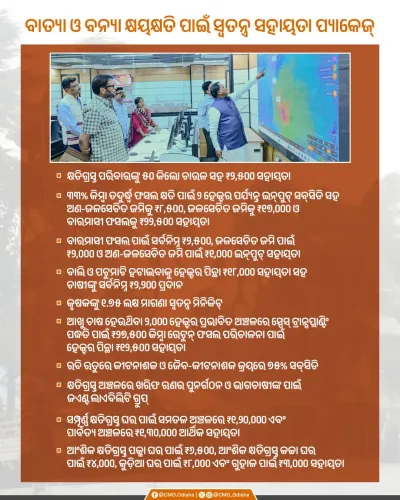
Each affected family will receive ₹2,500 in cash under the Chief Minister's special relief package.
Ganjam district has the highest impact: 4,29,782 families will share ₹107 crore 44 lakh 55 thousand .
Koraput district will receive ₹26 lakh 27 thousand 500 for 1,051 affected families .
District collectors have been directed to disburse funds immediately under prescribed guidelines.
The relief uses the same SDRF mechanism deployed after Cyclone Fani in 2019 .
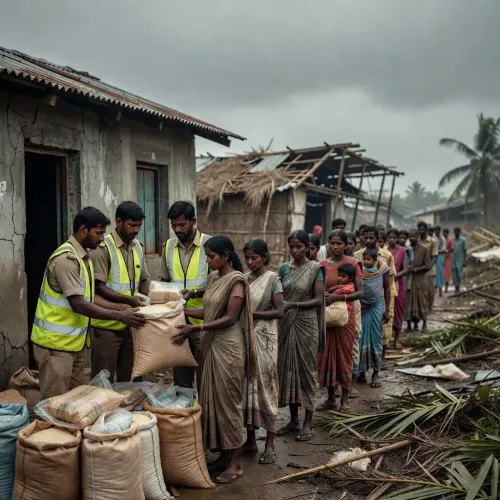
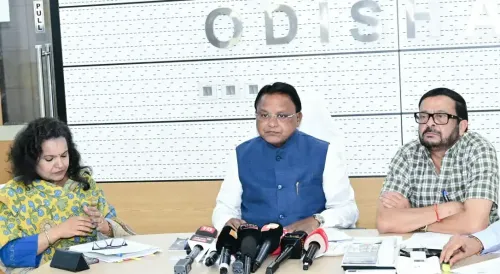
Over four lakh families in coastal and southern Odisha woke up to official confirmation of cash relief on Wednesday, 4 November 2026 — the state government has moved with unusual speed, sanctioning more than ₹107 crore 70 lakh from the State Disaster Response Fund within days of Cyclone Arnab making its impact felt. The Chief Minister's Office of Odisha announced the disbursement, keeping the Chief Minister's public pledge to affected households.
₹2,500 Per Family: What the Special Package Promises
At the heart of the relief announcement is a special package ordered personally by the Chief Minister: every verified cyclone-affected family will receive a flat ₹2,500 in cash assistance. The post states the funds have already been sanctioned and handed to the concerned district collectors — meaning the pipeline from treasury to doorstep is now open. District administrations have been directed to deliver the money to all eligible families 'immediately, in accordance with prescribed rules and guidelines.'
The scale is striking. Ganjam district — Odisha's most densely populated coastal belt, historically the first landfall zone for Bay of Bengal cyclones — accounts for the bulk of the relief: 4,29,782 affected families, drawing a sanction of ₹107 crore 44 lakh 55 thousand. Koraput district, a predominantly tribal interior district in southern Odisha, records 1,051 affected families, with ₹26 lakh 27 thousand 500 sanctioned for them.
SDRF: The Machinery Behind the Speed
The speed of the announcement is not accidental — it reflects a system Odisha has been sharpening since the catastrophic 1999 super cyclone that killed roughly 10,000 people and reshaped how the state thinks about disaster response. The State Disaster Response Fund (SDRF), constituted under central government norms, exists precisely to allow states to bypass procedural delays and push ex-gratia assistance to families within the first critical window after a disaster.
Odisha's model has been consistent across governments: establish verified household counts at the district level, calculate totals against per-family norms, sanction to collectors, and push disbursement. After Cyclone Fani in 2019, the same mechanism delivered ex-gratia payments to coastal households in Puri and Ganjam within days of landfall. That institutional muscle is being flexed again now.
Ganjam Bears the Brunt — Again
The numbers tell a familiar geography of vulnerability. Ganjam's coastline stretches along the Bay of Bengal at an angle that makes it a near-certain target when cyclones track north-northwest from the deep sea. With 4.29 lakh families affected in a single district, the livelihood damage — fishing boats, standing crops, damaged homesteads — will far outlast the storm itself. The ₹2,500 immediate relief is a first-response measure, not a full recovery package, but it provides liquidity to families who may have lost everything in a matter of hours.
Koraput's smaller but significant count is a reminder that cyclone impacts travel inland — particularly in hilly districts where rainfall, flooding, and landslides compound the damage long after the wind speed drops.
The district administrations now carry the execution burden. Whether the sanctioned funds reach every one of those 4,30,833 families quickly and without leakage will be the real test of a system Odisha has spent two decades building. Watch for disbursement progress reports and any state request for supplementary central assistance under NDRF norms.
Point of View
Raising long-term questions about coastal resilience investment beyond emergency payouts. At ₹2,500 per family, the package addresses immediate liquidity rather than full livelihood recovery, which means the real policy test begins now — in the speed and leakage rate of last-mile disbursement. How quickly funds actually reach tribal households in Koraput, where administrative reach is thinner, will reveal whether the system's well-known coastal efficiency extends equally to interior districts.
NationPress
4 Nov 2026
Frequently Asked Questions
How much relief will each cyclone Arnab affected family in Odisha get?
Each affected family will receive ₹2,500 in cash under the special package announced by the Odisha Chief Minister.
How much total money has Odisha sanctioned for cyclone Arnab relief?
The state government has sanctioned over ₹107 crore 70 lakh from the State Disaster Response Fund (SDRF) for immediate relief.
How many families in Ganjam are affected by cyclone Arnab?
4,29,782 families in Ganjam district have been identified as cyclone-affected and will receive a total of ₹107 crore 44 lakh 55 thousand .
What is the SDRF and how does it work in cyclone relief?
The State Disaster Response Fund (SDRF) is a central government-backed fund that allows states to quickly disburse ex-gratia cash assistance to disaster-affected families without procedural delays.
Which districts in Odisha received cyclone Arnab SDRF funds?
Ganjam and Koraput districts have received sanctioned SDRF amounts, with funds handed directly to the respective district collectors for immediate disbursement.