Odisha CM Majhi announces sweeping Cyclone Arnab relief package

Synopsis
Chief Minister Mohan Charan Majhi has announced a sweeping post-Cyclone Arnab relief package for Odisha, covering food grants, crop input subsidies, housing aid, livestock compensation, fishery support, MSME loans, and seed money for women's SHGs, as a Central Inter-Ministerial Committee prepares to visit on 2 November.
Key Takeaways
Every cyclone-hit household receives 50 kg rice and ₹2,500 cash ; fully destroyed homes get up to ₹1,30,000 for reconstruction.
Farmers with 33% or more crop loss receive input subsidies up to ₹22,500 per hectare for perennial crops, plus 1,75,000 free seed minikits .
Marine and Chilika fishermen get ₹60,000 per damaged boat ; aquaculture farmers receive up to ₹1,12,500 per hectare at 75% subsidy.
Affected MSMEs and traders can access loans up to ₹12 lakh with a direct government subsidy of up to ₹3 lakh (25%) .
A Central Inter-Ministerial Committee visits Odisha on 2 November 2026 for damage assessment ahead of Union government fund releases.
All field teams ordered to remain deployed amid threat of a new cyclonic system, Cyclone Murusu , in the Bay of Bengal.
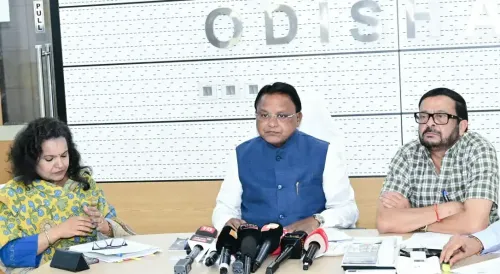
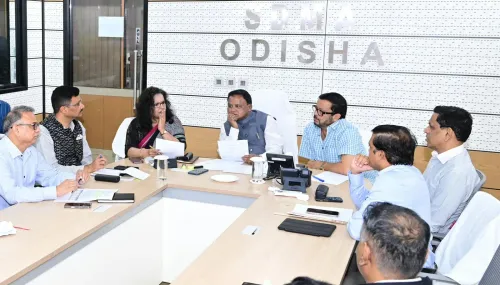
When a cyclone tears through Odisha's coast, the real test begins the morning after — and Chief Minister Mohan Charan Majhi moved swiftly on Sunday, 1 November 2026, convening a high-level review of post-Cyclone Arnab conditions before announcing one of the most detailed relief and recovery packages the state has seen, covering farmers, fishermen, traders, weavers and women's self-help groups across affected districts.
What every affected family gets first
The immediate lifeline is straightforward: every cyclone-hit household will receive 50 kilograms of rice along with a cash grant of ₹2,500. Families whose homes were completely destroyed or waterlogged for more than two days will also get ₹2,500 each for clothing and ₹2,500 for utensils — a small but critical bridge to normalcy. Fully damaged homes in plain areas will attract reconstruction support of ₹1,20,000, rising to ₹1,30,000 in hilly terrain.
Partial damage is accounted for in granular steps: ₹6,500 for a partially damaged pucca house, ₹4,000 for a kutcha house, ₹8,000 for a thatched hut, and ₹3,000 for a damaged cattle shed. These figures follow the template Odisha has refined over successive storms since Cyclone Fani in 2019, when the state drew national attention for its evacuation efficiency and post-disaster recovery speed.
The farmer-by-farmer arithmetic of crop loss relief
For agriculture — the backbone of Odisha's rural economy — the package is tiered by crop type and land category. Farmers who have suffered 33% or more crop loss on un-irrigated land will receive an input subsidy of up to ₹8,500 per hectare (capped at 2 hectares), rising to ₹17,000 for irrigated land and ₹22,500 for perennial crops. Even at minimum loss thresholds, support kicks in at ₹1,000 for un-irrigated land, ₹2,000 for irrigated, and ₹2,500 for perennials.
Fields smothered under sand or silt — a common post-cyclone nightmare in coastal Odisha — will attract ₹18,000 per hectare for land clearance, with a floor of ₹2,200 per farmer. CM Majhi also announced the free distribution of 1,75,000 seed minikits: 1,20,000 pulse variety, 5,000 oilseed, and 50,000 vegetable kits. For the upcoming Rabi season 2026-27, farmers will get a 75% subsidy on pesticides and bio-pesticides.
Sugarcane farmers in the 2,000 affected hectares can claim ₹27,500 per hectare for space transplanting or ₹12,500 for ratoon crop management. Short-term Kharif loans in severely hit areas will be restructured as medium-term loans, and joint liability groups will be formed for sharecroppers and landless farmers — a recognition that the most vulnerable cultivators often hold no formal credit history.
Fishermen, livestock owners and the Chilika community
The package reaches deep into Odisha's blue economy. Aquaculture farmers face losses that can wipe out an entire season's investment in hours; the government has set support at 75% of damage, up to ₹1,12,500 per hectare, with ₹22,500 for a damaged boat and ₹15,000 for nets. Marine and Chilika Lake fishermen — whose traditional crafts are irreplaceable — will receive ₹60,000 per damaged boat and ₹15,000 for nets. Fish farmers and women SHG community ponds with breached embankments can claim up to ₹1,75,000 per hectare.
Livestock compensation follows market-realistic rates: ₹37,500 for a milch cow or buffalo, ₹4,000 for sheep, goat or pig, and ₹100 per poultry bird up to a cap of ₹10,000. Large draught animals attract ₹32,000; smaller ones ₹20,000. Beyond compensation, 1,000 farmers will receive subsidised goats or bullocks, 5,000 dairy farmers will get up to 500 kg of cattle feed per animal, and 200 poultry farms suffering more than 70% damage will be supported under the Mukhyamantri Krushi Udyog Yojana.
MSMEs, weavers and women's groups — no one left outside the net
Cyclone damage to shops and small enterprises rarely makes headlines, but it quietly devastates local economies for months. The Majhi government has addressed this with loans of up to ₹12 lakh for affected MSMEs, traders and shopkeepers, with a direct government subsidy of up to ₹3 lakh (25%) credited straight to the bank. Street vendors and temporary stall operators will get ₹10,000; shops and commercial establishments, ₹25,000. Weavers and artisans can claim ₹5,000 for tool replacement and another ₹5,000 for lost materials. Every eligible cyclone-affected women's SHG will receive an additional ₹5,000 in seed money. Silk farmers — eri, mulberry, tassar — get ₹6,000 per hectare; muga silk farmers, ₹7,500; and fully destroyed rearing houses, ₹1,75,000.
Central team arrives 2 November; Cyclone Murusu watch activated
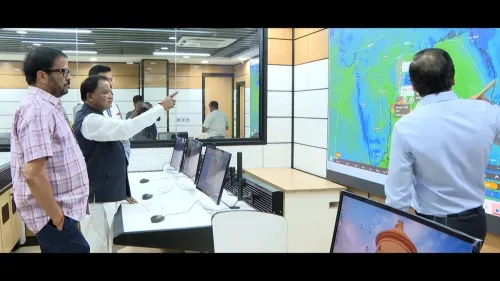
A Central Inter-Ministerial Committee is scheduled to visit Odisha on 2 November for an independent damage assessment — a step that typically precedes Union government funding releases under the National Disaster Response Fund. CM Majhi has also directed all deployed field teams to remain at their stations and stay on high alert, given the forecast possibility of another cyclonic system, Cyclone Murusu, forming in the Bay of Bengal. Lift irrigation points in all affected villages are to be repaired and made operational before the Rabi sowing window opens.
Odisha has built its disaster-management reputation over two decades, but each storm rewrites the scale of the challenge. This time, the government is betting that breadth — a package touching farmers, fishers, traders, weavers and SHGs simultaneously — is the fastest path back to normal.
Point of View
Land irrigation status, enterprise size, and livelihood category — reflects Odisha's institutionalised approach to disaster relief, built incrementally since Cyclone Fani in 2019. By routing the MSME subsidy directly to banks and restructuring Kharif loans into medium-term credit, the Majhi government is attempting to prevent a cascade of defaults that historically follow major cyclone events. The timing of the Central Inter-Ministerial Committee visit on 2 November is politically significant: it sets the clock for Union government reimbursement and signals the state's intent to press New Delhi for adequate NDRF releases. With Cyclone Murusu potentially forming, the decision to keep response teams in place rather than stand them down is both prudent governance and a signal that the administration has learned from the slow ramp-up that cost credibility in past multi-cyclone seasons.
NationPress
2 Nov 2026
Frequently Asked Questions
What immediate relief will cyclone-affected families in Odisha get?
Every affected family will receive 50 kilograms of rice and ₹2,500 in cash . Families whose homes were completely destroyed or waterlogged for over two days will additionally receive ₹2,500 for clothing and ₹2,500 for utensils .
How much crop loss compensation will Odisha farmers receive after Cyclone Arnab?
Farmers with 33% or more crop loss can receive input subsidies of up to ₹8,500 per hectare for un-irrigated land, ₹17,000 for irrigated land, and ₹22,500 for perennial crops, capped at 2 hectares per farmer.
What support is available for fishermen affected by Cyclone Arnab in Odisha?
Marine and Chilika Lake fishermen can claim ₹60,000 for a damaged boat and ₹15,000 for damaged nets . Aquaculture farmers are eligible for up to 75% subsidy on losses, capped at ₹1,12,500 per hectare .
Will MSMEs and small traders get help after the cyclone in Odisha?
Yes. Affected MSMEs, traders and shopkeepers can access loans of up to ₹12 lakh , with a government subsidy of up to ₹3 lakh (25%) paid directly to the bank. Street vendors get ₹10,000 and commercial establishments get ₹25,000 .
When is the Central Inter-Ministerial Committee visiting Odisha for Cyclone Arnab damage assessment?
The Central Inter-Ministerial Committee is scheduled to visit Odisha on 2 November 2026 to conduct an independent damage assessment, which typically precedes Union government funding under the National Disaster Response Fund.