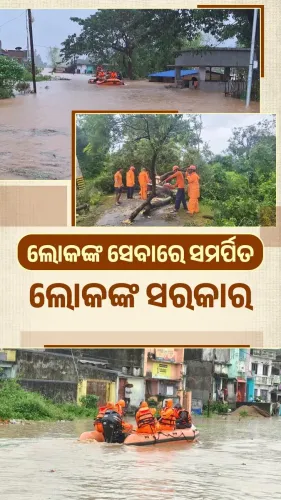
CM Mohan Majhi Reviews Cyclone Arnab Relief Ops in Odisha
Synopsis
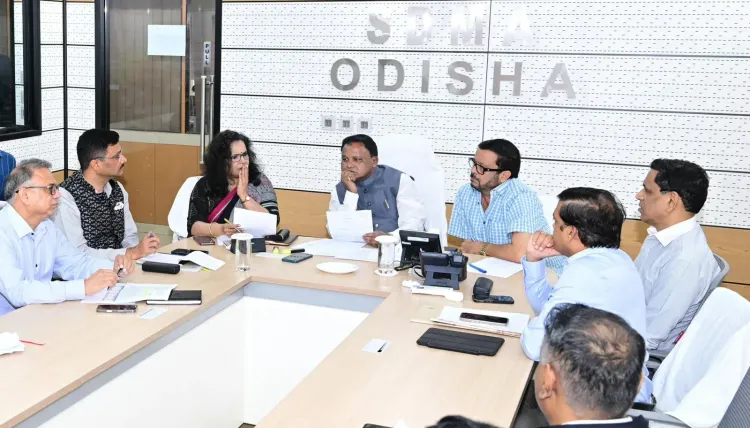
Chief Minister Mohan Majhi reviewed Odisha's response to Cyclone Arnab on 31 October 2026, ordering officials to accelerate rescue, relief, and restoration in affected areas and make public safety the top priority.
Key Takeaways
CM Mohan Majhi personally chaired a post-Cyclone Arnab review on 31 October 2026 .
He directed officials to accelerate rescue, relief, and restoration in all affected zones.
Public safety and provision of necessary assistance were declared the highest priority .
Odisha's disaster management framework was rebuilt after the devastating 1999 Super Cyclone , giving the state one of India's most developed rapid-response systems.
The Bay of Bengal coastline makes Odisha one of the most cyclone-exposed states in the country, with post-event reviews a standard protocol.
Relief camp operations, damage assessments, and potential central government assistance requests are expected in the coming days.
With Cyclone Arnab having swept through Odisha's coastline, Chief Minister Mohan Majhi has convened a high-level review of the post-cyclone situation — putting rescue, relief, and recovery at the top of the state's immediate agenda on Saturday, 31 October 2026. The Chief Minister's Office confirmed that Majhi has directed officials to accelerate operations in affected areas and make public safety the non-negotiable priority.
What CM Majhi Has Ordered on the Ground
The Chief Minister's Office posted in Odia that Majhi reviewed the post-Cyclone Arnab situation and the steps being taken to manage it. His directive was unambiguous: speed up rescue, relief, and restoration work in impacted zones, and ensure that people receive protection and necessary assistance as the first order of business. No delay, no bureaucratic drag — the instruction was to move fast.
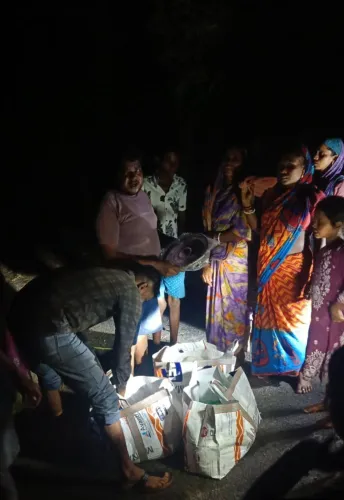
The review signals that the state machinery is now in full post-disaster mode, with district administrations expected to report progress on shelter operations, food distribution, and damage assessment in the hours and days ahead.
Odisha's Hard-Earned Disaster Playbook
Odisha did not arrive at this level of institutional readiness by accident. The catastrophic 1999 Super Cyclone — which killed nearly 10,000 people — became the brutal forcing function that rebuilt the state's entire disaster management architecture from the ground up. Early warning systems, pre-positioned relief stockpiles, rapid evacuation protocols, and a trained State Disaster Response Force are now standard operating procedure every time a storm rolls in from the Bay of Bengal.
That coastline is one of the most cyclone-prone stretches in Asia. Recurrent storms — from Phailin to Fani to Yaas — have made post-event reviews by the Chief Minister's office a well-rehearsed exercise, even as the human cost of each storm remains real and immediate for the communities in its path.
What Comes Next for Affected Communities
The coming days will be critical. Relief camp operations, damage surveys, and any formal request to the central government for disaster assistance funds will define how quickly normalcy returns to the affected districts. Majhi's direct involvement at this stage signals that the state is not waiting for damage tallies to be finalised before pushing resources forward.
For the residents of Odisha's coastal belt — fishermen, farmers, and families who have lived with the cyclone calendar their entire lives — the speed of that government response is the only number that matters right now.
Point of View
An efficient cyclone response also carries political weight: Odisha voters have historically rewarded administrations that deliver tangible relief quickly. The broader test will be whether the state activates central disaster funds swiftly and whether relief reaches the last-mile coastal communities before the post-storm window for intervention narrows.
NationPress
1 Nov 2026
Frequently Asked Questions
What is Cyclone Arnab and where did it affect Odisha?
Cyclone Arnab is a cyclonic storm that struck Odisha's Bay of Bengal coastline, prompting a state-level emergency review by Chief Minister Mohan Majhi on 31 October 2026. Specific district-level impact details are being assessed.
What steps has CM Mohan Majhi ordered after Cyclone Arnab?
CM Majhi has directed officials to accelerate rescue, relief, and restoration work in cyclone-affected areas and to prioritise public safety and essential assistance above all else.
How prepared is Odisha for cyclone disasters?
Odisha has one of India's most developed disaster management systems, built after the catastrophic 1999 Super Cyclone. It includes early warning systems, pre-positioned relief stockpiles, evacuation protocols, and a State Disaster Response Force.
Will Odisha seek central government help for Cyclone Arnab relief?
A formal request for central government disaster assistance funds is a standard step following major cyclones in Odisha; such a request is expected once damage assessments are completed in the coming days.
Who is Mohan Majhi and what is his role in Odisha's disaster response?
Mohan Majhi is the Chief Minister of Odisha. He heads the state government's disaster management reviews and issues directives to district administrations during and after major cyclone events.