CM Majhi Deploys Rescue Teams as Cyclone Arnab Hits Odisha

Synopsis
Odisha Chief Minister Mohan Charan Majhi announced on 29 October 2026 that rescue teams are actively working to restore road and communication links severed by Cyclone Arnab, while ensuring safe movement for affected residents.
Key Takeaways
Cyclone Arnab has disrupted connectivity — roads and communications — across parts of Odisha as of 29 October 2026 .
CM Mohan Charan Majhi confirmed rescue teams are working continuously to restore links and ensure safe public movement.
Odisha's disaster response framework was rebuilt after the 1999 Super Cyclone , which killed over 10,000 people .
The state demonstrated its evacuation capacity during Cyclone Fani (2019) , evacuating nearly 1.2 million people before landfall.
Connectivity restoration — roads, power, and telecom — is central to enabling subsequent relief distribution in cyclone-hit districts.
Official damage assessments and district-level reopening timelines are the key indicators to watch in the coming hours and days.
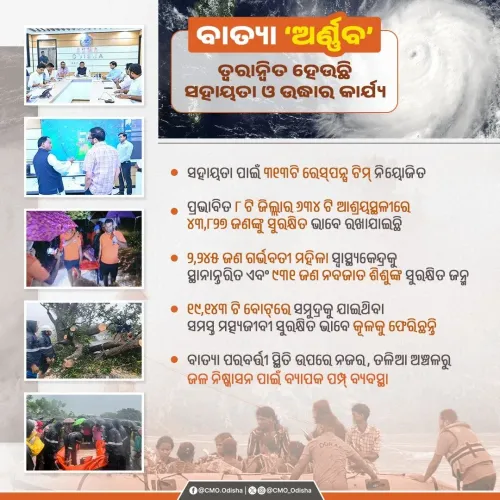
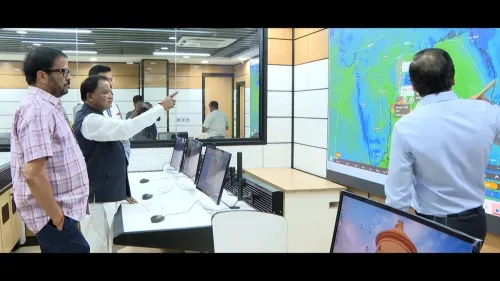
Rescue teams are on the ground and working without pause — that is the message Odisha Chief Minister Mohan Charan Majhi sent on Thursday, 29 October 2026, as Cyclone Arnab continued to batter the state's coast, severing road links and disrupting communications across affected districts.
In a bilingual post in Odia and English, CM Majhi confirmed that efforts to restore connectivity are 'ongoing' and that rescue teams are working continuously to 'ensure safe travel for the public and minimise inconvenience.' The dual-language communication itself signals who the government is speaking to — both the English-reading policy audience and Odia-speaking citizens on the ground.
Connectivity as the First Casualty of Every Cyclone
In Odisha, severed roads and dead communication lines are not an anomaly — they are cyclone season's most predictable wound. After the catastrophic 1999 Super Cyclone killed more than 10,000 people and left entire districts unreachable for days, successive governments rebuilt the state's disaster response architecture around one core lesson: connectivity is the lifeline that enables everything else — evacuation confirmation, relief distribution, and medical response.
That institutional memory showed clearly in Cyclone Fani (2019), when Odisha evacuated nearly 1.2 million people before landfall and was internationally credited for dramatically reducing the death toll. Rapid road and telecom restoration was central to that post-landfall recovery. The current mobilisation under CM Majhi draws on the same playbook.
What Rescue Teams Are Doing Right Now
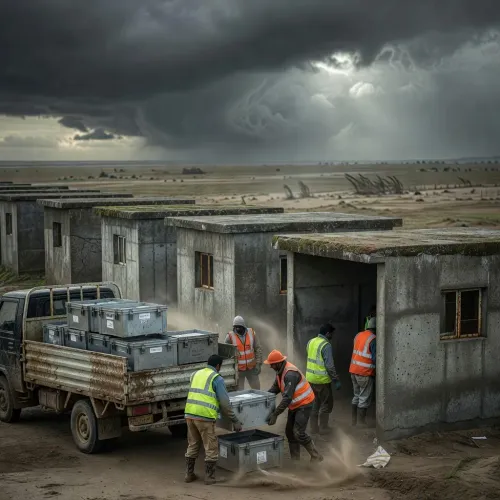
The Chief Minister's update, while operational rather than detailed, points to two simultaneous priorities: physical road clearance to restore movement corridors, and telecom link restoration to re-establish emergency communication with cut-off communities. Both are prerequisites for scaled relief operations that typically follow within hours of a storm's passage.
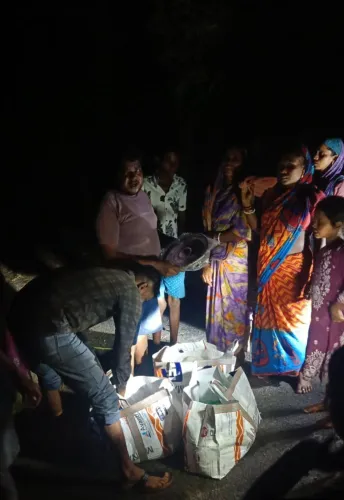
Road and power operators in cyclone-hit zones, along with state disaster response personnel, form the frontline of this effort. Affected residents — particularly in coastal and low-lying districts along the Bay of Bengal — depend on this infrastructure being restored before medical teams, food convoys, and administrative surveys can reach them.
Odisha's Disaster Record Under the Microscope
No Indian state has been tested by cyclones more repeatedly than Odisha, and none has refined its response more visibly over the past two decades. CM Majhi's active public communication during an active storm — real-time updates on X rather than post-event press briefings — is itself a feature of modern Odisha disaster governance: keep the public informed, demonstrate state presence, and reduce panic through transparency.
What comes next matters as much as the rescue push: official damage assessments, district-wise connectivity timelines, and the pace of restoring telecom links in the worst-hit pockets will measure how effectively the state's much-tested machinery has performed under Cyclone Arnab.
The teams are working. The clock is running. Odisha has been here before — and how fast it finds its way back is the only story that counts now.
Point of View
Reducing panic and signalling administrative control. Connectivity restoration is not merely an engineering task here; it is the single variable that determines how quickly relief, medical teams, and government surveyors reach isolated communities. The post also underscores the BJP state government's incentive to demonstrate institutional competence on disaster management, a domain where Odisha has set national benchmarks that now function as a standard the incumbent must visibly uphold.
NationPress
29 Oct 2026
Frequently Asked Questions
What is Cyclone Arnab and where has it hit?
Cyclone Arnab is an active cyclonic storm affecting Odisha as of 29 October 2026. Specific landfall location and damage figures are yet to be officially confirmed.
What is Odisha CM Mohan Majhi doing during Cyclone Arnab?
CM Mohan Charan Majhi has deployed rescue teams to restore road and telecom connectivity and has been providing public updates directly, including a bilingual post on 29 October 2026.
How has Odisha handled cyclones in the past?
Odisha rebuilt its disaster management system after the 1999 Super Cyclone, which killed over 10,000 people. By Cyclone Fani in 2019, the state evacuated nearly 1.2 million people before landfall, earning international recognition.
Why is restoring connectivity the first priority after a cyclone?
Road and telecom restoration enables relief convoys, medical teams, and administrative surveys to reach cut-off communities — making it the prerequisite for all other post-cyclone recovery work.
What should I watch for in Odisha's cyclone recovery?
Key indicators include official damage assessments, district-wise road reopening timelines, and the pace of telecom link restoration in the worst-affected coastal areas.