Uttarakhand CM unveils border infra push for Nepal trade
Synopsis
Uttarakhand's Chief Minister announced a ₹368-crore Integrated Check Post at Banbasa, a dry port proposal, NH-9 four-laning under Bharatmala, and the Charchum Bridge in Pithoragarh to strengthen India-Nepal border trade and connectivity.
Key Takeaways
An Integrated Check Post at Banbasa is being built at approximately ₹368 crore 28 lakh to modernise India-Nepal trade clearances.
A dry port in the border region is being planned to boost containerised cargo handling and trade logistics.
Under Bharatmala Pariyojana , NH-9 is being four-laned from the Sitarganj-Tanakpur route to the India-Nepal border at Banbasa at a cost of approximately ₹246 crore 86 lakh .
The Charchum Bridge Project in Dharchula, Pithoragarh aims to improve cross-border movement and trade in the high-altitude belt.
Cabinet Minister Satpal Maharaj and office-bearers of the Veer Gorkha Kalyan Samiti were present at the event.
The Chief Minister framed border zones as centres of cultural identity and economic growth, not just security assets.
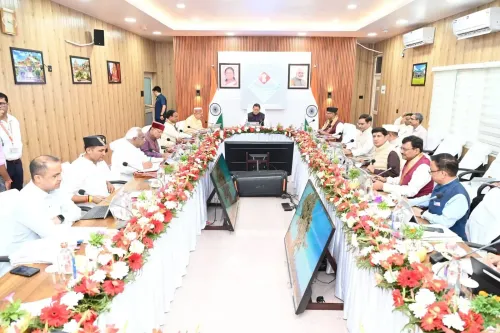
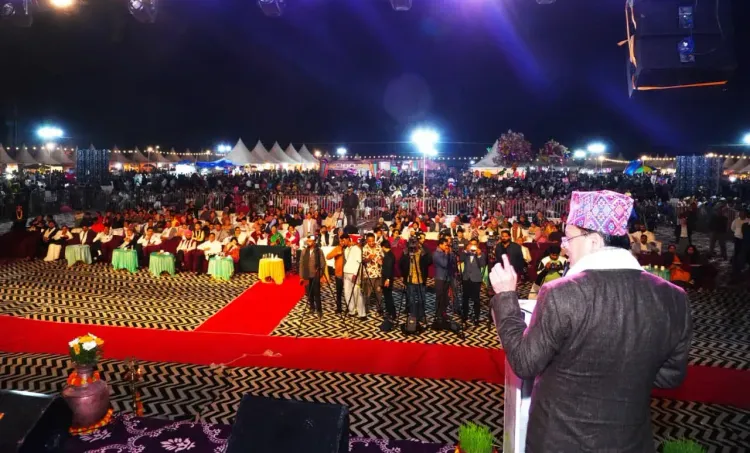
Roads, bridges, check posts, and a dry port — Uttarakhand's Chief Minister has laid out a multi-crore infrastructure blueprint for the state's Nepal-facing border districts, signalling that frontier zones are no longer just a security concern but an active economic frontier. The announcements were made on Sunday, 1 November 2026, at an event attended by Cabinet Minister Satpal Maharaj and prominent members of the Gorkha community, including office-bearers of the Veer Gorkha Kalyan Samiti.
Banbasa's ₹368-crore gateway to Nepal trade
The centrepiece of the announcement is an Integrated Check Post (ICP) at Banbasa — the established India-Nepal transit hub in the Himalayan foothills — being built at an estimated cost of approximately ₹368 crore 28 lakh. Integrated check posts consolidate customs, immigration, and phytosanitary clearances at a single facility, dramatically cutting the time and cost of formal cross-border trade. Banbasa is one of the most active land ports on the India-Nepal border, and a modern ICP here would directly benefit traders and transporters on both sides.
Alongside the check post, the government is also exploring the development of a dry port in the border region. A dry port — an inland facility that handles containerised cargo away from a seaport — would give Uttarakhand's border economy the logistics backbone it currently lacks, enabling goods to be consolidated, cleared, and dispatched efficiently.
NH-9 four-laning: Bharatmala's Himalayan stretch
Under the Bharatmala Pariyojana — the Central government's flagship national highway programme approved in 2017 — a four-lane corridor on National Highway 9 is being developed from the Sitarganj-Tanakpur route all the way to the India-Nepal border at Banbasa, at a projected cost of approximately ₹246 crore 86 lakh. Four-laning this stretch is critical: NH-9 is the primary road artery linking the Terai belt to the hills, and wider lanes mean faster freight movement, lower logistics costs, and a safer journey for border residents and pilgrims alike.
Charchum Bridge: connecting Pithoragarh's high-altitude belt
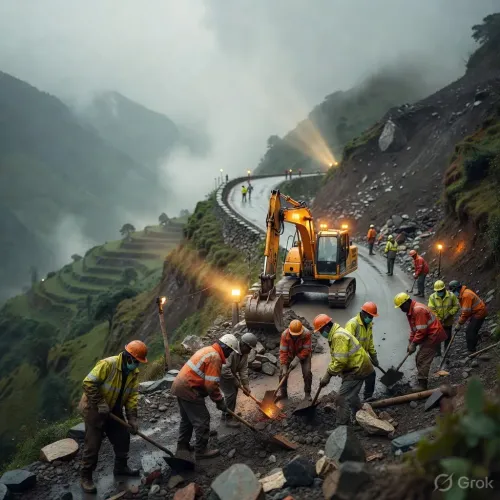
Further into the mountains, in the Dharchula area of Pithoragarh district, the Charchum (Charchhum) Bridge Project is underway with the stated aim of improving movement and trade connectivity between the border areas of both countries. Pithoragarh shares a border with both Nepal and Tibet, making infrastructure here a convergence of trade facilitation and strategic depth. The bridge project is part of a broader effort to knit together remote Himalayan communities that have historically been cut off by seasonal road closures and difficult terrain.
Gorkha community at the centre of the development pitch
The event's setting — a gathering of the Gorkha community and the Veer Gorkha Kalyan Samiti — was deliberate. The Chief Minister specifically invoked the cooperation, participation, and dedication of the Gorkha community, expressing confidence that 'Uttarakhand vikas ke naye aayam sthapit karega' (Uttarakhand will establish new dimensions of development) with their partnership. He also reaffirmed the state government's commitment to protecting Gorkha cultural heritage and dignity — a pointed acknowledgement of one of Uttarakhand's most demographically significant communities in border districts.
The Chief Minister's framing was explicit: 'Seemant kshetra keval desh ki suraksha ki drishti se hi mahatvapurn nahin hain, balki ye hamaari saanskritik pahchan aur arthik vikas ke bhi pramukh kendra hain' — 'Border areas are not important only from a security perspective; they are also the primary centres of our cultural identity and economic development.' It is a reframing that shifts the narrative around India's frontier zones from defensive preoccupation to proactive development.
What each project unlocks
Together, the ICP at Banbasa, the dry port proposal, the NH-9 four-laning, and the Charchum Bridge form a layered connectivity play: hard infrastructure feeding into trade facilitation, feeding into local employment and economic activity. The Chief Minister specifically flagged job creation and new economic opportunities at the local level as core objectives — a reminder that these are not just corridor projects but livelihood interventions for communities that have long seen their young migrate to plains cities.
If the projects deliver on timeline and cost, Uttarakhand's Nepal border belt could emerge as one of the more dynamic sub-regional trade corridors in the Himalayan arc. The political clock, as always, is ticking.
Point of View
Particularly after years of diplomatic turbulence. By bundling a check post, a dry port, and a four-lane highway into a single political moment, the Chief Minister is also sending a signal to the Gorkha community — a politically significant constituency in border districts — that the state government sees their region as an economic asset rather than a peripheral concern. The invocation of Bharatmala provides Central government cover and funding credibility to what are ultimately state-level political deliverables. Whether the projects stay on cost and schedule will be the real test; Himalayan terrain and inter-agency coordination have derailed similarly ambitious border road plans before.
NationPress
2 Nov 2026
Frequently Asked Questions
What is the Banbasa Integrated Check Post in Uttarakhand?
The Banbasa Integrated Check Post is a facility being constructed at approximately ₹368 crore 28 lakh at the India-Nepal border in Uttarakhand to consolidate customs, immigration, and trade clearances at a single point, making cross-border trade faster and more efficient.
What is the Charchum Bridge project in Pithoragarh?
The Charchum Bridge project is an infrastructure initiative in the Dharchula area of Pithoragarh district aimed at improving road connectivity and trade movement between India and Nepal across high-altitude border terrain.
How does Bharatmala Pariyojana connect to the Uttarakhand Nepal border?
Under Bharatmala Pariyojana, National Highway 9 is being four-laned from the Sitarganj-Tanakpur route to the India-Nepal border at Banbasa at an estimated cost of ₹246 crore 86 lakh, improving freight and passenger movement in the border belt.
What is a dry port and why is Uttarakhand developing one near the Nepal border?
A dry port is an inland logistics facility for handling and clearing containerised cargo. Uttarakhand is developing one near the Nepal border to boost formal trade, reduce dependence on distant ports, and create local economic opportunities in border districts.
What is the Veer Gorkha Kalyan Samiti?
The Veer Gorkha Kalyan Samiti is a community organisation representing Gorkha residents in Uttarakhand's border areas. Its members attended the Chief Minister's event where the border infrastructure projects were announced.