NCB's Uttarakhand JCC meeting targets drug trafficking, Nepal routes
Synopsis
The NCB's Uttarakhand JCC meeting in Dehradun put Nepal-linked trafficking corridors, pharmaceutical diversion, and an Odisha-Uttarakhand ganja supply chain under the scanner — with Uttarakhand ANTF directed to compile five years of ganja cases tracing back to Odisha. The meeting aligns with Home Minister Amit Shah's year-end deadline to uproot the narcotics trade from India.
Key Takeaways
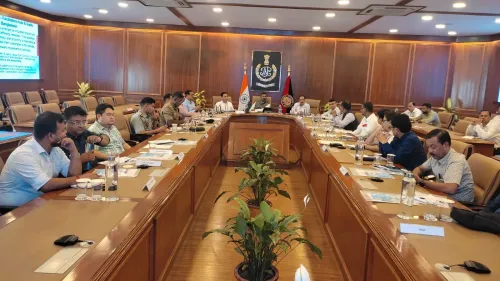
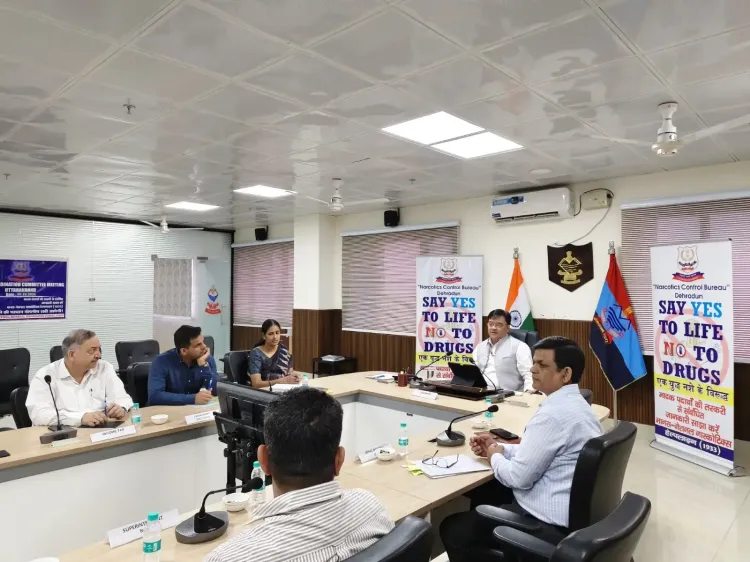
The NCB's JCC meeting for Uttarakhand was held in Dehradun on 10 October 2026 , chaired by the Deputy Director General, NCB (Northern Region) .
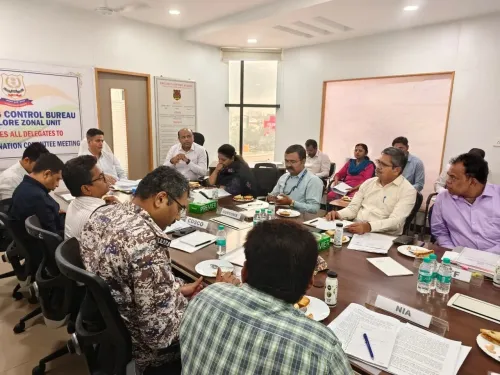
Agencies including NIA, DRI, ED, SSB, IB, ANTF , and FDA participated in inter-agency coordination discussions.
Key agenda items included Nepal-linked trafficking routes , pharmaceutical diversion, clandestine labs, and darknet and cryptocurrency investigation capacity.
Uttarakhand ANTF was directed to map major ganja cases linked to Odisha over the past five years and coordinate with Odisha authorities.
Union Home Minister Amit Shah has set a deadline of 31 December to uproot the narcotics trade, tying a drug-free India to the Viksit Bharat 2047 vision.
The Vision Document on Narcotics Control (2026–29) and establishment of dedicated NDPS courts were reviewed for progress.
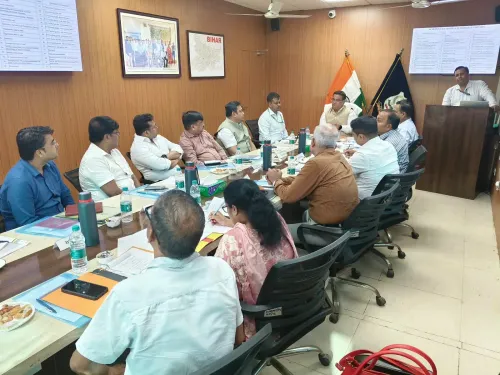
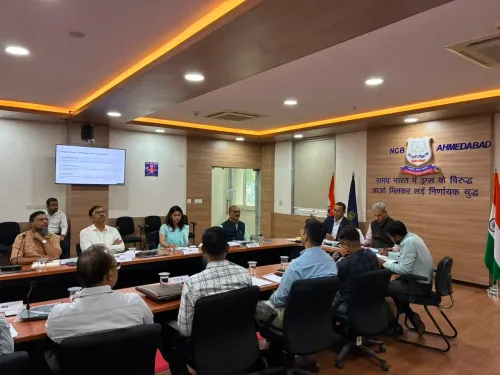
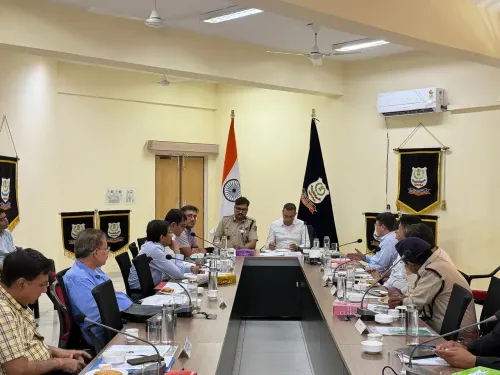
The Narcotics Control Bureau's (NCB) quarterly state-level Joint Co-ordination Committee (JCC) meeting for Uttarakhand, held in Dehradun on 10 October 2026, brought together senior officials from multiple central and state agencies to sharpen inter-agency strategies against drug trafficking. The meeting was chaired by the Deputy Director General, NCB (Northern Region).
Agencies and Agenda
Representatives from the National Investigation Agency (NIA), Directorate of Revenue Intelligence (DRI), Enforcement Directorate (ED), Income Tax, Sashastra Seema Bal (SSB), Intelligence Bureau (IB), Uttarakhand Anti-Narcotics Task Force (ANTF), and the Food and Drug Administration (FDA) participated in the deliberations. The breadth of representation signals that the Centre is treating Uttarakhand's drug problem as a multi-agency challenge rather than a law-enforcement silo.
Discussions centred on drug-trafficking hotspots, Nepal-linked trafficking routes, border interdictions, and emerging modus operandi. Pharmaceutical diversion and precursor chemical smuggling also featured prominently — areas that have attracted increasing scrutiny as synthetic drug consumption rises across northern India.
Key Focus Areas
Participants reviewed the functioning of clandestine laboratories, the status of financial investigations, and the use of the Prevention of Illicit Traffic in Narcotic Drugs and Psychotropic Substances (PIT-NDPS) provisions. The meeting also assessed progress on implementation of the Vision Document on Narcotics Control (2026–29), which lays out defined responsibilities, timelines, and monitoring mechanisms across four strategic pillars.
The establishment of dedicated NDPS courts, capacity-building initiatives for darknet and cryptocurrency investigations, and mechanisms for improved intelligence sharing were among the institutional issues reviewed. The growing role of digital payment channels and encrypted marketplaces in narcotics supply chains has made technology-focused capacity building a priority for the NCB nationally.
Odisha-Uttarakhand Ganja Supply Chain in Focus
In a notable operational directive, Uttarakhand ANTF was specifically urged to compile data on major ganja seizure cases from the past five years that trace back to Odisha as a source state, and to coordinate with Odisha authorities to dismantle supply networks at their point of origin. The instruction reflects a shift toward targeting source networks rather than merely intercepting consignments at the destination.
Amit Shah's Anti-Narcotics Push
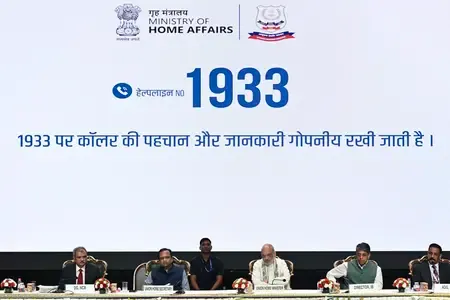
The meeting drew context from the 3rd National Conference of Anti-Narcotics Task Force (ANTF) heads held last month, where Union Home Minister Amit Shah stressed the urgency of delivering a decisive blow against narcotics. Shah described drugs as 'one of the most serious threats facing the country and the world' and set a target of uprooting the trade from India by 31 December. He linked a 'Drug-Free India' to the broader goal of building a Viksit Bharat by 2047 and protecting future generations.
That conference, organised by the NCB under the theme 'United Resolve, Shared Responsibility', was a two-day event that brought together ANTF heads from 36 states and Jammu and Kashmir, alongside stakeholders from multiple government departments. It featured technical sessions on demand reduction, rehabilitation, and the dismantling of trafficking networks.
What Comes Next
With the Vision Document on Narcotics Control covering the period 2026–29 now guiding the NCB's national roadmap, JCC meetings such as the one in Dehradun serve as the primary accountability mechanism at the state level. Monitoring the Odisha-linked ganja corridor, advancing NDPS court infrastructure, and building digital investigation capacity are expected to remain central priorities for Uttarakhand's enforcement apparatus in the months ahead.
Point of View
Yet NDPS court infrastructure and digital investigation capacity remain works in progress. Amit Shah's December deadline is ambitious given the pace of institutional build-out, and without verifiable enforcement metrics tied to the Vision Document, the risk is that headline coordination meetings substitute for measurable outcomes.
NationPress
10 Oct 2026
Frequently Asked Questions
What was the NCB JCC meeting in Dehradun about?
The NCB's quarterly Joint Co-ordination Committee (JCC) meeting for Uttarakhand, held in Dehradun on 10 October 2026, focused on strategies to enhance inter-agency coordination against drug trafficking. Key topics included Nepal-linked smuggling routes, pharmaceutical diversion, clandestine laboratories, and digital investigation capabilities.
Which agencies participated in the Uttarakhand JCC meeting?
The meeting included representatives from NIA, DRI, ED, Income Tax, SSB, IB, Uttarakhand ANTF, and FDA, along with NCB officials. It was chaired by the Deputy Director General, NCB (Northern Region).
Why is Odisha significant to Uttarakhand's drug problem?
Odisha has been identified as a major source state for ganja trafficking into Uttarakhand. Uttarakhand ANTF was directed to compile data on major ganja cases over the past five years tracing back to Odisha and coordinate with Odisha authorities to dismantle supply networks at the source.
What did Home Minister Amit Shah say about drug trafficking?
At the 3rd National ANTF Conference last month, Amit Shah called drugs one of the most serious threats facing India and the world, and set a target of uprooting the narcotics trade by 31 December. He linked a drug-free India to the Viksit Bharat 2047 vision.
What is the Vision Document on Narcotics Control 2026–29?
It is the NCB's national roadmap for narcotics control covering the period 2026 to 2029, built around four strategic pillars with defined responsibilities, timelines, and monitoring mechanisms. State-level JCC meetings serve as accountability checkpoints for its implementation.