ANTF national conference 2026: States adopt Vision Document on narcotics control
Synopsis
Thirty-six states and J&K have formally endorsed a three-year narcotics control blueprint at the NCB's biggest inter-state drug enforcement summit to date. With Home Minister Amit Shah setting a 31 December deadline to uproot drug trafficking — and a proposed NCB-RPF joint operations pact on the table — India is moving from seizure-counting to network dismantling as its primary enforcement doctrine.
Key Takeaways
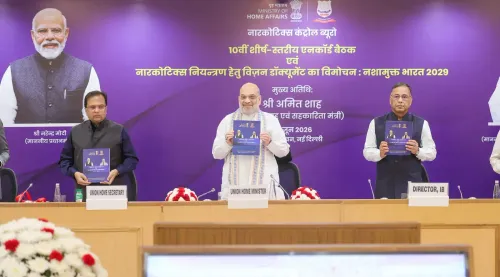
The 3rd National ANTF Conference concluded in New Delhi on 24 September 2026 , with 36 states and J&K endorsing the Vision Document on Narcotics Control (2026–29) .
Union Home Minister Amit Shah inaugurated the event on 22 September , calling for narcotics to be uprooted from India by 31 December .
The Vision Document rests on four strategic pillars with defined responsibilities, timelines, and monitoring mechanisms.
Demand-side measures include 500-metre Drug-Free Zones around schools and colleges and an expanded Nasha Mukt Bharat Abhiyan .
A proposed MoU between NCB and RPF would institutionalise joint operations against drug trafficking on railways.
States are directed to prepare state-specific three-year roadmaps aligned with the national Vision Document.
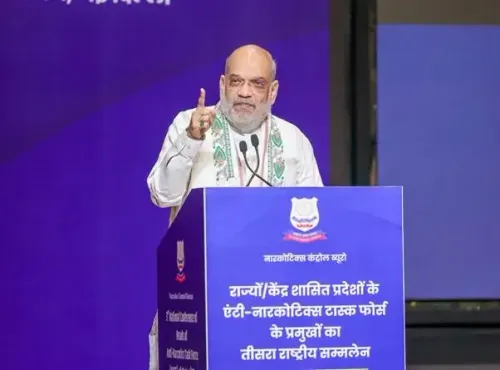
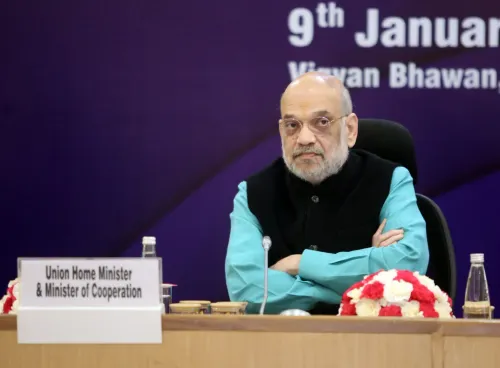
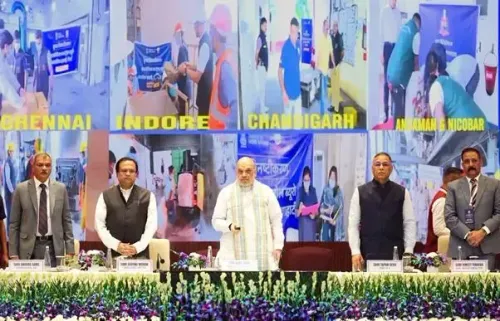
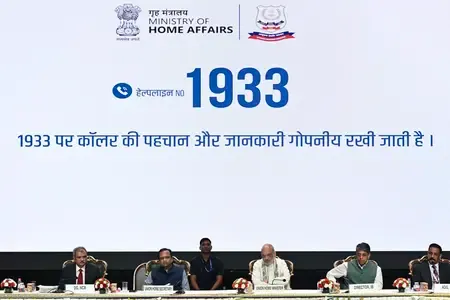
The 3rd National Conference of Anti-Narcotics Task Force (ANTF) heads concluded in New Delhi on 24 September 2026, with representatives from 36 states and Jammu & Kashmir reaffirming their commitment to implement the 'Vision Document' on Narcotics Control (2026–29). The two-day event, organised by the Narcotics Control Bureau (NCB) under the theme 'United Resolve, Shared Responsibility', brought together ANTF heads alongside stakeholders from multiple central and state government departments.
Shah's Opening Call: Uproot Drugs by December 31
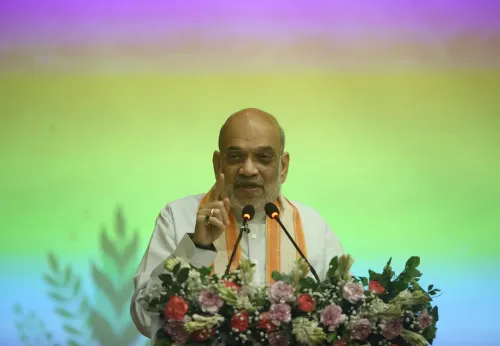
Union Home and Cooperation Minister Amit Shah inaugurated the conference on 22 September, framing narcotics as one of the gravest threats facing India and the world. Shah stressed the urgency of delivering a decisive blow against drug trafficking, expressing a firm resolve to uproot the trade from India by 31 December. He linked a drug-free India directly to the broader national goal of building a Viksit Bharat by 2047, emphasising the need to protect future generations and channel the youth toward national development.
Four Strategic Pillars of the Vision Document
Technical sessions across both days mapped out institutional mechanisms to achieve the Vision Document's targets. Discussions centred on its four strategic pillars — each carrying defined responsibilities, timelines, and monitoring mechanisms. Key priorities included strengthening state ANTFs, shifting from a seizure-centric to a network-centric enforcement model, financial profiling of drug networks, effective use of the PITNDPS Act, and focused prosecution of kingpins. The conference also stressed outcome-oriented meetings of the Narco Coordination Centre (NCORD) and Joint Coordination Committees (JCC).
Demand Reduction and Campus-Level Intervention
A dedicated session addressed demand reduction, covering the UGC's 'Nasha Mukt Campus Framework', the rollout of 500-metre Drug-Free Zones around educational institutions, expansion of the Nasha Mukt Bharat Abhiyan, and strengthening of de-addiction centres. The thrust reflects a growing recognition that supply-side enforcement alone cannot address the narcotics challenge without parallel investment in prevention and rehabilitation.
Cross-Border Cooperation, Digital Tools and Emerging Threats
Day two turned to international and technological dimensions. Sessions covered coordination with INTERPOL and foreign agencies, the role of the Financial Intelligence Unit-India (FIU-IND) in financial investigations, and the use of digital databases including NIDAAN, e-Sakshya, e-Prison, and CCTNS. Delegates also discussed Nar-K9 units, challenges around precursor chemicals, synthetic drugs, and clandestine laboratories, as well as the Voluntary Code of Conduct for the chemical industry. Emerging threats involving the darknet and cryptocurrency-based trafficking were flagged as priority areas requiring urgent attention.
NCB Director General Calls for State-Specific Roadmaps
In his valedictory address, the Director General of NCB urged all states and J&K to prepare state-specific three-year roadmaps aligned with the national Vision Document, while accounting for local ground realities. He called for stronger intelligence-sharing and inter-agency cooperation to detect, dismantle, and destroy transnational, inter-state, and intra-state drug networks. On rail-based trafficking, he noted that the Railway Protection Force (RPF) has constituted a dedicated narcotics cell, and that a proposed MoU between the NCB and RPF would institutionalise capacity building, information exchange, and joint operations. The conference's outcomes set the operational agenda for anti-narcotics enforcement across India through 2029.
Point of View
With little systematic follow-through on networks or financiers. The shift toward 'network-centric' enforcement signalled at this conference is the right diagnosis, but the Vision Document's credibility depends entirely on whether the monitoring mechanisms it promises are truly independent and outcome-linked, rather than self-reported seizure tallies dressed up as progress. The 31 December deadline Shah invoked is politically charged; the harder — and more meaningful — test will be whether kingpins are prosecuted to conviction and whether de-addiction infrastructure actually scales. India has drafted drug policy frameworks before; execution has been the persistent gap.
NationPress
24 Sept 2026
Frequently Asked Questions
What is the Vision Document on Narcotics Control 2026–29?
It is a three-year national blueprint adopted at the 3rd ANTF Conference in New Delhi on 24 September 2026, outlining four strategic pillars with defined responsibilities, timelines, and monitoring mechanisms to combat drug trafficking and demand across India. All 36 states and J&K have committed to align their enforcement plans with the document.
What did Amit Shah announce at the ANTF conference?
Home Minister Amit Shah, who inaugurated the conference on 22 September, called for a decisive blow against narcotics and set a target of uprooting drug trafficking from India by 31 December. He framed a drug-free India as essential to achieving Viksit Bharat by 2047.
What is the proposed NCB-RPF MoU about?
The proposed Memorandum of Understanding between the Narcotics Control Bureau and the Railway Protection Force aims to institutionalise capacity building, information exchange, and joint operations to tackle drug trafficking through the railway network. The RPF has already constituted a dedicated narcotics cell in preparation.
What demand-reduction measures were discussed at the conference?
The conference discussed the UGC's 'Nasha Mukt Campus Framework', mandatory 500-metre Drug-Free Zones around educational institutions, expansion of the Nasha Mukt Bharat Abhiyan, and strengthening of de-addiction centres. The aim is to complement supply-side enforcement with prevention and rehabilitation.
How does the new approach differ from past narcotics enforcement?
The conference explicitly called for a shift from seizure-centric to network-centric enforcement, meaning agencies will be expected to target trafficking organisations and their financiers rather than measuring success primarily by quantity of drugs seized. Financial profiling and focused prosecution of kingpins are now core priorities.