Amit Shah Launches 3-Year Narcotics Vision Document at NCORD Meet
Synopsis
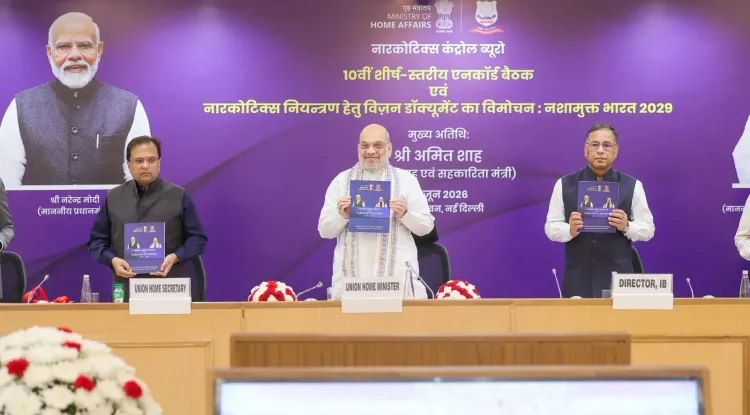
Union Home Minister Amit Shah on 26 June 2026 launched the Vision Document on Narcotics Control at the 10th NCORD Apex Meeting in New Delhi, charting a three-year, technology-driven strategy to detect, disrupt and destroy drug networks threatening Indian youth.
Key Takeaways
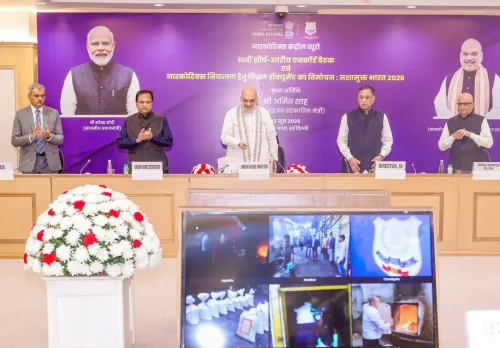
Union Home Minister Amit Shah launched the Vision Document on Narcotics Control at the 10th Apex-Level NCORD Meeting in New Delhi on 26 June 2026 .
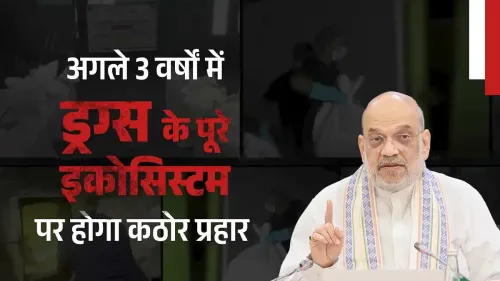
The document sets a three-year roadmap for dismantling drug cartels using an intelligence-led, tech-driven and network-centric approach.
The NCORD mechanism , constituted in 2019 , coordinates narcotics enforcement across central agencies, including the Narcotics Control Bureau , and state police forces.
India's anti-narcotics legal framework was strengthened through NDPS Act amendments in 2014 and 2021 .
The strategy explicitly targets protection of Indian youth from drug cartels operating through the Golden Crescent and Golden Triangle corridors.
Mid-term reviews at future NCORD apex meetings and state-level action plans are expected as the next implementation steps.
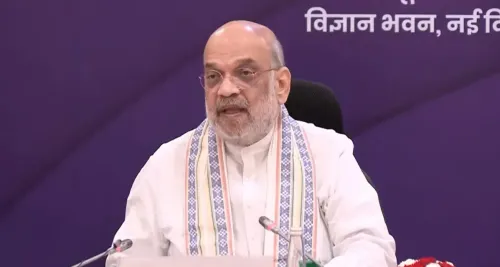
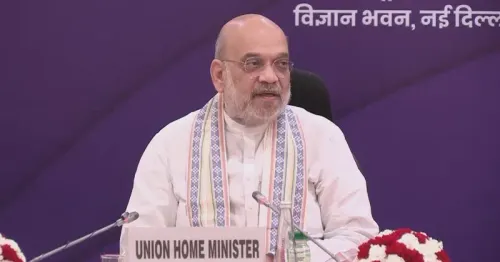
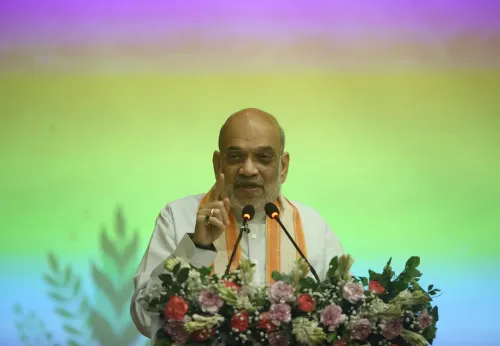
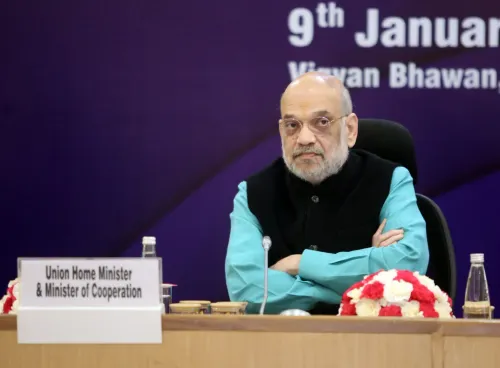
Union Home Minister Amit Shah on Friday, 26 June 2026, launched the Vision Document on Narcotics Control at the 10th Apex-Level Meeting of the NCORD (Narco-Coordination Centre) held in New Delhi, laying out a three-year roadmap to dismantle drug networks threatening India's youth.
Context
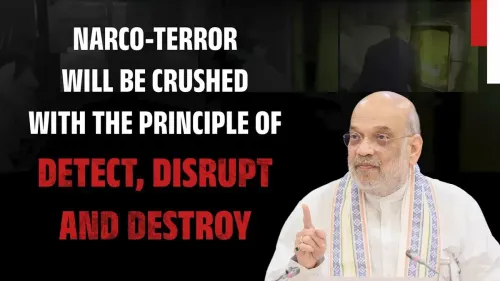
Sharing the development on X, Shah described the document as 'a comprehensive, timebound guideline to achieve Modi Ji's mission against narcotic drugs.' He said the strategy is 'crafted to detect, disrupt and destroy the evil' by deploying a 'modern, intelligence-led, tech-driven and network-centric approach' of India's anti-narcotics apparatus. The explicit goal, in his words, is to 'build an unbreachable bulwark shielding our youth from the claws of the drug cartels.'
The launch coincides with International Day against Drug Abuse and Illicit Trafficking, observed globally on 26 June, lending additional symbolic weight to the announcement.
Policy Backdrop
The NCORD mechanism was formally constituted in 2019 under the Ministry of Home Affairs to institutionalise coordination between central agencies — including the Narcotics Control Bureau (NCB) — and state police forces on drug enforcement. It operates across apex, state, district, and sub-district tiers, making the apex-level meeting the highest forum for setting national anti-narcotics priorities.
India's anti-narcotics legislative framework has been progressively tightened through amendments to the Narcotic Drugs and Psychotropic Substances (NDPS) Act in 2014 and 2021, which strengthened penalties and streamlined procedural provisions against trafficking. A National Action Plan for Drug Demand Reduction, first launched in 2014 and revised periodically, complements enforcement with prevention and rehabilitation measures.
India sits geographically between the Golden Crescent (Afghanistan-Pakistan-Iran) and the Golden Triangle (Myanmar-Laos-Thailand), making it both a transit corridor and a destination market for illicit narcotics. The emphasis in the new Vision Document on intelligence-led, network-centric disruption reflects a strategic shift from reactive seizures to sustained dismantling of supply chains at source.
Stakeholders and Impact
State police forces and border-guarding agencies are expected to be primary implementers of the three-year roadmap, with the NCORD framework providing the coordination spine. The document's technology-driven approach signals greater use of data analytics and inter-agency intelligence sharing to track trafficking networks in real time.
For Indian youth — identified explicitly as the intended beneficiaries of the policy — the roadmap aims to reduce both supply and demand for narcotics. Civil society organisations engaged in drug rehabilitation and awareness programmes are also likely stakeholders in the demand-reduction component of the strategy.
What's Next
With a three-year horizon, the Vision Document sets the stage for mid-term reviews at future NCORD apex meetings, where rollout milestones will be assessed. State governments are expected to align their own action plans with the national roadmap, and budgetary allocations in the 2026-27 cycle may reflect the new priorities. Observers will watch for measurable targets — such as seizure benchmarks, network takedowns, and inter-agency data-sharing protocols — to gauge implementation fidelity.
Point of View
Time-bound Vision Document at the apex NCORD forum marks a deliberate institutionalisation of India's anti-narcotics effort — moving the policy from ad hoc enforcement drives to a structured, reviewable three-year strategy. By anchoring the document to 'Modi Ji's mission,' Shah frames counter-narcotics as a flagship governance priority, not merely a law-enforcement function. The technology and intelligence-led framing also signals intent to close the coordination gaps between central agencies and state police that have historically allowed trafficking networks to exploit jurisdictional seams. How rigorously the three-year milestones are tracked and made public will determine whether this Vision Document translates into measurable outcomes or remains a statement of intent.
NationPress
25 Sept 2026
Frequently Asked Questions
What is the NCORD Vision Document on Narcotics Control?
The Vision Document on Narcotics Control is a comprehensive, time-bound strategic guideline launched by Union Home Minister Amit Shah at the 10th Apex NCORD Meeting on 26 June 2026, outlining a three-year roadmap to detect, disrupt and destroy drug trafficking networks in India using intelligence-led and technology-driven methods.
What is NCORD and when was it set up?
NCORD, or the Narco-Coordination Centre, is an apex multi-agency coordination mechanism under the Ministry of Home Affairs, formally constituted in 2019 to align central agencies such as the Narcotics Control Bureau with state police forces on narcotics enforcement.
What is India's legal framework against drug trafficking?
India's primary law is the Narcotic Drugs and Psychotropic Substances (NDPS) Act, which has been amended in 2014 and 2021 to strengthen penalties and procedural provisions against trafficking and drug abuse.
Why is India particularly vulnerable to drug trafficking?
India sits between the Golden Crescent (Afghanistan-Pakistan-Iran) and the Golden Triangle (Myanmar-Laos-Thailand), the world's two largest illicit opium-producing regions, making it both a transit corridor and a destination market for narcotics.
What happens next after the Vision Document launch?
The three-year roadmap will be reviewed at future NCORD apex meetings, with state governments expected to align their action plans and budgetary allocations in 2026-27 likely to reflect the new national priorities.