Amit Shah chairs 10th NCORD meet, launches Narcotics Vision Document
Synopsis
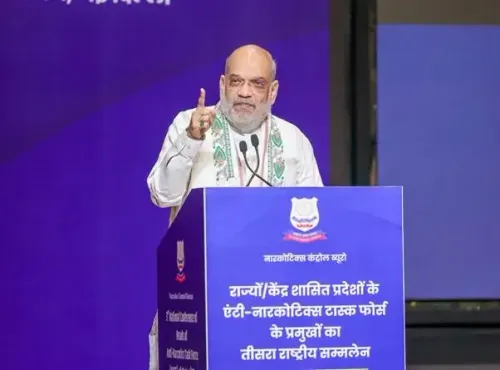
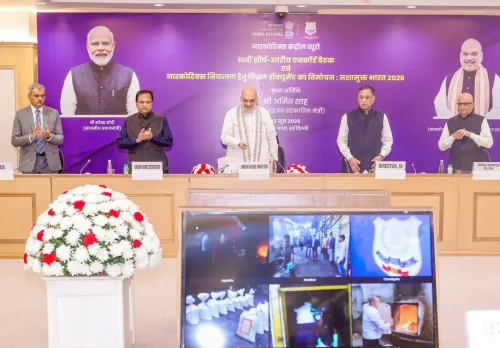
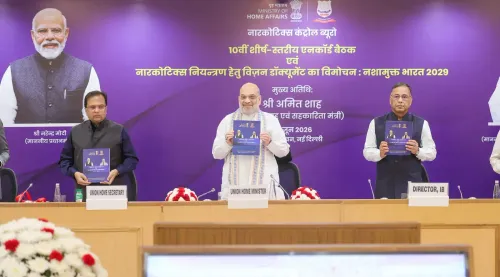
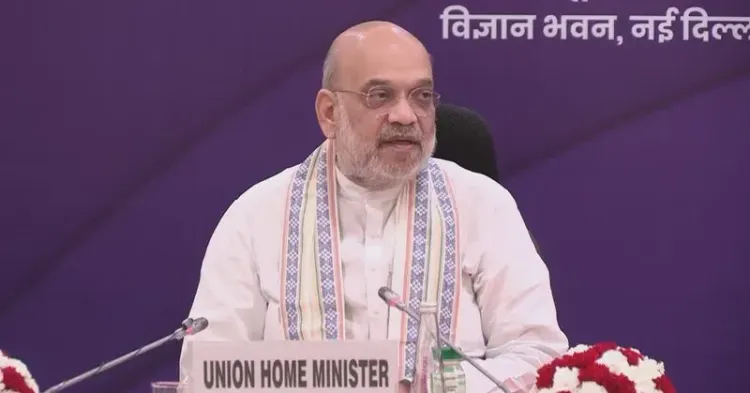
Union Home Minister Amit Shah addressed the 10th Apex-Level NCORD meeting in New Delhi on June 26, 2026, and launched a Vision Document on Narcotics Control, reinforcing the Ministry of Home Affairs' lead role in coordinating India's multi-agency drug enforcement and prevention architecture.
Key Takeaways
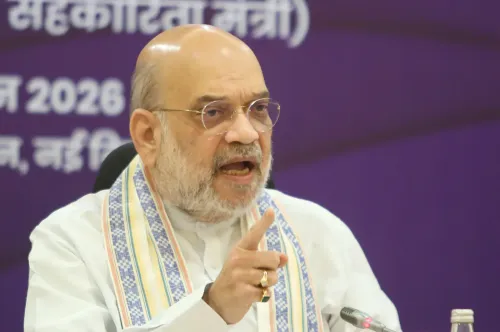
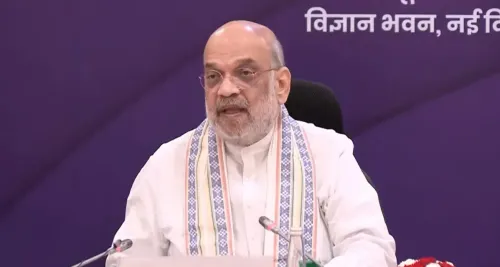
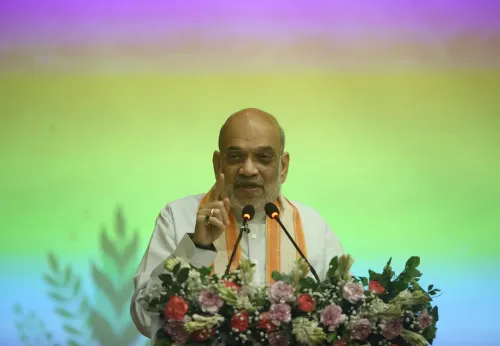
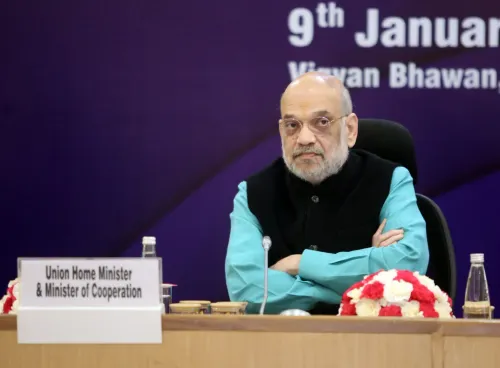
Union Home Minister Amit Shah chaired the 10th Apex-Level Meeting of NCORD in New Delhi on June 26, 2026 .
A Vision Document on Narcotics Control was formally launched at the meeting to guide India's anti-drug strategy.
NCORD is the apex inter-agency coordination body under the Ministry of Home Affairs linking central agencies and state governments.
India's narcotics enforcement framework is anchored by the NDPS Act, 1985 and the Narcotics Control Bureau , established in 1986 .
The Nasha Mukt Bharat Abhiyan , launched in August 2020 , forms part of the broader policy ecosystem the Vision Document builds upon.
State-level adoption of the Vision Document and future NCORD reporting will determine real-world impact on drug trafficking and abuse.
Union Home Minister Amit Shah on Friday, June 26, 2026, addressed the 10th Apex-Level Meeting of the NCORD and launched a Vision Document on Narcotics Control in New Delhi, marking a significant policy push to strengthen India's coordinated response to drug trafficking and abuse.
Context
The National Coordination Centre on Drugs (NCORD) is the apex inter-agency mechanism under the Ministry of Home Affairs that brings together central enforcement agencies and state governments to synchronise narcotics control efforts. The 10th Apex-Level Meeting signals a sustained institutional commitment to this multi-tier coordination framework. Shah's presence underscores the MHA's positioning of narcotics control as a core internal security priority, not merely a public health concern.
The occasion also coincided with International Day Against Drug Abuse and Illicit Trafficking, observed annually on June 26, lending added significance to the policy announcements made at the meeting.
Policy Backdrop
India's narcotics enforcement architecture rests on the Narcotic Drugs and Psychotropic Substances (NDPS) Act, 1985, which was strengthened through amendments in 2014 to enhance penalties and enforcement powers. The Narcotics Control Bureau (NCB), established in 1986, serves as the nodal agency for combating illicit drug trafficking and enforcing the NDPS Act across the country.
In August 2020, the government launched the Nasha Mukt Bharat Abhiyan — a national campaign targeting drug awareness and de-addiction in vulnerable districts — reflecting an integrated approach that combines law enforcement with community outreach. The newly launched Vision Document on Narcotics Control is expected to build on these foundations, though its specific contents were not disclosed in the post.
India's geographic position makes it particularly vulnerable to trafficking routes linked to the Golden Crescent — the Afghanistan-Pakistan-Iran corridor — as well as the growing proliferation of synthetic drugs, both of which have featured prominently in successive NCORD deliberations.
Stakeholders and Impact
State police forces are among the most directly affected stakeholders, as NCORD's apex meetings set coordination priorities that cascade down to state and district-level enforcement machinery. Effective implementation of any vision document depends heavily on states aligning their drug enforcement units with centrally mandated frameworks.
Border communities — particularly in states adjoining Punjab, Rajasthan, Manipur, and coastal zones — face acute exposure to trafficking networks, making the outcomes of this meeting consequential for local law enforcement and social welfare agencies. Youth in high-prevalence districts remain the primary demographic that de-addiction and awareness programmes seek to protect.
What's Next
Attention will now turn to how states adopt and operationalise the Vision Document on Narcotics Control within their existing enforcement and rehabilitation frameworks. Future NCORD meetings will serve as the primary reporting mechanism to assess progress against the benchmarks the document is expected to set.
With synthetic drug threats evolving rapidly and cross-border trafficking networks adapting to enforcement pressure, the structured, multi-level approach signalled at this meeting will be tested by ground-level outcomes in the months ahead.
Point of View
Long-horizon policy framework. This fits a broader pattern under the current administration of using apex coordination bodies — rather than standalone agency action — to align central and state machinery on complex, cross-jurisdictional threats. The document's credibility will ultimately rest on measurable state-level adoption and outcomes reported at future NCORD cycles.
NationPress
24 Sept 2026
Frequently Asked Questions
What is NCORD and what does it do?
NCORD, the National Coordination Centre on Drugs, is the apex inter-agency mechanism under India's Ministry of Home Affairs that coordinates narcotics control efforts between central enforcement agencies and state governments. It holds apex-level meetings to align policy priorities and enforcement strategies across the country.
What is the Vision Document on Narcotics Control launched by Amit Shah?
The Vision Document on Narcotics Control is a policy framework launched by Union Home Minister Amit Shah at the 10th Apex-Level NCORD meeting on June 26, 2026. It is intended to guide India's coordinated response to drug trafficking and abuse, though its specific contents have not been publicly detailed.
What is the Nasha Mukt Bharat Abhiyan?
The Nasha Mukt Bharat Abhiyan is a national campaign launched in August 2020 targeting drug awareness and de-addiction in vulnerable districts across India. It reflects an integrated approach combining law enforcement with community outreach and social welfare.
Why is June 26 significant for India's anti-drug policy?
June 26 is observed globally as the International Day Against Drug Abuse and Illicit Trafficking. India's government has used the date to make significant anti-narcotics policy announcements, including the launch of the Vision Document on Narcotics Control at the 10th NCORD Apex Meeting in 2026.
What is India's main law against drug trafficking?
The Narcotic Drugs and Psychotropic Substances (NDPS) Act, enacted in 1985 and amended in 2014 to enhance penalties, is India's primary legislation governing drug enforcement. The Narcotics Control Bureau, established in 1986, is the nodal agency responsible for enforcing the Act.