Amit Shah chairs 10th NCORD meet, launches Vision Document on Narcotics Control
Synopsis
Home Minister Amit Shah used the 10th NCORD apex meeting to draw a sharp policy line: zero tolerance for drug traffickers, rehabilitation for addicts. Backed by seizure data showing a fourfold jump in value from ₹40,000 crore (2004–14) to ₹1,84,000 crore (2014–26), Shah framed the next three years as India's most critical window in the war on narcotics.
Key Takeaways
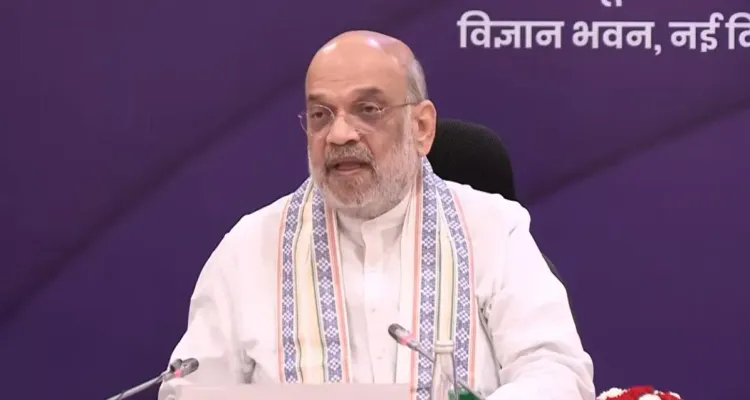
Union Home Minister Amit Shah chaired the 10th NCORD apex-level meeting on 26 June 2025 in New Delhi .
He launched the 'Vision Document on Narcotics Control' to guide India's anti-drug strategy.
Synthetic drug seizures rose from 26 lakh kg (2004–14) to 1 crore 18 lakh kg (2014–26), according to Shah.
Estimated value of seized narcotics increased from ₹40,000 crore to nearly ₹1,84,000 crore over the same periods.
Shah called for zero tolerance against traffickers and a compassionate, rehabilitation-first approach for addicts.
All states directed to upload drug-case data on NCB digital portals in real time for Central monitoring.
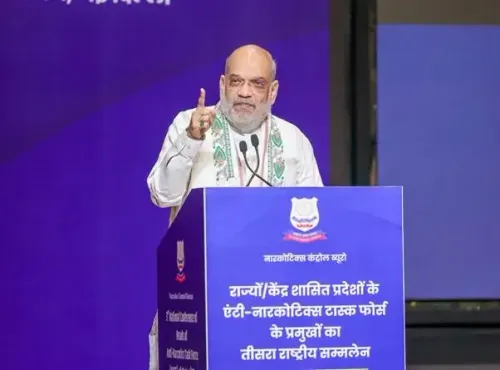
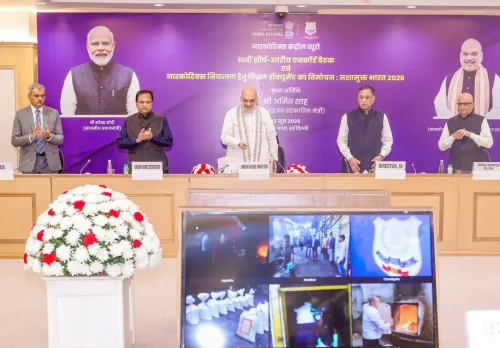
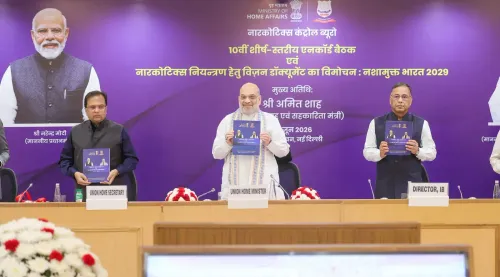
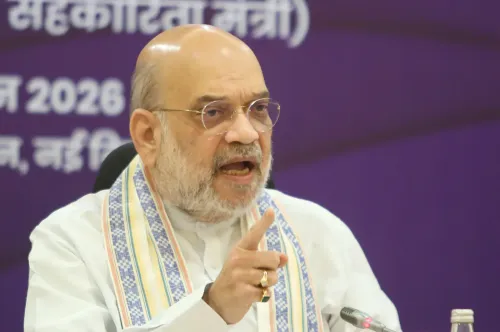
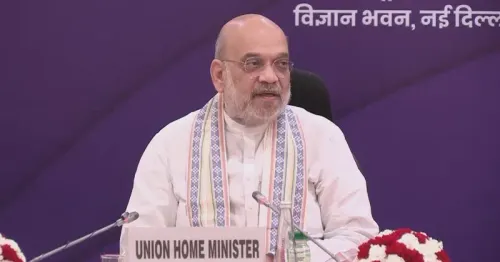
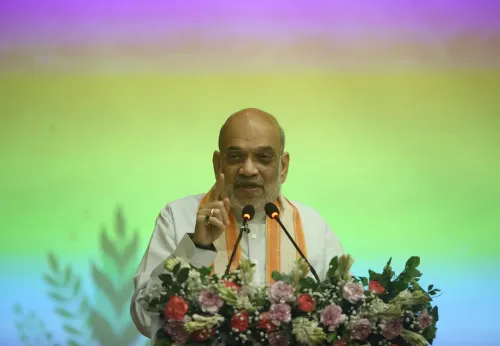
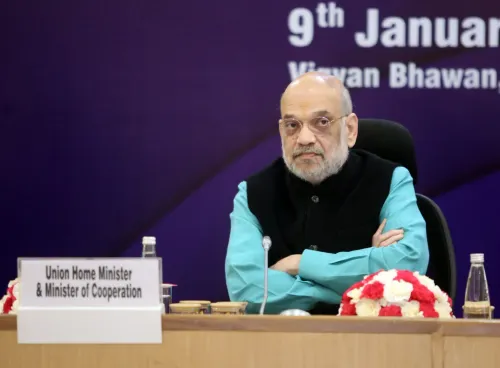
Union Home Minister Amit Shah on Friday, 26 June chaired the 10th apex-level meeting of the Narcotics Coordination (NCORD) in New Delhi, coinciding with the International Day Against Drug Abuse and Illicit Trafficking. At the meeting, Shah launched the 'Vision Document on Narcotics Control', a policy blueprint aimed at shielding India from the deepening threat of narcotics.
Key Developments at the NCORD Meeting
Shah declared that India stands at a critical juncture in its anti-narcotics campaign and that the next three years will be decisive in strengthening the country's counter-drug architecture. He urged Chief Secretaries and Directors General of Police of all states to treat NCORD portal meetings as result-oriented exercises rather than procedural formalities, stressing regular reviews and honest assessment of shortcomings.
The Home Minister also called for real-time information sharing across agencies, noting that the Narcotics Control Bureau (NCB) has built several digital portals for this purpose. He directed all states to upload drug-case details promptly so the Centre can monitor progress and provide timely guidance.
The Government's Policy Stance: Firm on Traffickers, Compassionate on Addicts
Shah articulated a dual-track policy: the government's approach toward those running the illegal drug trade must remain uncompromising, while individuals suffering from addiction deserve a compassionate response focused on treatment, rehabilitation, and reintegration into mainstream society. He assured that even stricter action against drug traffickers would follow in the years ahead.
He also underscored that narcotics is not merely a law-and-order problem but a direct threat to India's future. He called on governments, departments, spiritual leaders, youth, and women to unite on a common platform against drug abuse.
A Decade of Seizures: The Numbers
Shah presented a data-driven case for the campaign's growing effectiveness. Between 2004 and 2014, approximately 26 lakh kilograms of synthetic drugs were seized nationwide, with the estimated value of those seizures placed at around ₹40,000 crore. Between 2014 and 2026, seized quantities surged to 1 crore 18 lakh kilograms, with the estimated value of narcotics seized rising to nearly ₹1,84,000 crore — a more than fourfold increase in both volume and value, according to Shah.
Notably, the comparison period for the earlier figure spans 10 years against 12 years for the latter, a methodological asymmetry that critics may flag when evaluating the headline numbers.
Technology and Modern Strategy at the Centre
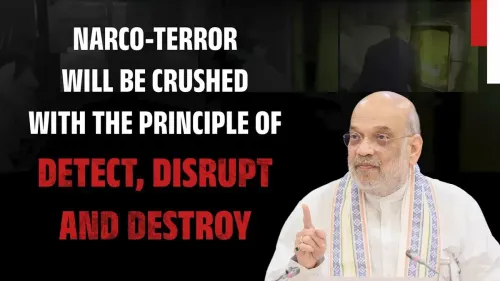
Shah warned that narcotics networks are constantly evolving, with traffickers deploying new techniques to evade law enforcement. He called for a comprehensive, technology-driven, and modern strategy to dismantle these networks entirely, rather than pursuing piecemeal enforcement.
What Comes Next
The Vision Document on Narcotics Control is expected to guide policy priorities across Centre and state agencies in the coming years. With Shah framing the next three years as pivotal, implementation timelines and inter-agency coordination benchmarks will be closely watched by both enforcement bodies and civil society groups working on addiction care.
Point of View
Rehabilitative for users — is a notable rhetorical shift for a Home Ministry traditionally associated with enforcement-first messaging. The seizure statistics are striking, but the comparison conflates a 10-year window (2004–14) with a 12-year one (2014–26), which inflates the contrast. More importantly, volume of seizures is an imperfect proxy for a campaign's success: a larger haul can reflect either better enforcement or a larger drug supply entering the country. The Vision Document's real test will be whether it sets measurable rehabilitation outcomes alongside enforcement targets — something India's anti-narcotics architecture has historically underweighted.
NationPress
25 Sept 2026
Frequently Asked Questions
What is the Vision Document on Narcotics Control launched by Amit Shah?
It is a policy blueprint launched by Union Home Minister Amit Shah on 26 June 2025 at the 10th NCORD apex meeting, designed to guide India's fight against drug abuse and illicit trafficking. The document is intended to coordinate action across Central and state agencies in the years ahead.
What is NCORD and what does it do?
NCORD — the Narcotics Coordination mechanism — is an apex-level inter-agency body that coordinates anti-drug efforts across Central and state governments in India. Its meetings, tracked through a dedicated portal, are meant to align enforcement, intelligence sharing, and rehabilitation policy.
What drug seizure statistics did Amit Shah cite at the NCORD meeting?
Shah stated that synthetic drug seizures rose from approximately 26 lakh kilograms between 2004 and 2014 to 1 crore 18 lakh kilograms between 2014 and 2026. The estimated value of seized narcotics increased from around ₹40,000 crore to nearly ₹1,84,000 crore over the same periods.
What is the government's policy on drug addicts versus drug traffickers?
Shah articulated a two-pronged approach: the government will maintain an uncompromising stance against those involved in the illegal drug trade, while adopting a compassionate, rehabilitation-focused approach toward individuals suffering from addiction, prioritising their treatment and reintegration into society.
Why did Amit Shah mention Bankim Chandra Chattopadhyay at the drug abuse event?
Shah noted that 26 June marks the birth anniversary of Bankim Chandra Chattopadhyay , the celebrated litterateur who composed 'Vande Mataram' . He used the occasion to connect the spirit of national resolve embodied in the composition to the collective effort required to make India drug-free.