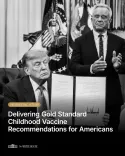
White House Pushes 'Gold Standard' Childhood Vaccine Guidelines
Synopsis
The White House on August 11, 2026 announced a 'Gold Standard' approach to childhood vaccines, pledging to protect children from dangerous diseases while explicitly avoiding over-vaccination — a framing that signals a potential shift in how the U.S. executive branch engages with the long-running debate over the ACIP-recommended immunisation schedule.
Key Takeaways
The White House posted on August 11, 2026 framing its childhood vaccine approach as a 'Gold Standard.' The post explicitly pairs disease protection with a stated commitment to avoid over-vaccination — unusual language for an official executive-branch communication.
Childhood vaccine recommendations in the U.S. are set by the Advisory Committee on Immunization Practices (ACIP) and published by the CDC .
The ACIP schedule has been updated since the 1960s and currently targets diseases including measles, polio, and pertussis .
Any concrete policy change would require an ACIP vote or revised CDC guidance — neither has been confirmed.
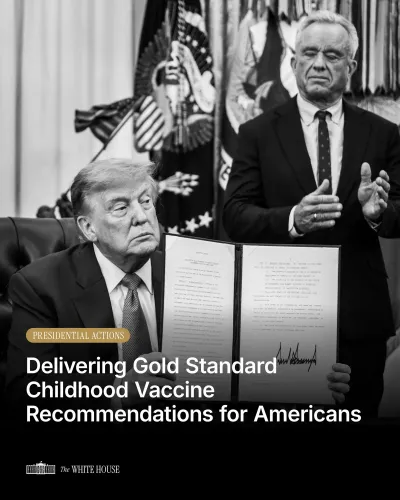
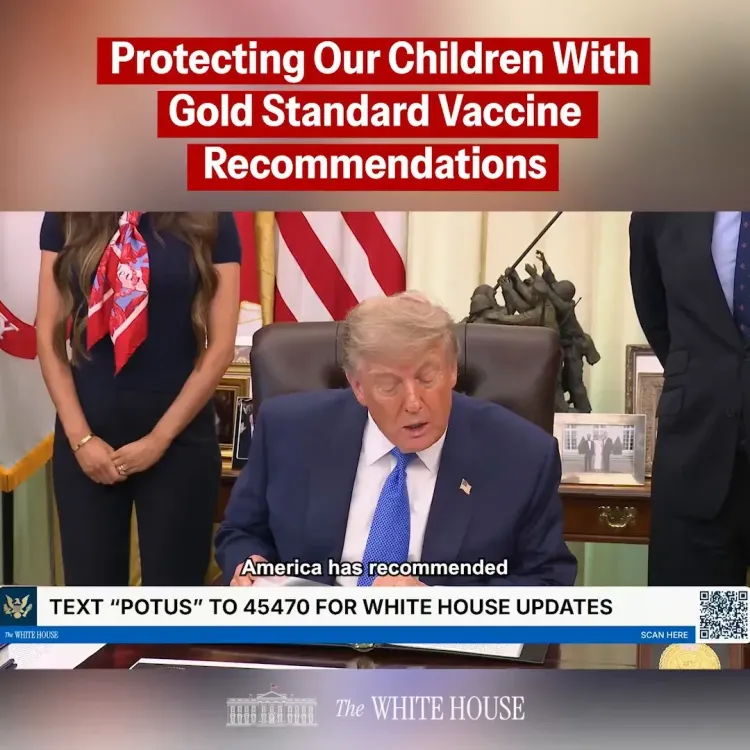
The United States government is drawing a sharp line on children's health policy — protecting kids from the most dangerous diseases while explicitly committing to avoid over-vaccination. The White House posted on X on Tuesday, August 11, 2026, framing its approach to childhood immunisation as a 'Gold Standard' — a signal that the administration is staking out a distinct, high-profile position on one of America's most debated public-health questions.
The post read: 'Protecting our children against the most dangerous and deadly diseases without over-vaccinating them. GOLD STANDARD CHILDHOOD VACCINE RECOMMENDATIONS.'
What 'Gold Standard' Means in the U.S. Vaccine Framework
In the United States, childhood vaccine recommendations have historically been set by the Advisory Committee on Immunization Practices (ACIP) — a federal expert panel that reviews clinical evidence and advises the Centers for Disease Control and Prevention (CDC) on which vaccines children should receive and when. The ACIP has been issuing and periodically updating the childhood immunisation schedule since the 1960s, expanding it as new vaccines received regulatory approval. The schedule has long targeted diseases including measles, polio, and pertussis — illnesses that once killed or disabled tens of thousands of American children annually. Over the decades, the number of recommended doses has grown alongside the number of licensed vaccines, and that expansion has periodically fuelled public debate over timing, total dose counts, and safety monitoring.The 'Over-Vaccination' Debate Enters Official Language
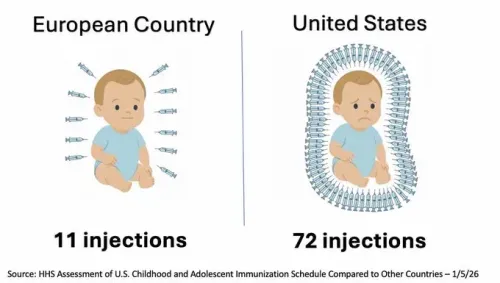
What makes the White House framing notable is the explicit pairing of two ideas that have rarely appeared together in official government communications: robust disease protection and a stated concern about over-vaccination. For years, that concern has circulated primarily among parent advocacy groups and vaccine-hesitant communities — not in executive-branch messaging. By deploying the phrase in an official White House post, the administration is signalling that it intends to engage directly with parental anxieties about the breadth of the childhood schedule, rather than dismiss them. Whether that translates into concrete changes — a revised ACIP vote, a narrowed CDC schedule, or new safety-monitoring requirements — is the question health-policy watchers will now be tracking closely.What Pediatricians and Parents Are Watching Next
Pediatricians and parents across the country represent the two groups most immediately affected by any shift in official guidance. For clinicians, the schedule is a clinical roadmap; any change in recommended timing or dose counts requires rapid adjustment in practice protocols. For parents, the framing may offer reassurance — or raise new questions about which vaccines the administration considers essential versus optional. The key near-term indicator will be whether the ACIP convenes to vote on schedule revisions, and whether the CDC issues updated guidance that operationalises the 'Gold Standard' language. Until then, the current schedule remains in effect. A government that once simply told parents to follow the schedule is now telling them it is actively curating it. How that curation unfolds will define children's health policy for the next generation.Point of View
Where U.S. policy often sets a template debated in domestic health circles, the framing could embolden similar conversations around the Universal Immunisation Programme. The real test is whether the rhetoric produces a measurable change in the ACIP schedule — or remains symbolic positioning.
NationPress
11 Aug 2026
Frequently Asked Questions
What is the White House 'Gold Standard' childhood vaccine recommendation?
The White House used the term 'Gold Standard' on August 11, 2026 to describe its approach to childhood vaccines — one that aims to protect children from dangerous diseases while avoiding what it called over-vaccination. Specific changes to the official CDC or ACIP schedule have not yet been announced.
What is ACIP and how does it set childhood vaccine rules in the US?
The Advisory Committee on Immunization Practices (ACIP) is a federal expert panel that reviews scientific evidence and advises the CDC on which vaccines children should receive and when. Its recommendations form the basis of the official U.S. childhood immunisation schedule.
What does 'over-vaccination' mean and why is it controversial?
'Over-vaccination' refers to concerns that children receive too many vaccine doses, too close together, or for diseases that pose minimal risk. Mainstream medical consensus holds that the current ACIP schedule is safe and necessary; the term has historically been associated with vaccine-hesitant communities rather than official government policy.
Will the US childhood vaccine schedule change after this White House post?
No change to the official schedule has been confirmed. Any revision would require a formal ACIP vote and updated CDC guidance. Health-policy watchers are monitoring for forthcoming ACIP meetings that might address dose counts or timing.
How does US vaccine policy affect India?
India runs its own Universal Immunisation Programme (UIP) governed by domestic health authorities. However, shifts in U.S. public-health framing often influence global debate and can shape conversations among Indian parents and policymakers about vaccine schedules and safety.