Trump Overhauls US Childhood Vaccine Schedule, Cites Peer Nations
Synopsis
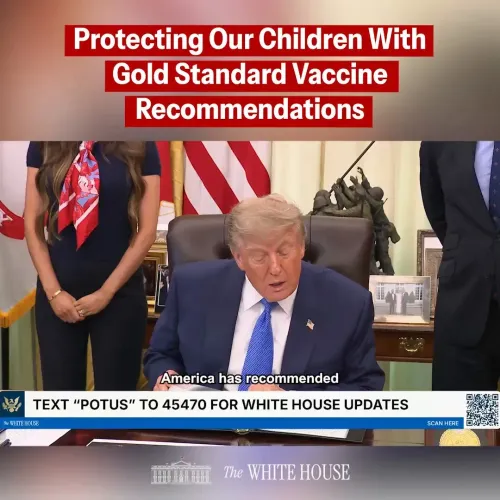
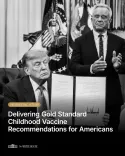
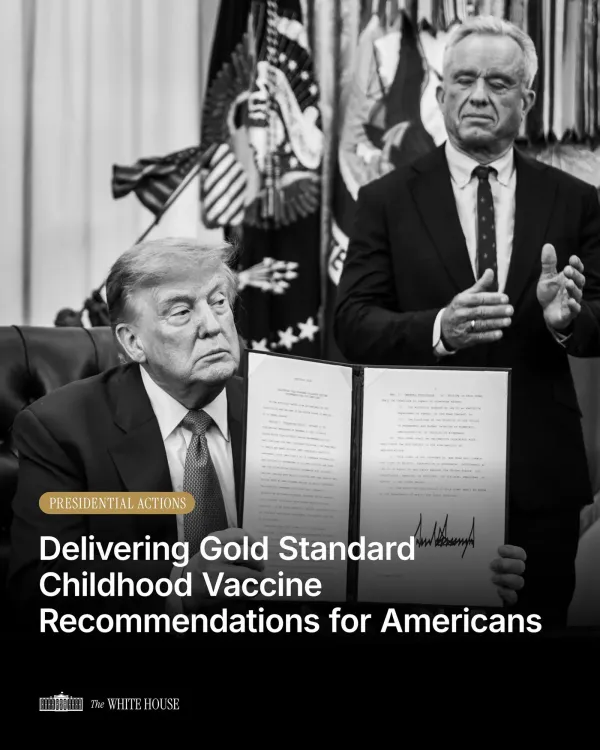
President Trump has formally recognised new 'Gold Standard Childhood Vaccine Recommendations,' the White House announced on August 10, 2026, citing alignment with peer developed nations and expanded parental choice — a significant shift from the longstanding CDC-guided US childhood immunisation schedule.
Key Takeaways
The White House announced on August 10, 2026 that President Trump has recognised new 'Gold Standard Childhood Vaccine Recommendations.' The move is framed as aligning the US childhood immunisation schedule with peer, developed nations — which historically recommend fewer vaccines than the US.
The policy explicitly emphasises 'maximising parental choice' alongside scientific alignment.
The US childhood vaccine schedule is traditionally set by the CDC's Advisory Committee on Immunization Practices (ACIP) .
Specific vaccines affected, implementation timelines, and agency directives have not yet been detailed.
The United States has long recommended more childhood vaccines than any comparable developed nation — until now. The White House announced on Monday, August 10, 2026, that President Donald Trump has formally recognised what it calls the 'Gold Standard Childhood Vaccine Recommendations,' a move framed as aligning America's immunisation schedule with science and the practices of peer, developed nations.
What the 'Gold Standard' Shift Actually Means
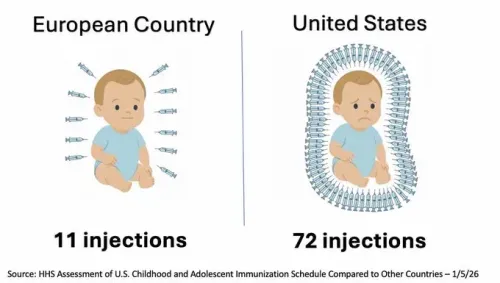
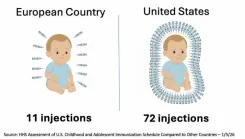
The White House post states the new framework will 'maximise parental choice' and bring US childhood immunisation policy in line with peer countries. For decades, the US schedule — set by the CDC's Advisory Committee on Immunization Practices (ACIP) — has been among the most comprehensive in the world, recommending a higher number of vaccines before age two than most European or comparable developed nations. The administration's framing positions that breadth not as a strength, but as an outlier worth correcting.
The phrase 'Gold Standard Childhood Vaccine Recommendations' signals a formal policy designation, though the specific vaccines affected, the agencies involved in implementation, and the timeline for any schedule changes have not been detailed in the announcement.
Parental Choice as a Policy Lever
Central to the White House's framing is the concept of parental choice — a phrase that has carried significant weight in American public health debates for years. Vaccine hesitancy, exemption laws, and debates over mandates have been fault lines in US health policy well before this announcement. By explicitly naming parental choice alongside scientific alignment, the administration is threading a needle between public health infrastructure and a constituency that has long pushed back against what it sees as an overloaded schedule.
Public health agencies, paediatricians, and immunisation advocates have historically argued that the US schedule is calibrated to the specific disease burden, healthcare access patterns, and epidemiological risks of the American population — factors that do not map cleanly onto European comparisons.
A Federal Health Landscape Already in Motion
This announcement does not arrive in a vacuum. The broader federal health apparatus under the Trump administration has been under active scrutiny over its approach to vaccine policy, agency staffing, and the role of advisory committees. Any revision to the childhood immunisation schedule would require coordination with — or direction to — the CDC and its advisory bodies, whose recommendations carry the force of clinical guidance even when not legally mandated.
Watch for follow-on announcements from federal health agencies specifying which vaccines, which age groups, and which institutional mechanisms are affected. The gap between a White House declaration and a revised ACIP schedule is where the real policy fight will play out.
Point of View
The White House is signalling both a technocratic and a populist rationale, appealing to vaccine-sceptic constituencies while maintaining the language of scientific legitimacy. The critical question is whether this remains a declaration or translates into a formal revision of ACIP guidance — because the distance between those two things is enormous. For India and other nations that model public health frameworks partly on US standards, any structural shift in American immunisation policy carries quiet but real downstream significance.
NationPress
11 Aug 2026
Frequently Asked Questions
What are the Trump Gold Standard Childhood Vaccine Recommendations?
The 'Gold Standard Childhood Vaccine Recommendations' is a designation announced by the White House on August 10, 2026, under President Trump, aimed at aligning the US childhood immunisation schedule with peer developed nations and expanding parental choice. Specific details on which vaccines are affected have not yet been released.
Does the US recommend more vaccines than other countries?
Historically, yes. The US childhood vaccine schedule, set by the CDC's Advisory Committee on Immunization Practices, has recommended a higher number of vaccines before age two compared to most European and other developed nations. The Trump administration cited this gap as a reason for the new policy.
Who sets the US childhood vaccine schedule?
The US childhood immunisation schedule is set by the CDC's Advisory Committee on Immunization Practices (ACIP), an expert panel whose recommendations guide clinical practice across the country.
What does parental choice mean in vaccine policy?
In the context of US vaccine policy, 'parental choice' refers to giving parents greater autonomy over which vaccines their children receive, as opposed to following a standardised recommended schedule. It has been a key demand of vaccine-hesitant communities and is now formally embedded in the White House's framing of this policy.
Will the new Trump vaccine policy change what vaccines children must get?
The White House announcement signals a policy direction, but formal changes to the US childhood immunisation schedule would require action by federal health agencies, including the CDC. No specific vaccines or mandatory changes have been announced yet.