Trump's Working Families Tax Cuts Near One-Year Mark
Synopsis
The White House on July 2, 2026, marked nearly one year of President Trump's Working Families Tax Cuts, highlighting record tax refunds, the Child Tax Credit, Trump Accounts, and new exemptions on overtime and tipped income as key wins for American households.
Key Takeaways
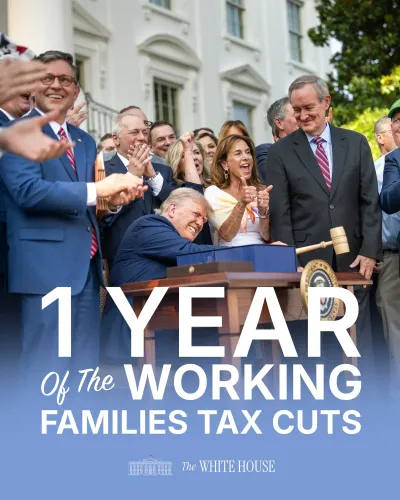
The White House on July 2, 2026 , promoted the near-one-year anniversary of President Donald J.
Trump 's Working Families Tax Cuts.
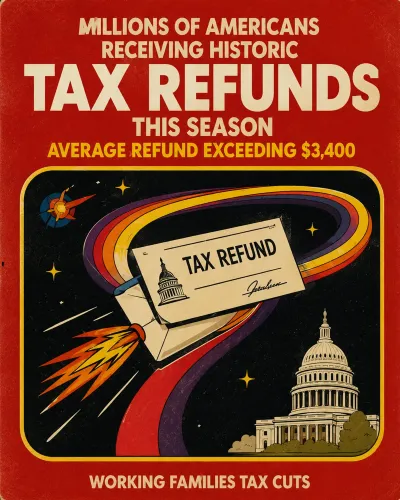
The administration claims the legislation has produced the 'Largest Tax Refunds in History' for American filers.
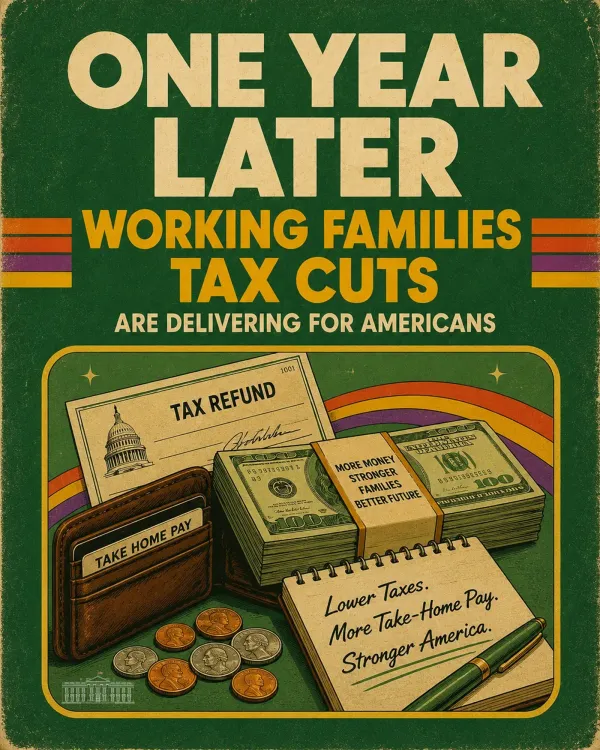
Key provisions include the Child Tax Credit , Trump Accounts , no federal tax on overtime pay, and no federal tax on tips.
The package extends the framework of the Tax Cuts and Jobs Act signed in December 2017 , which had doubled the Child Tax Credit to $2,000 per child .
Final IRS refund statistics for the 2026 filing season are awaited and will be a key test of the administration's claims.
Tipped workers and overtime earners — large constituencies in hospitality, healthcare, and manufacturing — are among the primary intended beneficiaries.
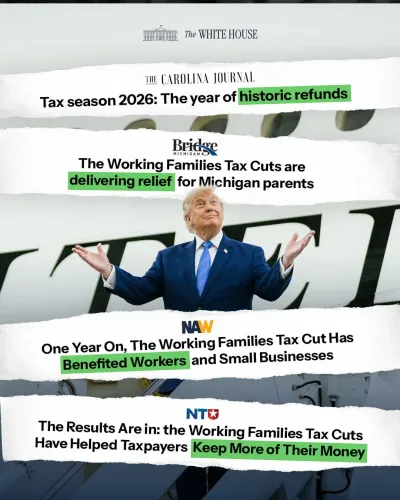
The White House on Thursday, July 2, 2026, marked nearly one year since the signing of President Donald J. Trump's Working Families Tax Cuts, stating the legislation is 'delivering BIG for Americans' across a range of household relief measures.
Context
The official White House account highlighted five pillars of the tax package: 'Largest Tax Refunds in History,' Trump Accounts, the Child Tax Credit, no tax on overtime pay, and no tax on tips. The post comes as the 2026 filing season draws toward its close and the administration seeks to consolidate its economic messaging ahead of the legislative calendar.
The White House did not release specific figures alongside the post, but framed the overall package as a historic win for working families, overtime workers, and tipped employees — three constituencies the administration has consistently targeted in its economic outreach.
Policy Backdrop
The Working Families Tax Cuts build on the foundation of the Tax Cuts and Jobs Act (TCJA), signed into law in December 2017 — the most sweeping overhaul of the federal tax code in more than three decades. That earlier legislation doubled the Child Tax Credit to $2,000 per child and lowered individual and corporate marginal rates across the board.
The newer package appears to extend and deepen that framework, adding targeted relief for tipped workers and those earning overtime — two categories of income that had previously been fully subject to federal income tax. The inclusion of 'Trump Accounts' points to a savings or investment vehicle introduced as part of this round of legislation, though final implementation details are subject to IRS and Treasury rulemaking.
Republican administrations have repeatedly anchored their economic identity around reducing marginal tax rates and expanding household credits. The current messaging fits squarely within that tradition, while attempting to broaden the coalition to include service-sector workers and hourly employees who may not have seen direct benefit from the corporate rate cuts of 2017.
Stakeholders and Impact
Working families with children stand to benefit most visibly through the enhanced Child Tax Credit, which reduces tax liability for parents filing with dependent minors. Tipped workers — a large cohort in hospitality, food service, and personal care — would see a meaningful reduction in their effective tax burden if the 'no tax on tips' provision is fully implemented and sustained.
Overtime workers in manufacturing, logistics, healthcare, and retail represent another significant bloc. Exempting overtime pay from federal income tax increases take-home pay without requiring employers to raise base wages, a politically attractive design for both labour and business constituencies. The administration's framing of 'largest tax refunds in history' suggests that IRS data for the current filing season is expected to support the claim, though official statistics have not yet been published.
What's Next
The IRS is expected to release final aggregate refund statistics for the 2026 filing season in the coming weeks, which will either substantiate or complicate the White House's 'largest refunds in history' claim. Congressional attention will also turn to which provisions of the original 2017 TCJA are set to expire and whether the current package includes permanent extensions.
For Indian observers and the Indian-American diaspora — a community heavily represented in technology, medicine, and small business — the no-tax-on-overtime and Child Tax Credit provisions carry direct financial relevance. Any major shift in US household disposable income also carries downstream implications for remittance flows and consumer spending patterns that touch global markets, including India.
Point of View
Cross-sectoral electoral coalition — linking the traditional Republican base of business owners and high earners to service-sector workers through the tips and overtime exemptions. The framing of 'largest tax refunds in history' is a high-stakes claim that places the administration's credibility squarely on forthcoming IRS data. Historically, tax-cut anniversaries are used to pre-empt opposition narratives and build momentum for extending expiring provisions — a legislative battle that is likely imminent given the TCJA's sunset clauses. The inclusion of 'Trump Accounts' as a named savings vehicle signals an effort to embed the president's brand identity into the financial infrastructure of American households, a strategy with long-term political resonance beyond any single filing season.
NationPress
1 Oct 2026
Frequently Asked Questions
What are Trump's Working Families Tax Cuts?
Trump's Working Families Tax Cuts is a legislative package signed approximately one year before July 2026 that includes an enhanced Child Tax Credit, new Trump Accounts savings vehicles, and exemptions from federal income tax on overtime pay and tipped income, building on the 2017 Tax Cuts and Jobs Act framework.
What is the Child Tax Credit under Trump's tax plan?
The Child Tax Credit is a federal tax benefit for parents with dependent children. Under the 2017 Tax Cuts and Jobs Act, it was doubled to $2,000 per child; the Working Families Tax Cuts package maintains and potentially expands this benefit.
Is overtime pay really tax-free in the US now?
The White House has stated that 'no tax on overtime' is a provision of the Working Families Tax Cuts signed in 2025-2026. Full implementation details depend on IRS and Treasury rulemaking, and final rules have not been publicly confirmed in official IRS guidance as of the date of this post.
What are Trump Accounts?
'Trump Accounts' is the name given to a new savings or investment vehicle introduced as part of the Working Families Tax Cuts package. Specific eligibility criteria and contribution limits are subject to regulatory guidance from the IRS and Treasury Department.
How does the US tax cut affect India or Indian-Americans?
Indian-Americans working in sectors such as technology, healthcare, and hospitality could benefit directly from the overtime and tips exemptions and the Child Tax Credit. Broader increases in US household disposable income can also influence remittance flows and global consumer spending patterns relevant to India.