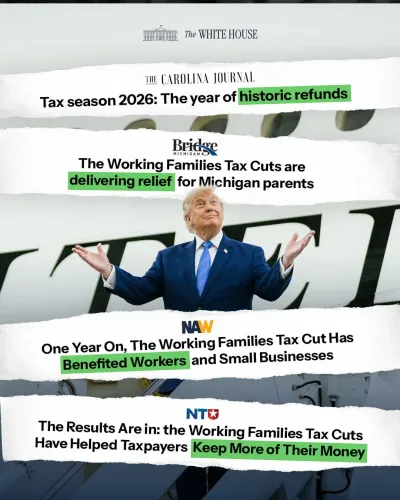
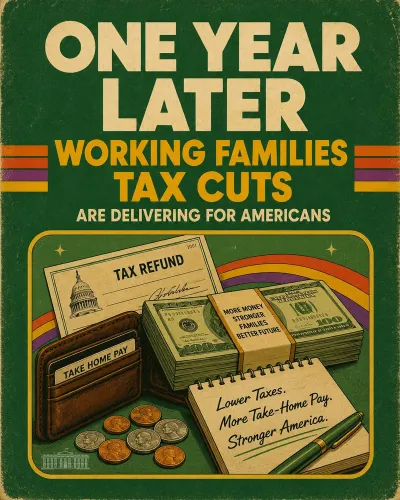
Trump tax cuts one year on: $82bn relief, record $3,400 refunds, White House claims
Synopsis
More than a year after the Working Families Tax Cuts became law, the White House is claiming its biggest vindication yet — $82 billion in relief, a record $3,400 average refund, and 29 million workers paying zero tax on overtime. But with Democrats framing the same legislation as a deficit-widening gift to the wealthy, the numbers war is just getting started ahead of the 2026 midterms.
Key Takeaways
The White House on 23 July said the Working Families Tax Cuts delivered $82 billion in direct tax relief to American families and workers.
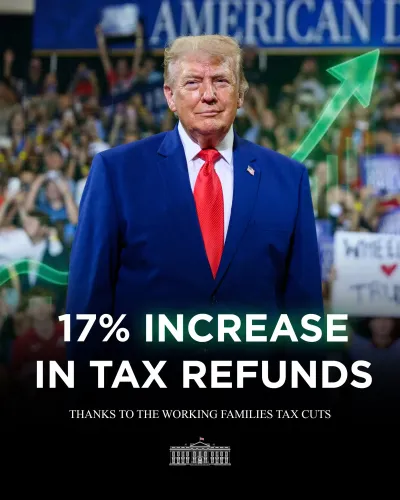
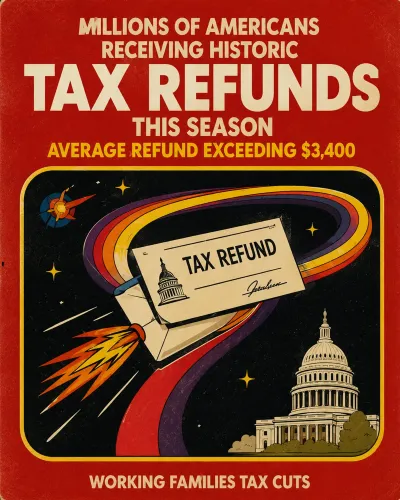
The average tax refund this filing season hit $3,400 — an 11 per cent rise over the prior year, which the administration called a historic high.
97 per cent of tax filers benefited from lower taxes, according to White House figures.
More than 29 million workers claimed no tax on overtime; 35 million seniors paid no tax on Social Security benefits; nearly 8 million workers claimed no tax on tips.
The White House argued Democratic opposition would have triggered a $4 trillion tax increase affecting 90 per cent of Americans.
Critics contend the cuts disproportionately benefit higher earners and add to federal deficits.
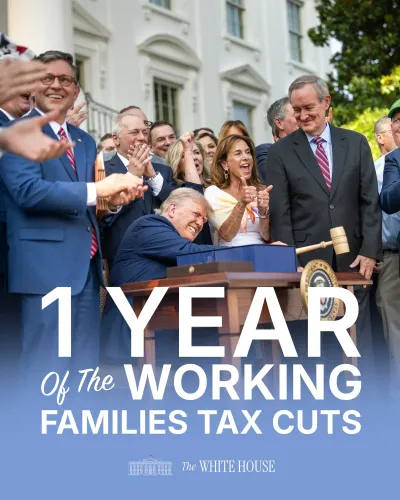
The White House on Thursday, 23 July defended President Donald Trump's Working Families Tax Cuts as a proven growth engine, citing $82 billion in direct tax relief, record refunds averaging $3,400, and a wave of domestic manufacturing expansions — more than a year after the legislation was signed into law.
Key Claims from the Briefing
Press Secretary Karoline Leavitt, speaking at the daily White House briefing, described the legislation as 'a key pillar of Trump's economic agenda.' She said the latest tax filing season produced what the administration called 'the biggest tax refund season in American history,' with the average refund rising 11 per cent over the previous year to $3,400. According to the White House, 97 per cent of tax filers benefited from lower taxes under the law.
Leavitt also highlighted specific worker-focused provisions. She said more than 29 million workers claimed no tax on overtime pay, more than 35 million senior citizens paid no tax on Social Security benefits, and nearly 8 million workers claimed no tax on tips.
Manufacturing Expansion Cited as Evidence
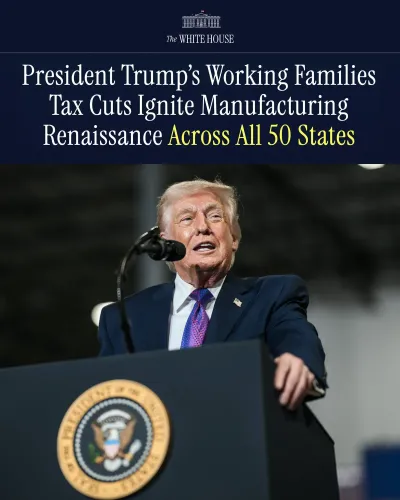
The administration pointed to a report released this week by the National Association of Manufacturers, which it said showed the tax cuts were supporting 'investment, job creation, innovation and long-term growth in all 50 states.' Several companies were cited as examples.
Pivot Manufacturing in Arizona reportedly made 'the largest equipment purchase in company history' following the legislation. Winton Machine Company in Georgia is described as being 'on pace for the best year in its history,' while Catchy Ink in North Carolina purchased new machinery and expanded its workforce by 25 per cent. Jergens in Ohio expanded a production facility and raised employee pay, the White House said, crediting the no-tax-on-overtime provision.
Political Fault Lines
Leavitt used the briefing to sharpen the administration's contrast with congressional Democrats, who voted against the legislation. 'When they had the chance to vote for the largest middle-class tax cuts in history, they refused,' she said. The White House argued that Democratic opposition would have amounted to 'the largest tax increase in history' — a projected $4 trillion rise that, it claimed, would have increased taxes for 90 per cent of Americans.
Democrats have broadly contested these characterisations. Critics argue that large-scale tax reductions disproportionately benefit higher-income earners and contribute to widening federal deficits — a structural concern that the administration has not directly addressed in its public statements.
The Broader Economic Argument
The White House framed permanent business tax incentives as the mechanism drawing investment back onshore. 'A business opening or expanding in this country means more opportunity and higher wages for American workers,' Leavitt said, adding that domestic manufacturing growth restores 'the belief that we can make and build things right here at home.' This comes amid a broader administration push to reshore supply chains and reduce dependence on foreign manufacturing — a theme that has defined Trump's second term economic messaging.
Whether the growth figures cited reflect the direct impact of the tax cuts or broader macroeconomic conditions remains a point of contention between the administration and independent economists. The debate is likely to intensify as the legislation approaches its second anniversary and becomes a central plank of the 2026 midterm campaign narrative.
Point of View
But they tell us nothing about distributional impact: who got the largest share of that relief matters as much as the aggregate. The administration's reliance on company-level anecdotes — one Arizona firm's equipment purchase, one North Carolina printer's headcount — is a classic substitution of vivid narrative for systemic evidence. Independent economists will need to disaggregate the manufacturing uptick from broader post-pandemic investment cycles before the causal claim holds. The $4 trillion 'tax increase' framing for the Democratic alternative is a projection, not a fact, and deserves that label.
NationPress
22 Oct 2026
Frequently Asked Questions
What are the Trump Working Families Tax Cuts?
The Working Families Tax Cuts is a tax legislation signed by President Donald Trump that includes provisions such as no tax on overtime pay, no tax on Social Security benefits for seniors, and no tax on tips for eligible workers. The White House says the law has been in effect for more than a year and has delivered $82 billion in direct relief to American families and workers.
What was the average tax refund under the new law?
According to the White House, the average tax refund this filing season exceeded $3,400, representing an 11 per cent increase over the previous year. The administration described it as the largest tax refund season in American history.
How many workers benefited from the no-tax-on-overtime provision?
The White House said more than 29 million workers claimed no tax on overtime pay under the legislation. Additionally, more than 35 million senior citizens paid no tax on Social Security benefits, and nearly 8 million workers claimed no tax on tips.
Why do Democrats oppose the Working Families Tax Cuts?
Congressional Democrats voted against the legislation, and critics broadly argue that large tax reductions of this kind disproportionately benefit higher-income earners while increasing federal deficits. The White House, in turn, claimed that Democratic opposition would have resulted in the largest tax increase in history, amounting to $4 trillion and affecting 90 per cent of Americans — a figure Democrats contest.
Which companies has the White House cited as benefiting from the tax cuts?
The administration highlighted Pivot Manufacturing in Arizona, Winton Machine Company in Georgia, Catchy Ink in North Carolina, and Jergens in Ohio as examples of businesses that have expanded operations, purchased new equipment, or raised wages following the legislation. These examples were drawn from a National Association of Manufacturers report released this week.