Did the CDC Just Revise Childhood Immunization Schedule to Reduce Vaccines?
Synopsis
The CDC has adopted a revised childhood immunization schedule, significantly cutting the number of recommended vaccines for children. This controversial change has sparked debates among health officials and political leaders. While the Trump administration touts this as a major public health improvement, critics warn it may undermine child safety.
Key Takeaways
The CDC revised the childhood immunization schedule.
Fewer vaccines are now recommended for children.
The changes aim to align U.S. practices with other developed nations.
Some health officials support the revisions, while others raise concerns.
Insurance will continue to cover all currently recommended vaccines.
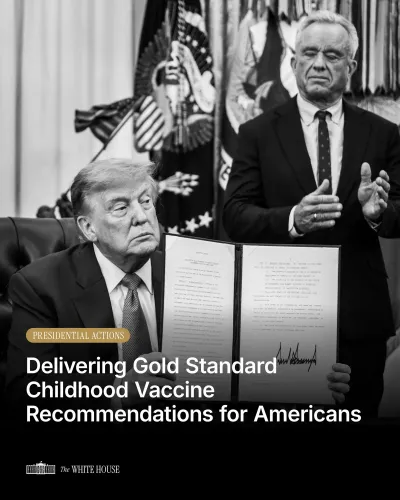
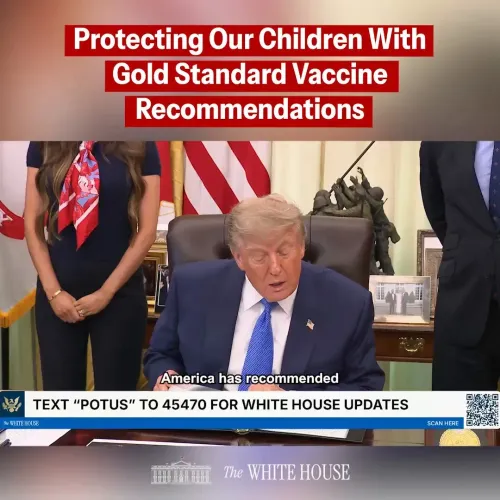
Washington, Jan 6 (NationPress) The Centers for Disease Control and Prevention has officially adopted a revised childhood immunization schedule in the United States, which now suggests fewer vaccines for children. This decision follows a federal examination that compared American vaccination practices to those in other developed countries. President Donald Trump hailed this as a significant transformation of public health policy.
The formalization of this change was made through a memorandum signed by Acting CDC Director Jim O’Neill. He stated, “The data supports a more concentrated schedule that safeguards children against the most severe infectious diseases while enhancing clarity, adherence, and public trust.”
Earlier on Monday, Trump revealed the updated schedule on Truth Social.
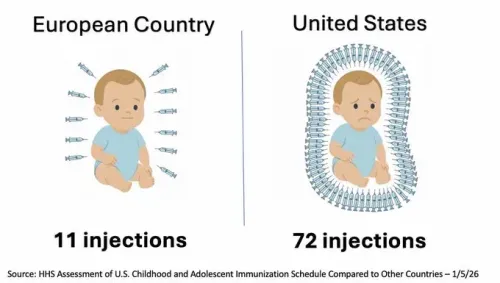
“Today, the Trump Administration is thrilled to present the United States of America’s revised Childhood Vaccination Schedule,” Trump stated. “Starting today, America will no longer mandate 72 vaccines for our beautiful, healthy children.”
He noted that children will now receive vaccinations for “11 of the most serious and perilous diseases,” describing the new framework as “a much more rational Schedule.”
“This Schedule is grounded in the Gold Standard of Science and is widely supported by Scientists and Experts globally,” Trump commented, adding that it “finally aligns the United States with other developed nations.”
The updated framework will see the CDC maintain three categories for childhood immunizations: vaccines recommended for all children, those suggested for specific high-risk groups, and vaccines given based on shared clinical decision-making between physicians and families.
Vaccines recommended for all children will comprise those for measles, mumps, rubella, polio, pertussis, tetanus, diphtheria, Haemophilus influenzae type B, pneumococcal disease, human papillomavirus, and varicella (chickenpox).
“All vaccines currently recommended by the CDC will continue to be covered by insurance without cost sharing,” stated Centers for Medicare and Medicaid Services Administrator Dr. Mehmet Oz. “No family will lose access to these vaccines.”
Health and Human Services Secretary Robert F. Kennedy Jr. indicated that the review was initiated due to international comparisons and decreasing public confidence.
“President Trump instructed us to analyze how other developed nations protect their children and to take action if they are performing better,” Kennedy explained. “Following an extensive review of the data, we are aligning the U.S. childhood vaccine schedule with global consensus while enhancing transparency and informed consent.”
This decision has faced intense backlash from Democratic lawmakers.
Senate Finance Committee Ranking Member Ron Wyden criticized, “Robert Kennedy is determined to continue his anti-vaccine crusade, affecting the health of Americans and jeopardizing children and other vulnerable populations.”
“The U.S. is currently experiencing the highest measles rates in the 21st century,” Wyden added. “With Trump’s endorsement, Robert Kennedy is steering the country toward a tragic outcome where more children succumb to preventable diseases.”
Senator Kirsten Gillibrand remarked that the revised schedule eliminates vital protections. “Once again, the Trump administration prioritizes pseudoscience and extremism over the health and safety of our children,” Gillibrand stated. “This decision will put our children at risk and worsen the health situation in America.”
Congressman Kim Schrier, a pediatrician, expressed his outrage, stating, “As a pediatrician, I am appalled by RFK Jr.’s reckless and dangerous decision to implement sweeping changes to our nation’s childhood immunization schedule.”
“This decision disregards decades of comprehensive research in favor of medical conspiracy theories,” Schrier added, warning that it could “result in more children falling ill, being hospitalized, suffering, and potentially dying.”
CDC documents indicated that the review analyzed immunization practices in 20 peer developed nations, revealing that the U.S. recommends more routine childhood vaccine doses than any of them, without achieving higher vaccination rates.
“Public health is effective only when it is trusted,” noted Food and Drug Commissioner Dr. Marty Makary. “That trust relies on transparency, rigorous science, and respect for families.”
“This reckless action by the Trump administration has nothing to do with science or informed choice – it’s merely a move to satisfy a discredited anti-vaccine agenda championed by RFK Jr. and his associates,” remarked California Governor Gavin Newsom.
In the United States, childhood immunization schedules are established by federal health agencies, while states maintain authority over school vaccination mandates. Vaccines for diseases such as measles, polio, and whooping cough have historically been credited by health authorities with decreasing childhood illness and mortality.
Point of View
It is vital to acknowledge the differing perspectives surrounding the CDC's revised childhood vaccination schedule. While the Trump administration presents this update as a necessary alignment with global practices, the backlash from health professionals emphasizes the importance of maintaining rigorous immunization standards to safeguard public health. We will continue to report on this evolving story as it impacts families nationwide.
NationPress
2 Oct 2026
Frequently Asked Questions
What changes were made to the childhood immunization schedule?
The CDC has revised the immunization schedule, reducing the number of vaccines recommended for children and focusing on 11 of the most serious diseases.
Why was the immunization schedule revised?
The revision followed a federal review comparing U.S. vaccination practices with those of other developed nations, aiming to improve clarity and public trust.
What vaccines are still recommended for children?
Vaccines for measles, mumps, rubella, polio, pertussis, tetanus, diphtheria, Haemophilus influenzae type B, pneumococcal disease, human papillomavirus, and varicella will still be recommended.
How will this change affect vaccine coverage?
All vaccines currently recommended by the CDC will remain covered by insurance without cost-sharing, ensuring families maintain access.
What has been the response to this change?
The decision has received criticism from Democratic lawmakers and health officials who express concerns regarding child safety and public health.