Does the WHO Disagree with CDC on Vaccines and Autism?
Synopsis
In a recent development, the WHO has decisively countered CDC's claims that vaccines may be linked to autism. This article dives deep into the findings of the WHO’s Global Advisory Committee, shedding light on the importance of vaccines for childhood health.
Key Takeaways
The WHO confirms no link between vaccines and autism.
CDC's recent claims are challenged by WHO findings.
Childhood vaccines have saved over 154 million lives.
Evidence supports the safety of vaccines with aluminium adjuvants.
Ongoing immunization efforts are essential for public health.
New Delhi, Dec 11 (NationPress) The World Health Organization (WHO) has firmly stated that there is no correlation between vaccines and autism, directly challenging recent assertions made by the US Centers for Disease Control and Prevention (CDC).
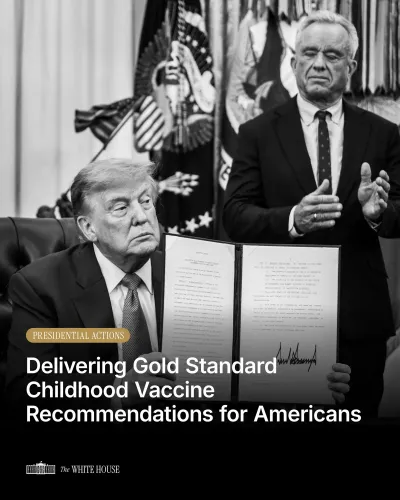
After the CDC altered its previous position under President Donald Trump last month, implying that the longstanding consensus on vaccines not causing autism is not “evidence-based,” the WHO conducted a comprehensive analysis.
According to a WHO statement, “The WHO global expert committee on vaccine safety has determined that, based on existing evidence, no causal relationship exists between vaccines and autism spectrum disorders (ASD). This conclusion reinforces the WHO's stance that childhood vaccines do not lead to autism.”
The CDC remarked, “studies have not definitively ruled out the potential that infant vaccines could trigger autism,” suggesting that “evidence supporting a link has been overlooked by health officials.”
In response, the WHO’s Global Advisory Committee on Vaccine Safety (GACVS), created in 1999, reviewed data from 31 primary research studies published between January 2010 and August 2025.
The experts examined the connection between thiomersal-containing vaccines and ASD, as well as the general relationship between vaccines and ASD.
The WHO indicated that “data from numerous nations strongly supports the favorable safety profile of vaccines administered during childhood and pregnancy, confirming the lack of a causal link with ASD.”
The Committee also evaluated potential health risks related to vaccines containing aluminium adjuvants, analyzing studies from 1999 through March 2023.
Additionally, it considered a recent large-scale cohort study examining national registry data of children born in Denmark from 1997 to 2018.
“High-quality evidence indicates no link between trace amounts of aluminium in certain vaccines and ASD, thus supporting the continued use of vaccines with aluminium adjuvants,” stated the UN health body.
“Following its review, GACVS reaffirms its earlier conclusions from 2002, 2004, and 2012: vaccines, including those with thiomersal and/or aluminium, do not cause autism,” the statement concluded.
The WHO has urged national authorities to rely on the latest scientific findings to formulate vaccine policies based on the strongest evidence available.
“Global childhood immunization initiatives stand as one of the most significant achievements in enhancing lives, livelihoods, and societal prosperity. Over the past half-century, childhood immunization has saved at least 154 million lives,” the WHO stated.
Point of View
It's vital to ground our discussions in scientific evidence. The WHO’s reaffirmation not only provides clarity but also reinforces the importance of immunization in safeguarding public health. At NationPress, we stand by the facts and encourage informed decisions based on credible research.
NationPress
2 Oct 2026
Frequently Asked Questions
What did the WHO state about vaccines and autism?
The WHO declared that there is no causal link between vaccines and autism spectrum disorders, reaffirming their long-standing position based on extensive evidence.
How did the CDC's recent stance differ from the WHO?
The CDC suggested that studies have not ruled out the possibility that infant vaccines could cause autism, which contrasts with the WHO's conclusions.
What studies did the WHO analyze to reach their conclusion?
The WHO analyzed 31 primary research studies published from January 2010 to August 2025, focusing on vaccine safety and its relationship with autism.
What has the WHO said about childhood immunization efforts?
The WHO highlighted that global childhood immunization initiatives have saved at least 154 million lives, emphasizing their critical role in public health.
What is the position of the WHO on vaccines containing aluminium adjuvants?
The WHO found no association between the trace amounts of aluminium in certain vaccines and autism, supporting the ongoing use of these vaccines.