White House Marks One Year of Trump's D.C. Safety Push
Synopsis
The White House has marked one year of President Trump's second term by claiming Washington, D.C. has been transformed — with crime at 'historic lows', homeless camps cleared, and parks reclaimed. The post frames the results as campaign promises delivered, though specific statistics remain unverified.
Key Takeaways
The White House posted on August 11, 2026 , marking one year of President Trump's second term with a public safety progress report on Washington, D.C.
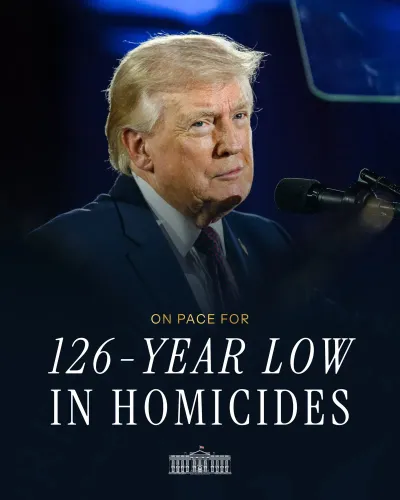
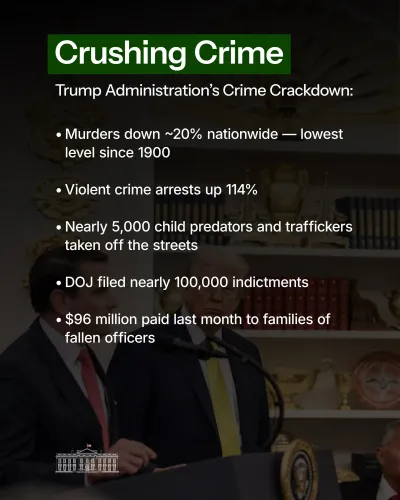
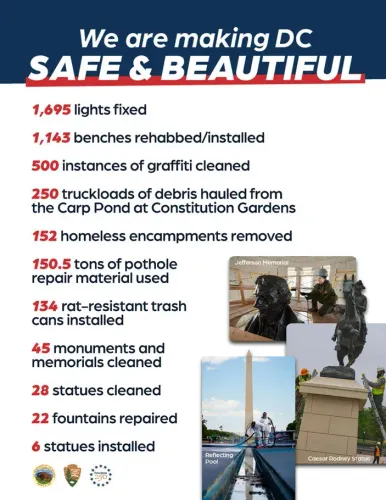
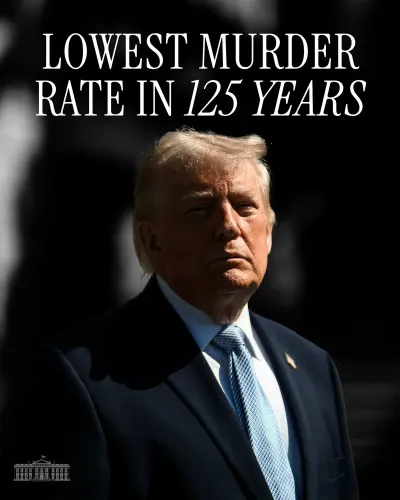
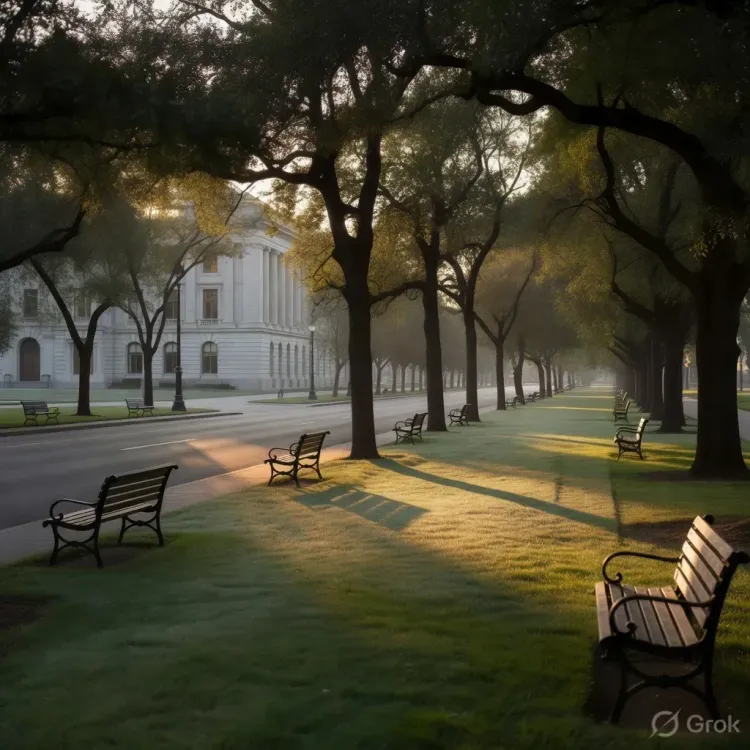
The post claims crime in D.C. is at 'historic lows', with homeless encampments cleared and public parks reclaimed.
The administration attributes prior conditions to Democratic governance and credits its own enforcement actions for the turnaround.
Washington, D.C. 's unique status as a federal district gives the president and Congress direct oversight over certain law enforcement functions.
Specific crime statistics cited by the White House have not been independently verified; official D.C.
Metropolitan Police Department data would be the authoritative benchmark.
Promises Kept.' framing is a signature Trump political formulation, signalling the start of an achievement-narrative cycle ahead of future electoral messaging.
One year into President Donald Trump's second term, the White House is claiming a transformation in the streets of Washington, D.C. — pointing to reduced crime, cleared homeless encampments, and reclaimed public parks as proof that a hard-line public safety agenda is delivering results.
The official White House account posted on X on Tuesday, August 11, 2026, declaring: 'One year later: President Trump made D.C. safe again. No more Democrat-run nightmare of lawlessness. Predators and gangbangers off the streets. Homeless camps cleared. Parks reclaimed. Crime at historic lows. Promises Made. Promises Kept.'
D.C.'s Unique Federal Status and the Safety Debate
Washington, D.C. occupies a singular position in American governance — as the federal district, it falls under direct congressional and presidential oversight for key law enforcement functions in ways that ordinary U.S. cities do not. That structural reality has made the capital a recurring flashpoint in national debates over urban crime and policing, and a natural stage for administrations to demonstrate law-and-order credentials. During Trump's first term (2017–2021), the administration consistently amplified federal support for local policing and used D.C. as a symbol of its public safety messaging. The second term, which began in January 2025, appears to have continued that playbook with greater intensity, targeting street-level crime, gang activity, and visible homelessness in the capital.What the White House Is Claiming — and What Remains Unconfirmed
The post is explicit in its political framing, attributing prior conditions to Democratic governance and crediting the Trump administration's intervention for the turnaround. The claims — 'historic lows' in crime, cleared encampments, reclaimed parks — are stated as accomplished facts. However, independent verification of these specific figures is pending. Official crime data from the D.C. Metropolitan Police Department and any federal reviews of public safety initiatives would be the authoritative measure of whether the administration's characterisation holds up statistically. The White House has not, in this post, cited specific data sources or programme names. The 'Promises Made. Promises Kept.' formulation is a long-running Trump campaign signature, deployed here to mark what the administration is framing as a one-year milestone of measurable delivery. Whether the data bears out the headline or not, the political signal is unmistakable: the White House is building a re-election-era narrative around public order — and Washington, D.C. is its chosen exhibit.Point of View
D.C., where federal authority over public safety is constitutionally distinct, the Trump team is on familiar terrain: the capital has long served as a law-and-order symbol for Republican administrations. The explicit partisan framing — blaming 'Democrat-run' governance — signals this is as much about the 2028 political cycle as it is about current policy. The critical question is whether official crime data will validate or complicate the headline; until that data is public, the claim remains a political assertion, not a verified record.
NationPress
11 Aug 2026
Frequently Asked Questions
What did the White House claim about Washington D.C. crime in August 2026?
The White House claimed that under President Trump's second term, Washington D.C. has seen crime fall to 'historic lows', with homeless camps cleared and public parks reclaimed, marking one year of the administration's public safety push.
Does the U.S. president have special authority over Washington D.C.'s police?
Yes. Washington D.C. is a federal district, not a U.S. state, which gives the federal government — including the president and Congress — direct oversight over certain law enforcement and public safety functions that would normally fall to state governments elsewhere.
What is the 'Promises Made. Promises Kept.' slogan used by Trump?
'Promises Made. Promises Kept.' is a long-running political formulation used by Donald Trump and his administration to argue that campaign commitments have been fulfilled. It has been a recurring feature of Trump's political communications since his first term.
Has Washington D.C. crime reduction under Trump been independently verified?
As of the date of the post, the specific claims of 'historic lows' in crime have not been independently verified. Official data from the D.C. Metropolitan Police Department would be the authoritative source for confirming or challenging the administration's figures.
Why does Trump focus on Washington D.C. for public safety messaging?
Washington D.C.'s unique federal status makes it a natural stage for presidential public safety messaging. Because the federal government has direct authority over aspects of D.C. governance, administrations can more directly claim credit or assign blame for conditions in the capital than in any other American city.