White House Credits New President for Restored Law and Order
Synopsis
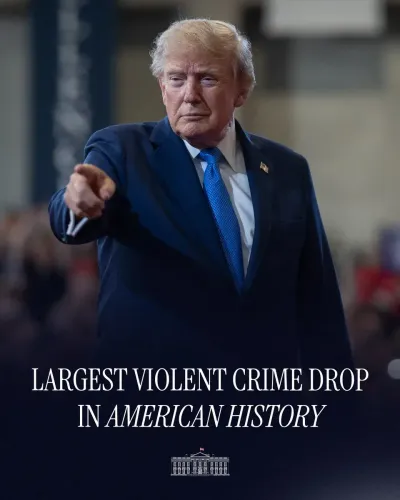
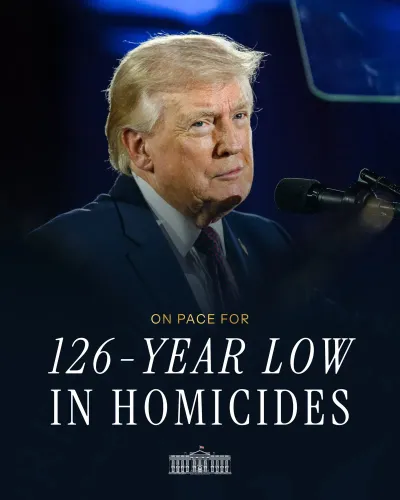
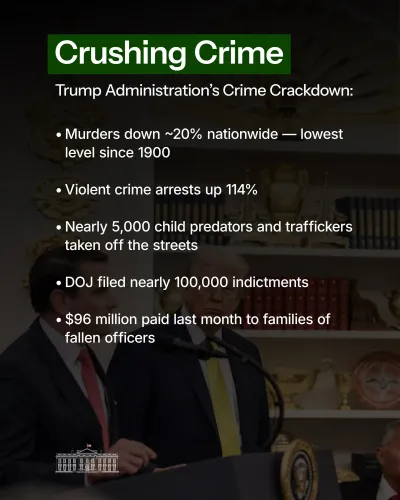
The White House on May 28, 2026, posted a stark message on X claiming that a new president was all that was needed to restore law and order in the United States, framing executive leadership as the decisive factor in improved national public safety.
Key Takeaways
The White House posted on May 28, 2026 , asserting that a new president directly restored law and order and improved public safety.
The post was accompanied by 1 image and framed the change in executive leadership as the singular cause of the safety improvement.
The FBI 's Uniform Crime Reporting programme is the primary federal source for national crime data; its 2025–2026 releases will be the key empirical benchmark.
Criminologists and policy experts consistently attribute crime trends to a combination of local policing, demographics, economic conditions, and reporting — not executive action alone.
Both major US parties have historically used law-and-order messaging during periods of heightened public concern over violent crime, often tied to electoral cycles.
Congressional action on federal policing grants and criminal justice legislation will determine whether the messaging translates into concrete policy shifts.
The White House, the official communications account of the Executive Office of the President of the United States, posted a pointed message on X on Thursday, May 28, 2026, asserting that a change in presidential leadership was the decisive factor behind what it described as a restoration of law and order and improved public safety across the country.
Context
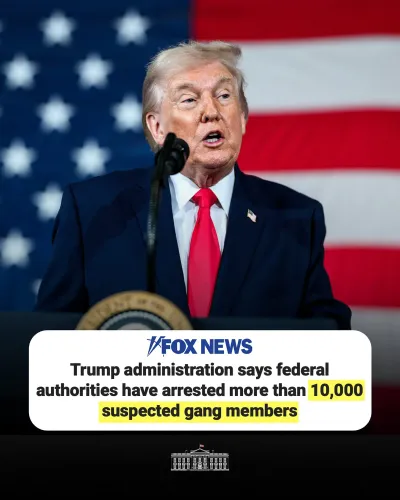
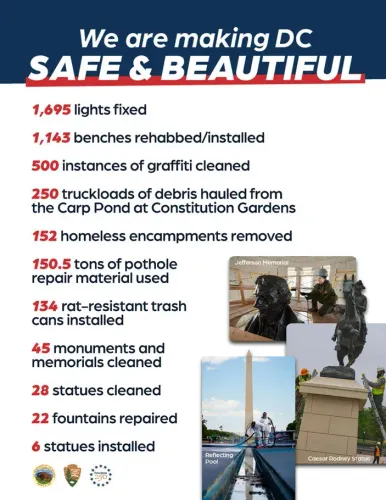
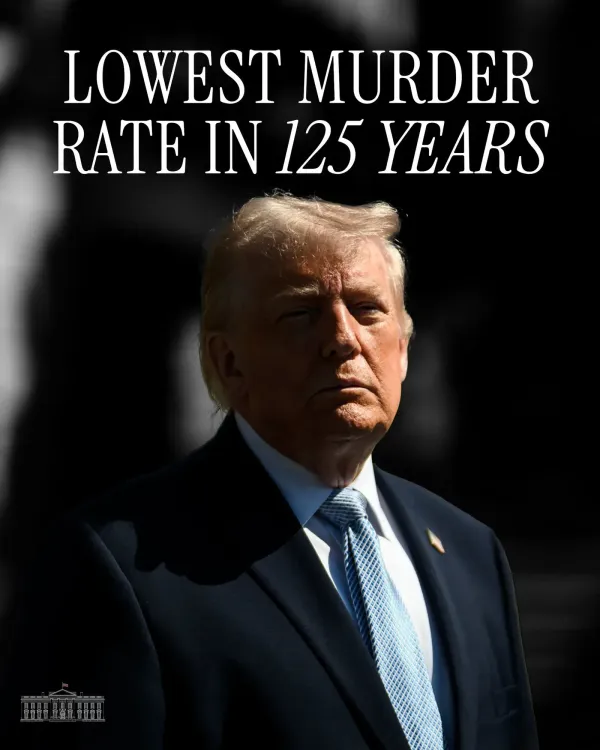
The post, which read 'When law and order is restored, safety follows. ALL WE NEEDED WAS A NEW PRESIDENT,' was accompanied by an image and appeared to be a direct claim of credit for a shift in the national public safety environment. The statement frames the sitting president as the central variable in any recent improvement in crime or order-related metrics.
White House communications accounts routinely amplify policy messaging on behalf of the sitting administration, particularly on issues such as crime, border security, and federal law enforcement priorities — themes that have been central to the current administration's political identity.
Policy Backdrop
US administrations across party lines have long used public safety messaging to reinforce executive credibility. The Violent Crime Control and Law Enforcement Act of 1994 expanded federal support for local policing and was credited — with caveats — for contributing to the national crime decline observed through the late 1990s. More recently, the First Step Act of 2018, passed under the prior Trump administration, introduced federal sentencing reforms focused on reducing recidivism.
Analysts and criminologists consistently note that crime rate fluctuations reflect a complex mix of local policing strategies, demographic trends, economic conditions, and reporting methodology — not solely federal executive action. The FBI's Uniform Crime Reporting programme remains the primary federal source for national crime statistics, and its releases for 2025–2026 will be closely watched in light of claims like Wednesday's post.
Stakeholders and Impact
The message is directed at a broad domestic audience, particularly urban communities and law enforcement agencies that have been at the centre of national debates over policing, crime, and federal support. For these groups, White House rhetoric on law and order carries tangible implications — from federal grant allocations to prosecutorial priorities and immigration enforcement.
Political opponents are likely to contest the causal claim, pointing to the multi-year lag between policy changes and measurable crime trends. Advocacy groups focused on criminal justice reform may also push back against a framing that centres punitive enforcement over systemic factors.
What's Next
The FBI's upcoming Uniform Crime Reporting releases for 2025 and 2026 will provide the clearest empirical test of the administration's claims. Any congressional movement on federal policing grants or new criminal justice legislation would further define the policy substance behind the White House's messaging. How opposition lawmakers and independent researchers respond to this assertion is likely to shape the political contours of the law-and-order debate heading into the next legislative cycle.
Point of View
Multi-variable phenomenon like national crime trends to a single cause (presidential leadership), the administration is staking a clear electoral and policy narrative. The timing, ahead of potential FBI crime data releases, suggests a deliberate effort to shape the interpretive frame before the numbers land. Whether the data validates or complicates that narrative will be the real test of this messaging strategy.
NationPress
21 Sept 2026
Frequently Asked Questions
What did the White House post about law and order on May 28, 2026?
The White House posted on X stating 'When law and order is restored, safety follows. ALL WE NEEDED WAS A NEW PRESIDENT,' directly crediting a change in presidential leadership for improved public safety in the United States.
Is there evidence that a new US president directly reduces crime rates?
Criminologists and policy experts consistently find that crime rate changes result from a combination of local policing, economic conditions, demographics, and reporting practices — not executive leadership alone, though federal enforcement priorities can influence certain trends over time.
What is the FBI Uniform Crime Reporting programme?
The FBI's Uniform Crime Reporting programme is the primary federal system for compiling and publishing national crime statistics in the United States, and its annual releases are widely used to assess public safety trends.
What is the First Step Act and how does it relate to US law and order policy?
The First Step Act of 2018, passed under the prior Trump administration, introduced federal criminal justice reforms focused on sentencing reductions and reducing recidivism, representing a shift toward rehabilitation alongside enforcement in federal policy.
Why do US presidents focus on law and order messaging?
Public safety is a consistently high-priority concern for American voters, and administrations across party lines have used law-and-order messaging to reinforce executive credibility, particularly during periods of heightened concern over violent crime or ahead of election cycles.