White House Claims Violent Crime Fell Sharply in 2025
Synopsis
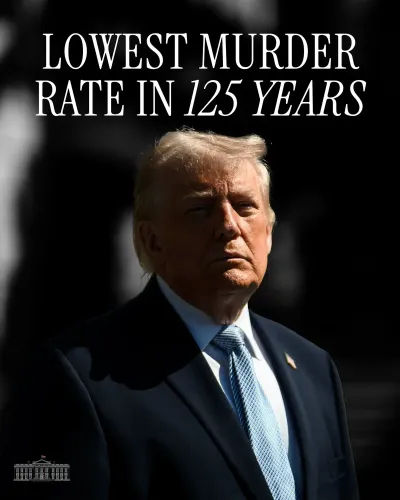
The White House declared on October 26, 2026 that violent crime 'plummeted' between 2024 and 2025, attributing the drop to Law and Order policies. Official FBI data for 2025 has not yet been independently confirmed, leaving the specific figures unverified.
Key Takeaways
The White House posted on October 26, 2026 claiming violent crime fell sharply from 2024 to 2025 .
The administration attributed the decline to its 'Law and Order policies,' framing the figures as a kept promise on public safety.
No specific crime categories or percentage drops were cited in the post; independent FBI data for 2025 had not been confirmed at publication.
The FBI 's Uniform Crime Report is the standard benchmark for national violent-crime statistics in the United States.
Criminologists note that violent-crime trends are driven by multiple factors beyond federal policy, including local policing, economics, and social conditions.
Official 2025 crime data from the FBI is the key release to watch for independent verification of the White House's claim.
A year into its second term, the White House is pointing to what it calls a landmark public-safety result: violent crime, it says, plummeted between 2024 and 2025 — and it wants Americans to know exactly who gets the credit.
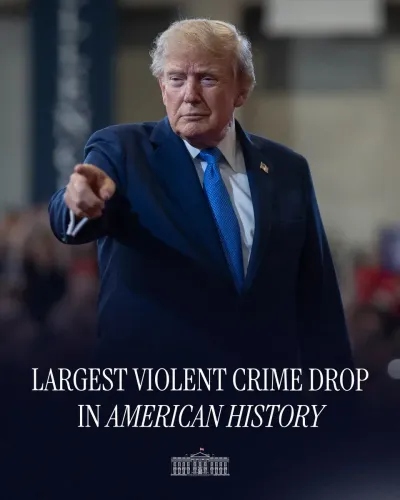
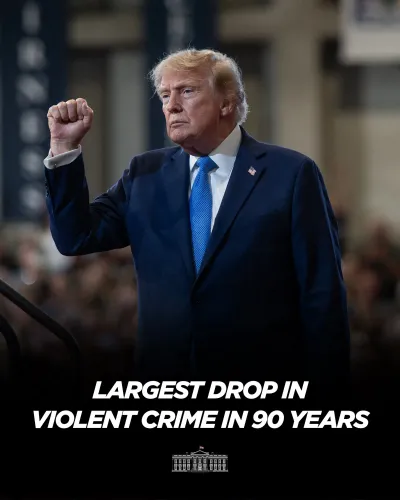
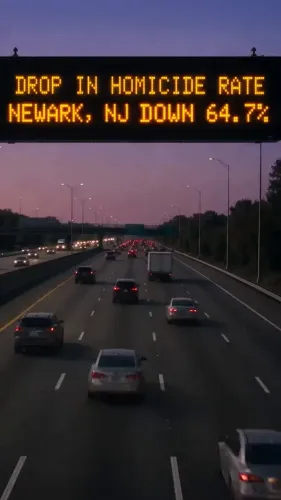
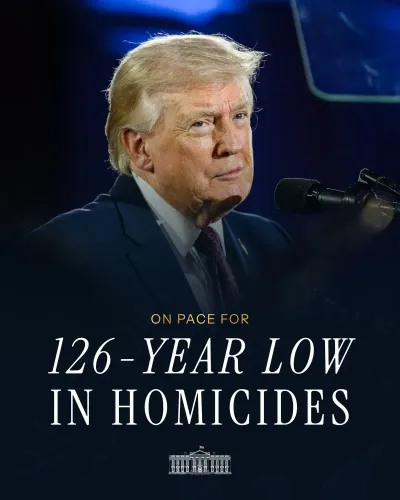
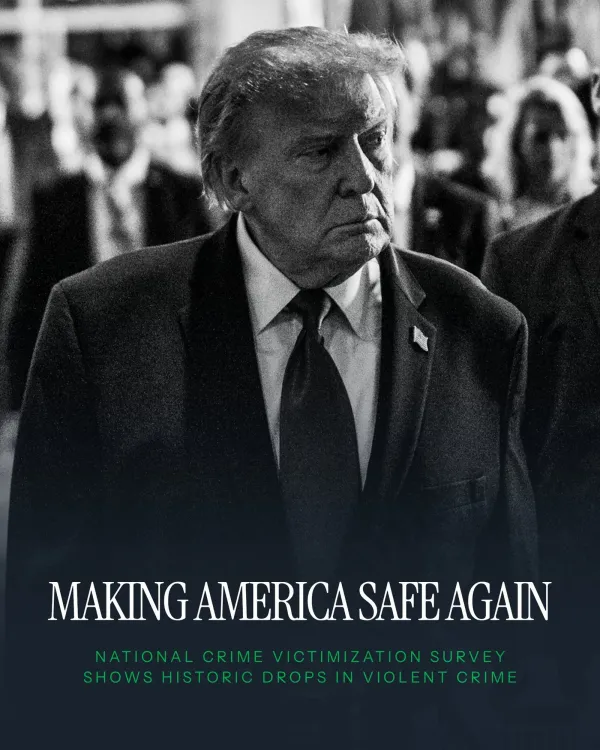
The White House posted on Monday, October 26, 2026, declaring it was 'delivering on the promise to keep Americans safe' and attributing the drop squarely to 'Law and Order policies in action.' The post, accompanied by two images, frames the figures as vindication of a governing philosophy the administration has championed since day one.
What the claim says — and what remains unverified
The post does not specify which crimes fell, by how much, or which data source underpins the numbers. In the United States, national violent-crime statistics are compiled and published by the FBI through its Uniform Crime Report programme — the authoritative benchmark against which any administration's public-safety claims are measured. Official FBI data covering the full 2025 calendar year had not been independently confirmed at the time of publication, and the specific figures cited by the White House could not be verified.
That caveat matters, because the relationship between federal policy and local crime rates is rarely straightforward. Researchers and law-enforcement practitioners consistently note that violent-crime trends reflect a web of variables — local policing strategies, economic conditions, demographic shifts, and social-service investment — that no single policy lever fully controls.
A well-worn playbook, now with new numbers
U.S. presidents across the political spectrum have long reached for crime statistics as proof of governing competence. The tactic is as old as the modern presidency: when numbers move in a favourable direction, the White House claims the narrative. When they don't, the explanation pivots to local jurisdictions or broader social forces.
What makes this moment distinct is the scale of the claim. 'Plummeted' is not a word administrations use carelessly — it sets a bar that independent data will eventually either validate or complicate. Urban communities and law-enforcement agencies alike will be watching whether the FBI's forthcoming official release matches the administration's framing.
Why this lands differently for an Indian audience
For Indian observers tracking U.S. governance, the announcement carries a broader signal: the White House is entering the final stretch of its current term on an assertive law-and-order footing, using public-safety metrics as a centrepiece of its domestic record. That posture shapes U.S. political dynamics in ways that ripple outward — including in debates about immigration enforcement, federal policing budgets, and bilateral cooperation on transnational crime.
When the FBI's verified 2025 crime data arrives, it will either cement this narrative or force a quiet revision. Until then, the scorecard belongs to the White House — and the fact-checkers are sharpening their pencils.
Point of View
Raising the stakes for independent verification by the FBI. Until official data confirms the scale of the claimed drop, the announcement functions primarily as political positioning rather than a verifiable policy outcome. For analysts watching U.S. governance, the more consequential question is whether federal 'Law and Order' spending and enforcement directives can be causally isolated from the broader local and socioeconomic drivers that criminologists identify as primary forces behind crime trends.
NationPress
27 Oct 2026
Frequently Asked Questions
Did violent crime actually fall in the United States in 2025?
The White House claimed on October 26, 2026 that violent crime 'plummeted' from 2024 to 2025, but the specific figures and their source had not been independently verified through official FBI data at the time of publication.
Which agency publishes official US violent crime statistics?
The FBI compiles and publishes national violent-crime data through its Uniform Crime Report (UCR) programme, which is the standard benchmark used to assess public-safety trends across the United States.
What are 'Law and Order' policies in the US context?
In American political discourse, 'Law and Order' typically refers to a suite of policies emphasising stricter enforcement, increased federal support for policing, tougher sentencing, and immigration enforcement — priorities the current White House has championed since taking office.
Can a US president's policies alone reduce violent crime?
Criminologists and policy researchers consistently find that violent-crime trends are shaped by multiple overlapping factors — including local policing strategies, economic conditions, and social services — making it difficult to attribute changes solely to federal executive policy.
When will official US crime data for 2025 be released?
The FBI typically releases its annual Uniform Crime Report data in the year following the reporting period; the official 2025 data release from the FBI is the key figure to watch for independent confirmation of the White House's claims.