White House Credits Trump Policies for Largest US Violent Crime Drop
Synopsis
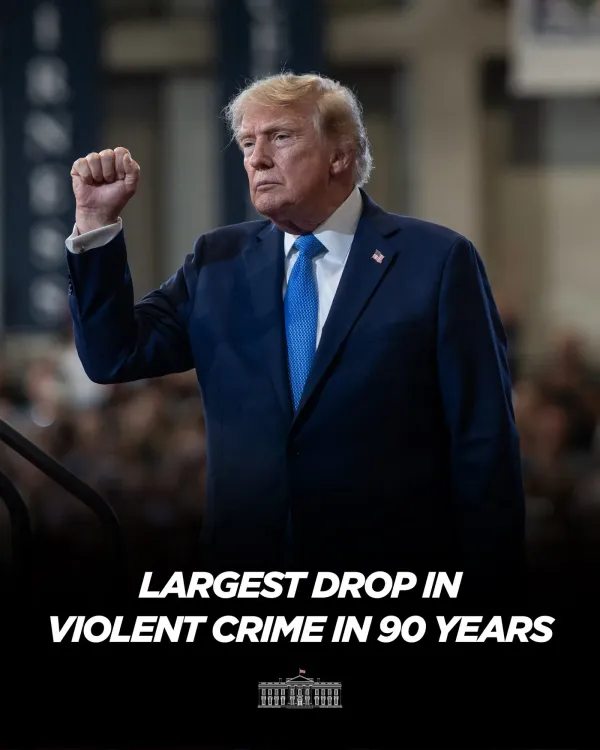
The White House credited President Trump's law and order policies for a 9.7% drop in US violent crime last year — the largest single-year decline since the FBI began national estimates — framing the milestone as a direct policy outcome.
Key Takeaways
The White House posted on August 18, 2026 attributing falling US crime rates directly to President Trump 's law and order policies.
Violent crime in the US dropped by 9.7% last year, according to the post.
The administration describes this as the largest annual drop since the FBI began publishing national crime estimates.
The White House framed the causal link as 'simple' and 'direct,' making no qualifications about other contributing factors.
The announcement positions public safety as a flagship Trump-era achievement ahead of the ongoing 2026 political cycle.
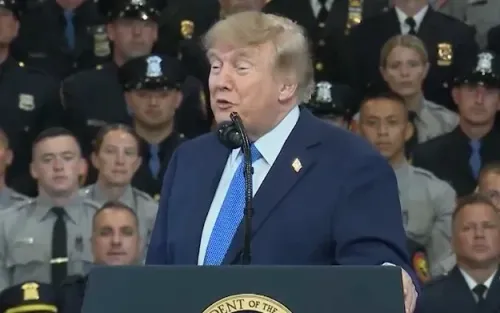
Violent crime in the United States fell by its steepest margin in recorded federal history last year — and the White House is making sure no one misses the credit line. The White House posted on X on Tuesday, August 18, 2026, attributing the landmark decline directly to President Donald Trump's law and order agenda.
The post states plainly: 'Violent crime dropped by 9.7% last year, the largest annual drop since the FBI began national estimates.' That is not a routine fluctuation — it is a generational statistical milestone, one that the administration is framing as a policy dividend, not a coincidence.
What the 9.7% figure actually means
The FBI's national crime estimates have been the benchmark for measuring public safety trends in the United States for decades. A single-year drop of 9.7% in violent crime — covering offences such as murder, aggravated assault, robbery, and rape — would represent the sharpest year-on-year decline in that dataset's history. For context, even the crime-reduction waves of the 1990s, widely credited to a combination of policing strategy, economic growth, and demographic shifts, rarely produced drops of this magnitude in a single year.
The White House is attributing the fall squarely to the Trump administration's 'law and order policies' — a broad umbrella that has historically included stricter federal sentencing, expanded immigration enforcement, and increased support for local law enforcement agencies.
A political claim as much as a statistical one
Framing a crime-statistics release as a direct policy outcome is a deliberate political move. Criminologists routinely caution that violent crime trends are shaped by a complex web of factors — economic conditions, demographic change, policing methods, and even data-reporting reforms at the local level. The White House's post makes no such qualifications: it calls the link 'simple' and 'direct.'
That confidence is itself a message. Heading into the political calendar, the administration is staking a clear line: safer streets are a Trump-era deliverable, and the FBI's own numbers are the proof. Whether opponents contest the causation or accept the statistic, the White House has already set the terms of the debate.
For Indian observers watching US domestic politics, the development signals that crime and public safety — long a defining fault line in American elections — will remain front and centre in the 2026 political cycle, with the executive branch wielding a headline number that is genuinely difficult to dismiss.
Point of View
' the administration pre-empts nuanced counter-narratives and forces opponents to argue against a number most Americans will welcome. The 9.7% figure, if independently verified, would be a genuinely significant data point — but the political framing strips away the multi-causal complexity that criminologists typically apply to such trends. For the Trump administration, the real audience may be less the policy community and more the suburban voter for whom 'safety' remains the decisive kitchen-table issue heading into the next electoral contest.
NationPress
3 Oct 2026
Frequently Asked Questions
How much did violent crime drop in the US in 2025?
According to the White House, violent crime in the United States dropped by 9.7% last year — described as the largest annual decline since the FBI began publishing national crime estimates.
What FBI crime report is the White House referring to?
The White House referenced the FBI 's national crime estimates, the long-standing federal benchmark for tracking violent offences including murder, aggravated assault, robbery, and rape across the United States.
What are Trump's law and order policies?
The Trump administration's 'law and order' agenda has broadly included stricter federal sentencing guidelines, expanded immigration enforcement operations, and increased federal support for local law enforcement agencies.
Is the White House claim that Trump caused the crime drop accurate?
The White House states the link is 'direct,' but criminologists generally caution that crime trends reflect multiple factors — economic conditions, demographic shifts, policing strategies, and local data-reporting changes — not a single policy cause.
Why does the US violent crime drop matter for the 2026 political cycle?
Public safety is a defining electoral issue in the United States. A record-breaking crime decline gives the Trump administration a concrete, headline-ready statistic to campaign on, making it a significant political asset in 2026 .