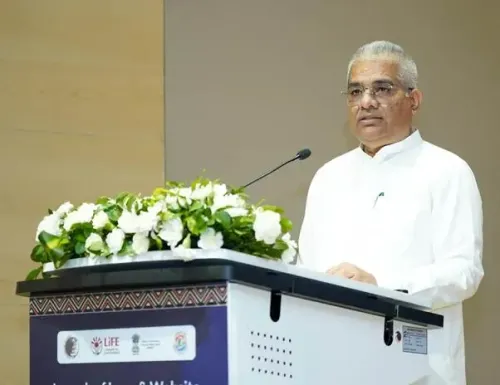
Bhupender Yadav champions big cats as climate tools at COP31
Synopsis
Union Environment Minister Bhupender Yadav co-hosted a high-level ministerial side event at COP31 in Antalya, arguing that big cat conservation drives climate mitigation. Ministers from Nepal, Venezuela, Cambodia, and Sri Lanka attended the International Big Cat Alliance-backed event, praising India's cheetah reintroduction and PM Modi's conservation leadership.
Key Takeaways
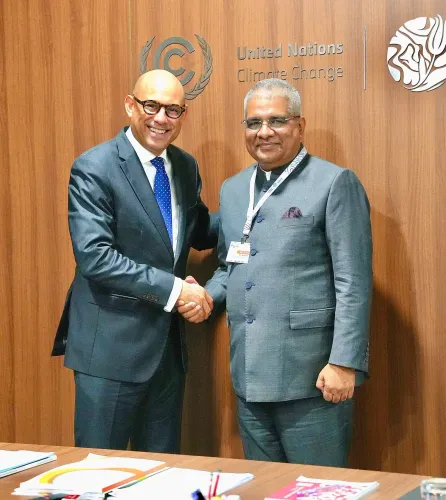
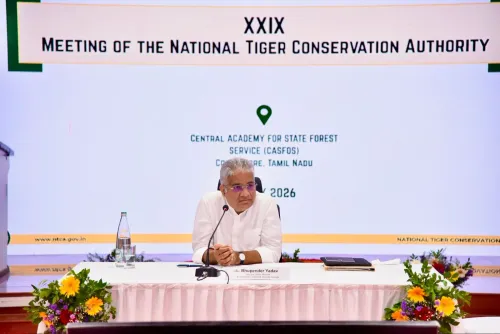
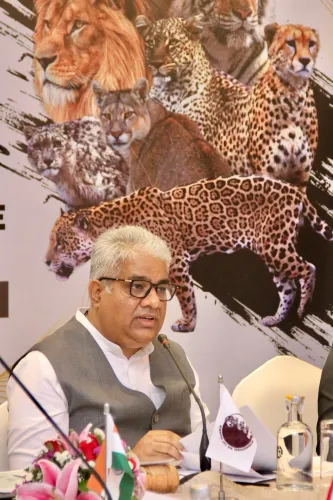
Union Environment Minister Bhupender Yadav addressed the 'BIG CATS: Drivers of Climate Change Mitigation' side event at COP31 in Antalya, Türkiye .
The event was co-organised by MoEFCC and the International Big Cat Alliance (IBCA) , with participation from Nepal, Venezuela, Cambodia, and Sri Lanka .
Delegates from the Ramsar Convention and UNCCD also attended, broadening the conservation-climate linkage beyond UNFCCC.
India's cheetah reintroduction programme (launched 2022 at Kuno National Park) drew specific appreciation from participating nations.
The IBCA , announced by PM Modi in 2023 during Project Tiger's 50th anniversary , covers seven big cat species and is being used as an active diplomatic tool.
The event signals India's strategy to frame biodiversity conservation — anchored in Project Tiger's 1973 legacy — as a mainstream climate mitigation instrument.
At a high-level side event on the margins of COP31 in Antalya, Türkiye, Union Environment Minister Bhupender Yadav made the case that protecting big cats is not just a wildlife imperative — it is climate policy. The ministerial gathering, co-organised by India's Ministry of Environment, Forest and Climate Change (MoEFCC) and the International Big Cat Alliance (IBCA), pulled together ministers and senior representatives from big cat range countries including Nepal, Venezuela, Cambodia, and Sri Lanka, alongside delegates from the Ramsar Convention and the UNCCD.
India's big cat pitch at the climate table
The event's title — 'BIG CATS: Drivers of Climate Change Mitigation' — was itself a statement of intent. Minister Yadav argued that apex predators anchor entire ecosystems: healthy big cat habitats lock in carbon, regulate prey populations, and buffer landscapes against climate shocks. It is a framing India has been sharpening for years, threading its domestic wildlife successes into the language of UNFCCC negotiations.
Participants from attending nations acknowledged India's conservation record under Prime Minister Narendra Modi, with particular appreciation for the cheetah reintroduction programme — the bold and contested effort, launched in 2022, to bring African cheetahs back to Kuno National Park after the species went locally extinct in India. That programme, whatever its ongoing challenges, has given India a dramatic story to tell on the world stage.
The IBCA: India's global platform for seven big cats
The International Big Cat Alliance is India's own creation — announced by Prime Minister Modi in 2023 during the 50th anniversary of Project Tiger to build multilateral cooperation around the conservation of seven big cat species: tiger, lion, leopard, snow leopard, cheetah, jaguar, and puma. By co-hosting the COP31 side event through IBCA, India is signalling that the alliance is now an active diplomatic instrument, not just an aspirational announcement.
Project Tiger, launched in 1973, remains the bedrock. Over five decades it expanded from a narrow tiger-rescue effort into a broad habitat-protection framework that now underpins much of India's big cat diplomacy. That long institutional lineage gives New Delhi credibility in rooms like the one convened in Antalya.
Why range countries in the room signals something bigger
The presence of Nepal, Venezuela, Cambodia, and Sri Lanka at a single ministerial table is worth noting. These are nations spread across three continents, each with their own pressures on big cat habitat — from Himalayan snow leopard corridors to Amazonian jaguar ranges. Pulling them into a conversation about climate mitigation, mediated by India's conservation experience, is exactly the coalition-building the IBCA was designed to catalyse.
What comes next is the harder question. Converting ministerial appreciation into formal UNFCCC language — or into bilateral conservation agreements — is a different challenge entirely. The operationalisation of the IBCA secretariat and any concrete outcomes from this Antalya gathering will determine whether this side event is remembered as a turning point or a talking shop.
India has placed its bet: that tigers, cheetahs, and snow leopards belong in the same sentence as carbon budgets and resilience targets. The world is listening.
Point of View
New Delhi is building the multilateral base the IBCA needs to graduate from announcement to institution. The cheetah reintroduction, however contested in scientific circles, functions as India's most visible symbol of conservation ambition on the global stage. The critical test will be whether this diplomatic momentum translates into UNFCCC text or binding bilateral agreements — or remains a high-profile side event in Antalya's corridors.
NationPress
17 Nov 2026
Frequently Asked Questions
What is the International Big Cat Alliance and who started it?
The International Big Cat Alliance is a global conservation platform initiated by India and announced by Prime Minister Narendra Modi in 2023 during the 50th anniversary of Project Tiger. It aims to foster multilateral cooperation for the protection of seven big cat species: tiger, lion, leopard, snow leopard, cheetah, jaguar, and puma.
What was India's big cat event at COP31 about?
India's Ministry of Environment, Forest and Climate Change and the IBCA co-hosted a High-Level Ministerial Side Event titled 'BIG CATS: Drivers of Climate Change Mitigation' at COP31 in Antalya, Türkiye, arguing that protecting big cat habitats supports carbon sequestration and ecosystem resilience.
Which countries participated in India's big cat side event at COP31?
Ministers and country representatives from Nepal, Venezuela, Cambodia, and Sri Lanka participated, along with delegates from international bodies including the Ramsar Convention and the UNCCD.
What is India's cheetah reintroduction programme?
India launched the cheetah reintroduction programme in 2022, bringing African cheetahs to Kuno National Park in Madhya Pradesh to restore a species that had gone locally extinct in the country. The programme has drawn international attention and was highlighted at the COP31 side event.
What is Project Tiger and how old is it?
Project Tiger is India's flagship big cat conservation programme, launched in 1973 to protect tigers and their habitats. Over five decades it has expanded in scope and is widely credited with stabilising India's tiger population, forming the foundation of the country's broader big cat diplomacy.