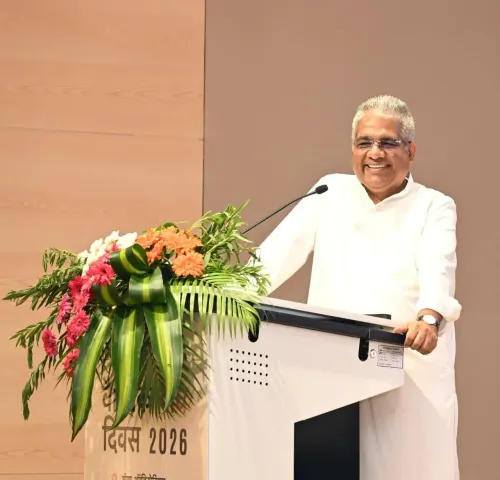
Bhupender Yadav chairs 29th NTCA meet in Coimbatore
Synopsis
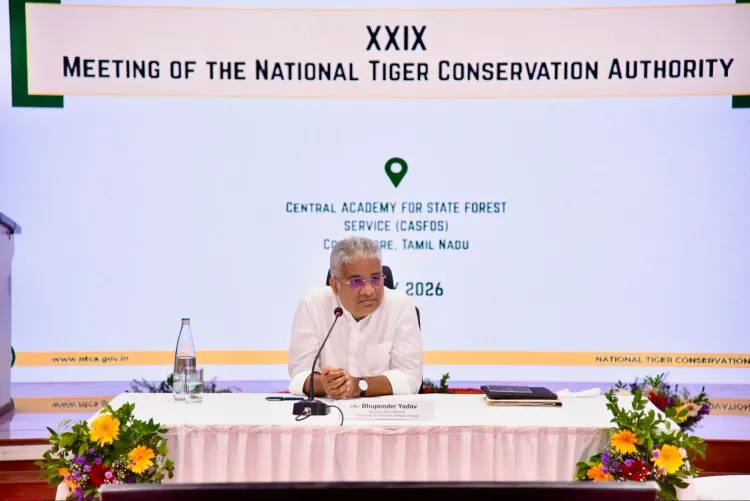
Union Environment Minister Bhupender Yadav chaired the 29th NTCA meeting at Coimbatore on 9 July 2026. Discussions covered tiger reserve protection, management practices, and — notably — conservation of river sources and water table management linked to tiger landscapes, reflecting India's shift to landscape-level ecological security.
Key Takeaways
Union Environment Minister Bhupender Yadav chaired the 29th NTCA meeting on 9 July 2026 in Coimbatore, Tamil Nadu .
Deliberations focused on strengthening protection and improving management across India's tiger reserves.
The meeting included dedicated discussions on conserving river sources originating from tiger reserves and managing water tables around them.
India's tiger reserve network has grown from 9 reserves in 1973 to over 50 today under the Project Tiger framework.
The 2018 tiger census recorded 2,967 tigers , reflecting decades of conservation progress.
Outcomes are expected to shape state-level action plans on both wildlife protection and watershed governance.
Union Environment Minister Bhupender Yadav chaired the 29th meeting of the National Tiger Conservation Authority (NTCA) at the Central Academy for State Forest Service in Coimbatore, Tamil Nadu, on 9 July 2026. Deliberations centred on strengthening protection, improving management practices, and enhancing conservation outcomes across India's tiger landscapes, with a notable focus on watershed protection linked to tiger reserves.
Context
Yadav posted on X that the meeting included 'elaborate discussions on conserving sources of the rivers originating from tiger reserves and water table management around them.' The venue — the Central Academy for State Forest Service in Coimbatore — is a national training institute for state forest officers under the Ministry of Environment, Forest and Climate Change, making it a fitting location for a high-level conservation council.
The NTCA is a statutory body constituted under the Wildlife Protection Act following its 2006 amendment, functioning as the apex authority for overseeing India's tiger reserve network and setting national conservation standards.
Policy Backdrop
India's tiger conservation architecture traces back to Project Tiger, launched in 1973, which created the first nine dedicated tiger reserves and institutionalised habitat protection as a state responsibility. That network has since grown to over 50 tiger reserves, reflecting five decades of incremental policy expansion.
The All India Tiger Estimation 2018 recorded 2,967 tigers across the country, documenting a sustained population recovery that placed India at the centre of global conservation success stories. Recent NTCA meetings have progressively broadened their agenda beyond species counts, linking tiger habitat security to watershed health and climate adaptation — a trend reinforced by the discussions at the 29th meeting.
The explicit focus on rivers originating from tiger reserves signals a maturing of conservation policy: forests that shelter tigers also function as critical catchments for river systems that millions of people depend on, and protecting one increasingly means protecting the other.
Stakeholders and Impact
State forest departments across tiger-range states will be the primary implementers of any management directives emerging from the meeting. Wildlife conservation organisations and local communities living in and around tiger reserve buffer zones are also directly affected by decisions on habitat management and water governance.
The water table management discussions carry implications beyond wildlife: communities downstream of tiger reserve watersheds — particularly in peninsular and central India — rely on these forest-fed rivers for agriculture and drinking water. Integrating their interests into NTCA's conservation framework represents a significant broadening of the authority's traditional mandate.
What's Next
The outcomes of the 29th NTCA meeting are expected to feed into state-level action plans on both tiger protection and watershed management. The next cycle of the All India Tiger Estimation will be a key benchmark for assessing whether landscape-level interventions discussed at such meetings translate into measurable conservation gains.
With the NTCA increasingly treating tiger reserves as ecological anchors for river systems and regional water security, future meetings are likely to draw in a wider set of stakeholders — including water resource and agriculture ministries — as the conservation agenda expands in scope.
Point of View
The NTCA is building a policy rationale that appeals simultaneously to wildlife advocates and water security concerns, widening the political constituency for forest preservation. For Bhupender Yadav, convening this meeting at a forest service training academy in Tamil Nadu also carries a federal signal: engaging southern states in a conservation agenda historically centred on central and northern India. The question going forward is whether these deliberations translate into enforceable inter-ministerial coordination on water and forest policy.
NationPress
8 Oct 2026
Frequently Asked Questions
What was discussed at the 29th NTCA meeting in Coimbatore?
The 29th NTCA meeting, chaired by Union Environment Minister Bhupender Yadav on 9 July 2026, focused on strengthening tiger reserve protection, improving management practices, and conserving river sources and water tables linked to tiger landscapes.
What is the National Tiger Conservation Authority (NTCA)?
The NTCA is a statutory body established under the Wildlife Protection Act amendment of 2006. It functions as India's apex authority for overseeing tiger reserves and setting national tiger conservation policy.
How many tiger reserves does India have?
India has over 50 tiger reserves today, expanded from the original 9 reserves created when Project Tiger was launched in 1973.
Why is water table management being discussed at NTCA meetings?
Tiger reserves often cover the source catchments of major rivers, meaning forest health directly affects downstream water availability. The NTCA has increasingly linked tiger habitat protection with watershed conservation as part of a broader landscape-level approach.
Where is the Central Academy for State Forest Service located?
The Central Academy for State Forest Service is located in Coimbatore, Tamil Nadu. It is a national training institute under the Ministry of Environment, Forest and Climate Change for state forest officers.