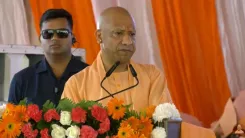
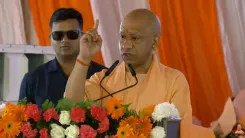
Bhupender Yadav in Coimbatore to Chair NBWL, NTCA, CAMPA Meetings

Synopsis
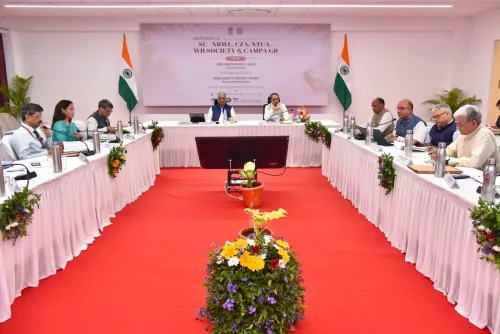
Union Environment Minister Bhupender Yadav landed in Coimbatore on July 8, 2026, to chair two days of meetings covering the NBWL Standing Committee, NTCA, CZA, WII, and National CAMPA, with human-wildlife conflict and conservation issues on the agenda.
Key Takeaways
Bhupender Yadav arrived in Coimbatore, Tamil Nadu on July 8, 2026 for a two-day series of conservation governance meetings.
He will chair the Standing Committee of the National Board for Wildlife (NBWL) , which clears development projects in protected areas under the Wildlife Protection Act, 1972 .
Meetings also cover NTCA , CZA , Wildlife Institute of India , and National CAMPA — the compensatory afforestation fund authority operationalised in 2016 .
Human-wildlife conflict and associated conservation issues are explicitly on the agenda, a priority area under the National Wildlife Action Plan (2017–2031) .
Coimbatore's location near the Western Ghats makes it a relevant venue given ongoing elephant corridor and tiger reserve pressures in Tamil Nadu .
Outcomes may include clearance decisions on infrastructure projects in protected areas and new conflict-mitigation guidelines.
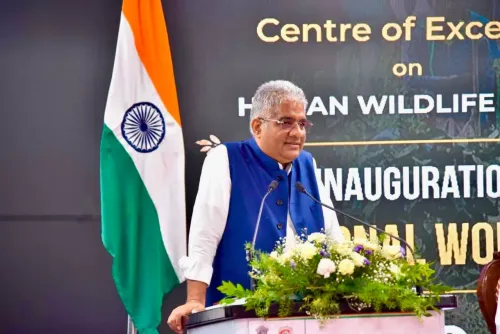
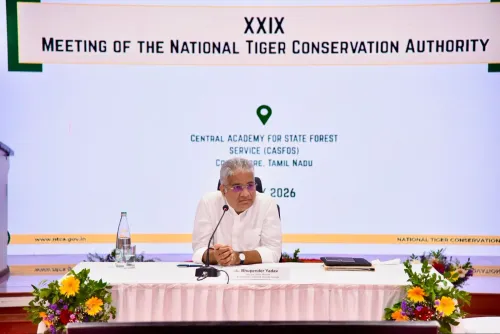
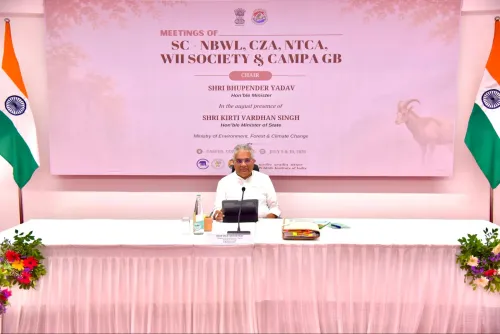
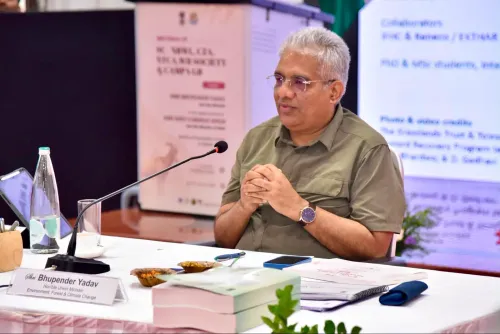
Union Environment Minister Bhupender Yadav arrived in Coimbatore, Tamil Nadu on Wednesday, July 8, 2026, to chair a series of high-level conservation and forest governance meetings over the next two days, including sessions of the Standing Committee of the National Board for Wildlife (NBWL), the National Tiger Conservation Authority (NTCA), the Wildlife Institute of India (WII), the Central Zoo Authority (CZA), and National CAMPA.
Context
Posting on X, Yadav confirmed his arrival and outlined the agenda: 'Over the next couple of days will be chairing meetings of standing committee of the National Board for Wildlife, WII, CZA, NTCA and National CAMPA. Will also deliberate on matters related to human wildlife conflict and associated conservation issues.' He also thanked BJP Tamil Nadu workers for their warm welcome.
Coimbatore's proximity to the Western Ghats — one of the world's biodiversity hotspots — makes it a strategically significant venue for these deliberations. The region has been a recurring site of human-wildlife conflict, particularly involving elephants and tigers moving through fragmented forest corridors amid growing infrastructure pressures.
Policy Backdrop
The Standing Committee of the NBWL, empowered under the 2002 amendment to the Wildlife Protection Act, 1972, is the apex body that clears development projects proposed within or near protected areas. Its decisions carry direct implications for infrastructure projects across the country that intersect with wildlife habitats.
National CAMPA, operationalised following Supreme Court directions in 2016, manages compensatory afforestation funds collected from agencies that divert forest land for non-forest use. These funds are channelled back into afforestation, wildlife protection, and forest management. NTCA, meanwhile, is the statutory authority overseeing India's network of tiger reserves and has a dedicated mandate for conflict mitigation between tigers and local communities.
Human-wildlife conflict was formally recognised as a priority area in the National Wildlife Action Plan (2017–2031) adopted by the Ministry of Environment, Forest and Climate Change (MOEFCC), signalling long-term federal commitment to addressing the issue through science-based management.
Stakeholders and Impact
The meetings bring together the leadership of India's key conservation institutions under one roof, with outcomes likely to affect state forest departments, local communities living on the fringes of protected areas, and project proponents awaiting environmental clearances. Tamil Nadu in particular has seen sustained discussions around elephant corridors and the management of tiger reserves such as Anamalai and Mudumalai.
Conservation organisations and community groups have long called for more structured conflict-mitigation protocols, including early-warning systems and compensation frameworks for crop and livestock losses. Deliberations at Coimbatore are expected to engage with these ground-level concerns alongside higher-level clearance decisions.
The Wildlife Institute of India, based in Dehradun, provides the scientific backbone for many of these bodies, supplying research on species populations, corridor mapping, and conflict hotspot analysis. Its inclusion in the meeting schedule underscores the government's intent to align policy decisions with field data.
What's Next
Decisions from the NBWL Standing Committee on pending project proposals — particularly those affecting protected areas in the Western Ghats — are expected to emerge from the Coimbatore sessions. Any new guidelines or protocols on human-wildlife conflict mitigation would represent a significant policy output from the deliberations.
The choice to hold these meetings in Tamil Nadu reflects the broader federal approach of engaging state-level realities directly, and signals continued central attention to the ecological pressures facing peninsular India's forest landscapes.
Point of View
Close to the Western Ghats, rather than in New Delhi, reflects a deliberate effort to ground central policy in regional ecological realities. For Bhupender Yadav, the visit also serves a dual function: substantive policy work alongside visible outreach through the BJP's Tamil Nadu unit, a state where the party continues to build organisational presence. The breadth of the agenda — spanning clearances, afforestation funds, tiger reserves, zoos, and conflict mitigation — suggests the government is attempting to demonstrate coordinated institutional action on environment ahead of what is likely to be a scrutinised legislative and judicial calendar on forest and wildlife policy.
NationPress
7 Oct 2026
Frequently Asked Questions
Why is Bhupender Yadav visiting Coimbatore in July 2026?
He is in Coimbatore to chair a series of high-level meetings over two days, including sessions of the NBWL Standing Committee, NTCA, CZA, Wildlife Institute of India, and National CAMPA, with human-wildlife conflict also on the agenda.
What is the National Board for Wildlife Standing Committee?
The Standing Committee of the NBWL is a statutory body empowered under the 2002 amendment to the Wildlife Protection Act, 1972, to approve or reject development projects proposed within or near protected areas in India.
What is National CAMPA and what does it do?
National CAMPA manages compensatory afforestation funds collected from agencies that divert forest land for non-forest use. It was operationalised following Supreme Court directions in 2016 and channels money into afforestation, wildlife protection, and forest management.
Why is Coimbatore significant for wildlife conservation discussions?
Coimbatore lies near the Western Ghats, a global biodiversity hotspot, and Tamil Nadu faces recurring human-wildlife conflict involving elephants and tigers in fragmented forest corridors, making it a relevant venue for these deliberations.
What decisions are expected from the Coimbatore wildlife meetings?
Outcomes may include NBWL clearance decisions on development projects in protected areas and new protocols or guidelines on human-wildlife conflict mitigation, particularly relevant for Tamil Nadu's elephant corridors and tiger reserves.