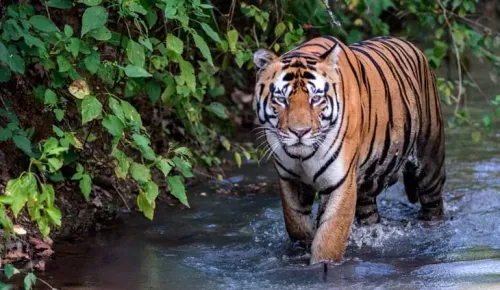
Yadav Highlights India's Tiger Wealth, 58 Reserves

Synopsis
Union Environment Minister Bhupender Yadav on 25 May 2026 highlighted India's unprecedented wildlife richness, noting the country hosts 75 per cent of the world's wild tigers across 58 tiger reserves — a milestone built over five decades of policy under Project Tiger and the NTCA.
Key Takeaways
Union Environment Minister Bhupender Yadav stated on 25 May 2026 that India is home to 75 per cent of the world's wild tigers.
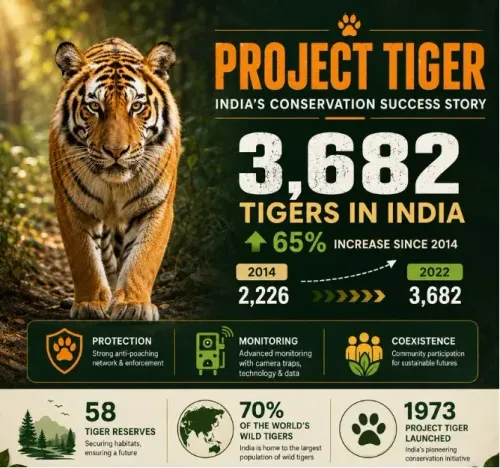
India currently operates 58 tiger reserves under the framework of Project Tiger and the National Tiger Conservation Authority .
The 2022 All India Tiger Estimation recorded 3,167 tigers , up from 2,967 in 2018 , confirming India met its St.
Petersburg Declaration target.
Project Tiger was launched in 1973 with nine reserves and has expanded steadily under the Wildlife Protection Act .
The next All India Tiger Estimation cycle is expected around 2026 , which will provide updated population data.
India uses its tiger conservation record in international forums on biodiversity finance and climate adaptation .
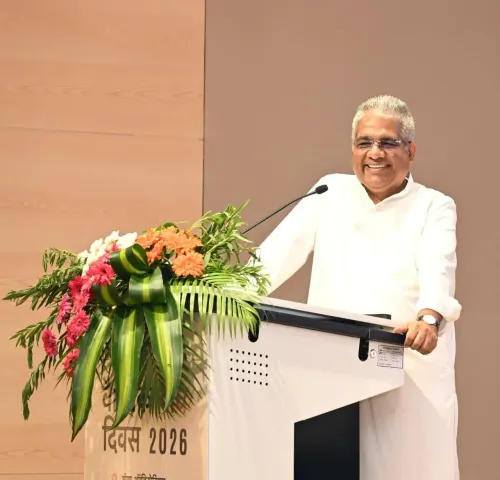
Union Environment Minister Bhupender Yadav on Monday, 25 May 2026, highlighted India's growing wildlife richness, stating that the country is home to 75 per cent of the world's wild tigers and operates 58 tiger reserves across its territory.
Context
In a post on X, Minister Yadav wrote, 'भारत की wildlife में समृद्धि अभूतपूर्व है' ('India's wildlife richness is unprecedented'), pointing to the country's dominant share of the global tiger population and its expanding network of protected reserves. The post was accompanied by a video, underscoring the government's effort to visually communicate conservation milestones to a broad public audience.
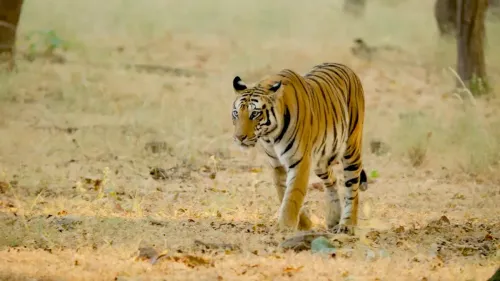
The figures cited by the minister reflect India's position as the single largest habitat for wild tigers on the planet — a status built over five decades of sustained conservation policy and enforcement under the Wildlife Protection Act.
Policy Backdrop
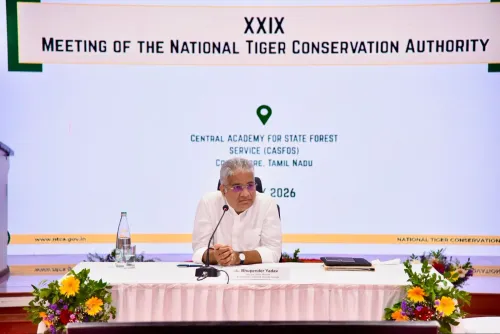
Project Tiger, launched in 1973 by Prime Minister Indira Gandhi with just nine initial reserves, is the foundational scheme that transformed India's approach to tiger conservation. Administered through the National Tiger Conservation Authority (NTCA), a statutory body established in 2005, the programme has progressively expanded both the number of reserves and the rigour of anti-poaching enforcement.
India signed the St. Petersburg Declaration in 2010, committing to double its wild tiger population by 2022. The All India Tiger Estimation — a periodic national survey using camera traps conducted every four years — recorded 2,967 tigers in 2018 and 3,167 tigers in 2022, confirming that the target was met ahead of schedule. Tigers have since been recorded occupying new landscapes beyond the traditional habitats of central India and the Western Ghats.
Stakeholders and Impact
The expansion of tiger reserves has direct consequences for local communities, forest departments, and the eco-tourism sector. Buffer zones around reserves have become engines of rural livelihoods, while stricter core-area protection has required careful management of human-wildlife conflict — a persistent challenge as tiger populations push into new territories.
At the international level, India regularly invokes its conservation record in negotiations under the Convention on Biological Diversity and the Global Tiger Initiative, using documented population growth to support its positions on biodiversity finance and climate adaptation funding.
What's Next
The NTCA is expected to notify any additional tiger reserves in the coming months, and the next cycle of the All India Tiger Estimation is anticipated around 2026, which would provide the most current population data. The results of that survey will be closely watched by conservationists and policymakers alike as a benchmark for whether India's upward trajectory in tiger numbers has continued. Minister Yadav's post signals that the government intends to keep wildlife conservation — and particularly tiger protection — prominently in public discourse ahead of that milestone.
Point of View
And its repetition at this moment suggests the government is building a narrative ahead of international climate and biodiversity negotiations. The emphasis on 58 reserves also signals that reserve expansion — not just population numbers — is being foregrounded as a policy output. Taken together, the post reinforces the government's broader arc of using verifiable conservation data to anchor India's soft-power credentials on the world stage.
NationPress
13 Oct 2026
Frequently Asked Questions
How many tigers are there in India in 2026?
The most recent verified count from the 2022 All India Tiger Estimation placed India's wild tiger population at 3,167. The next estimation cycle is expected around 2026 and will provide updated figures.
How many tiger reserves are there in India?
Union Environment Minister Bhupender Yadav stated on 25 May 2026 that India has 58 tiger reserves, managed under the National Tiger Conservation Authority as part of Project Tiger.
What percentage of world's tigers are in India?
Minister Yadav cited that India is home to 75 per cent of the world's wild tigers, a figure the government has highlighted to underscore the country's conservation achievements.
What is Project Tiger in India?
Project Tiger is a centrally sponsored scheme launched in 1973 by Prime Minister Indira Gandhi to create protected habitats for tigers. It is overseen by the National Tiger Conservation Authority and has grown from 9 to 58 reserves over five decades.
When is the next All India Tiger Estimation?
The All India Tiger Estimation is conducted every four years; the next cycle is anticipated around 2026, following the 2022 survey that recorded 3,167 tigers.