Yadav Flags India's Multi-Species Wildlife Conservation Push

Synopsis
Union Environment Minister Bhupender Yadav on 25 May 2026 confirmed India is simultaneously running conservation programmes for five species — sloth bears, tigers, elephants, the Great Indian Bustard, and pangolins — highlighting the country's expanding multi-species wildlife recovery agenda.
Key Takeaways
Union Environment Minister Bhupender Yadav confirmed active work on five species-recovery programmes: Project Sloth Bear , Project Tiger , Project Elephant , Project GIB , and Pangolin conservation .
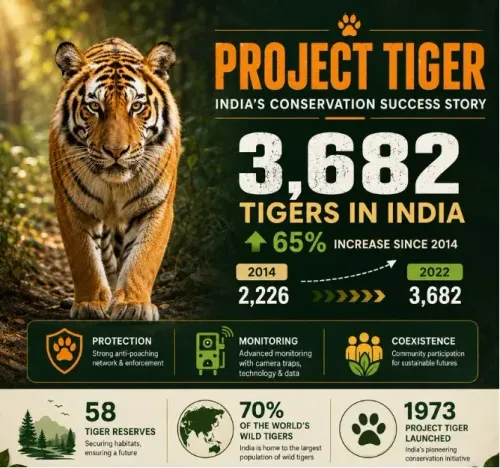
Project Tiger (launched 1973 ) and Project Elephant (launched 1992 ) are India's two longest-running flagship wildlife schemes.
Project GIB targets the Great Indian Bustard , one of India's most critically endangered bird species, found mainly in Rajasthan .
Pangolins are among the world's most heavily trafficked mammals, making their conservation a law-enforcement as well as a habitat challenge.
All programmes operate under the National Wildlife Action Plan and India's obligations under the Convention on Biological Diversity .
Progress reports on these schemes are typically presented to Parliament and the National Board for Wildlife .
Union Environment Minister Bhupender Yadav on Monday, 25 May 2026 highlighted India's ongoing multi-species wildlife conservation agenda, citing active work across five separate species-recovery programmes — including efforts for sloth bears and pangolins alongside the country's more established flagship schemes.
In a post on X, the minister stated: 'हम लोग प्रोजेक्ट Sloth Bear, प्रोजेक्ट Tiger, प्रोजेक्ट Elephant, प्रोजेक्ट GIB और Pangolin conservation पर भी काम कर रहे हैं।' — 'We are working on Project Sloth Bear, Project Tiger, Project Elephant, Project GIB, and Pangolin conservation as well.'
Context
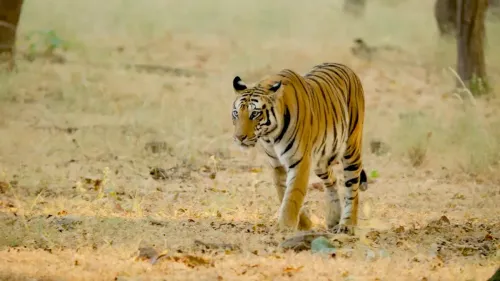
The remark underscores that India's wildlife recovery portfolio extends well beyond its most celebrated programme. Project Tiger, launched in 1973, remains the country's flagship conservation initiative, credited with reversing a steep decline in tiger populations across designated reserves. Project Elephant, initiated in 1992, addresses habitat corridors and human-animal conflict for the country's elephant population.
The explicit mention of sloth bears and pangolins signals ministerial attention to species that receive comparatively less public visibility but face serious pressures from poaching and habitat loss.
Policy Backdrop
India's species-specific recovery model is anchored in the Wildlife (Protection) Act, 1972, which was significantly strengthened through amendments in 2006 to stiffen penalties and establish national oversight bodies. These programmes are coordinated by the Ministry of Environment, Forest and Climate Change in partnership with state forest departments and wildlife organisations.
Project GIB — focused on the Great Indian Bustard, a critically endangered bird found primarily in Rajasthan and parts of western India — represents one of the more urgent recovery efforts given the species' precarious population numbers. Pangolins, heavily targeted by illegal wildlife trade networks, have similarly drawn conservation attention under India's commitments to the Convention on Biological Diversity.
All these programmes operate within the broader framework of the National Wildlife Action Plan, which sets medium- and long-term targets for species and habitat protection across the country.
Stakeholders and Impact
State forest departments are the primary implementing agencies for each of these projects, working alongside wildlife NGOs and research institutions for monitoring and field operations. The success of corridor-based conservation — central to both elephant and sloth bear programmes — depends heavily on coordination across state boundaries and with local communities living near forest edges.
For pangolins, the challenge is compounded by their status as among the world's most trafficked mammals, making enforcement and international cooperation as critical as habitat protection. The minister's statement, while brief, signals that these lesser-publicised programmes remain active policy priorities at the central level.
What's Next
Progress updates on India's species recovery programmes are typically presented during Parliament's monsoon or winter sessions, and may also feature at forthcoming meetings of the National Board for Wildlife. The minister's public communication on the breadth of ongoing conservation work is likely to precede more detailed reporting on species metrics and programme outcomes in the months ahead.
As India's wildlife conservation framework continues to expand beyond its original tiger-centric focus, the integration of lesser-known species into formal recovery programmes will be a key indicator of the country's biodiversity commitments on the global stage.
Point of View
The minister is building a narrative of comprehensive biodiversity stewardship ahead of likely parliamentary scrutiny and international reporting cycles. The move fits a pattern of the BJP government seeking to demonstrate tangible environmental credentials while managing criticism over forest clearances and development-linked habitat pressures. Whether the mention translates into enhanced budgets or measurable field outcomes for lesser-funded programmes will be the real test of political commitment.
NationPress
9 Oct 2026
Frequently Asked Questions
What is Project Sloth Bear in India?
Project Sloth Bear is a species-specific conservation programme run by India's Ministry of Environment, Forest and Climate Change aimed at protecting sloth bear populations and their habitats. It operates alongside better-known schemes like Project Tiger and Project Elephant.
What is Project GIB and why is the Great Indian Bustard endangered?
Project GIB is India's dedicated conservation initiative for the Great Indian Bustard, a critically endangered bird found primarily in Rajasthan and parts of western India. The species faces severe threats from habitat loss, power-line collisions, and low reproductive rates, making it one of the country's most at-risk birds.
When was Project Tiger launched in India?
Project Tiger was launched in 1973 by the Government of India to reverse a sharp decline in tiger populations. It remains the country's flagship wildlife conservation programme and is widely credited with stabilising tiger numbers across designated reserves.
Are pangolins protected in India?
Yes, pangolins are protected under the Wildlife (Protection) Act, 1972, and India has conservation efforts specifically targeting the species. Pangolins are among the world's most trafficked mammals, and their protection involves both habitat conservation and anti-poaching enforcement.
What is the National Wildlife Action Plan of India?
The National Wildlife Action Plan is a policy framework that sets medium- and long-term targets for species and habitat protection across India. It provides the overarching structure within which individual species-recovery programmes, including those for tigers, elephants, and pangolins, are implemented.