Bhupender Yadav Chairs 91st SC-NBWL Meet in Coimbatore
Synopsis
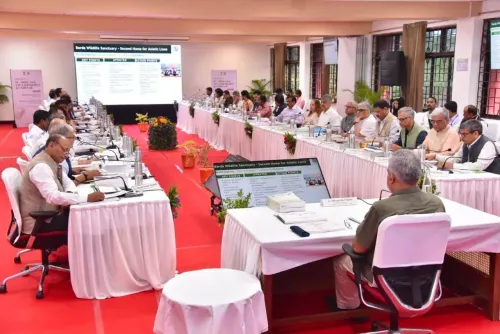
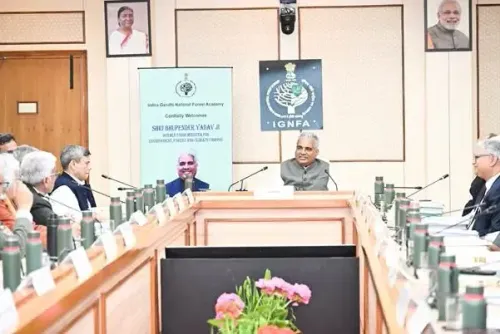
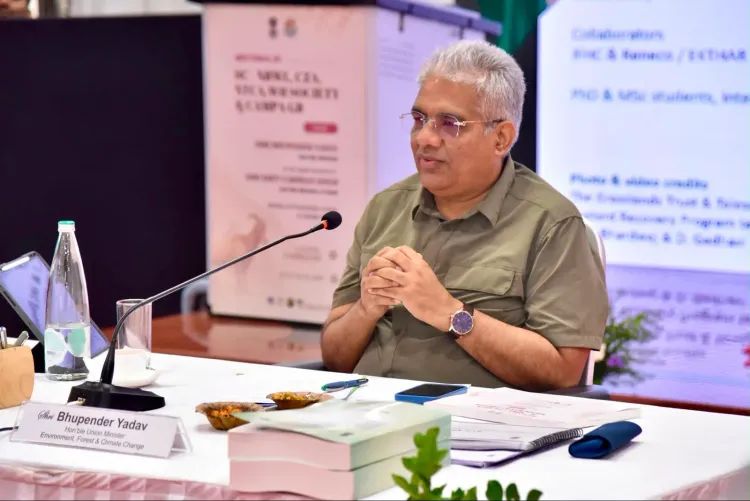
Union Environment Minister Bhupender Yadav chaired the 91st SC-NBWL meeting in Coimbatore on 9 July 2026, reviewing 118 state infrastructure and defence proposals, discussing tiger management, and releasing technical publications on the Great Indian Bustard, Sloth Bear, and Small Cats.
Key Takeaways
The 91st SC-NBWL meeting was chaired by Union Environment Minister Bhupender Yadav on 9 July 2026 in Coimbatore .
118 proposals related to infrastructure and defence from state governments were taken up for review.
The committee reviewed species conservation programmes, active tiger population management , and progress of earlier NBWL-mandated projects.
Technical publications on the Great Indian Bustard , Sloth Bear , and Small Cats were released at the meeting.
The venue — Central Academy for State Forest Service, Coimbatore — is a national training hub for state forest officers.
Outcome notifications listing approved, deferred, or rejected proposals are awaited from the committee.
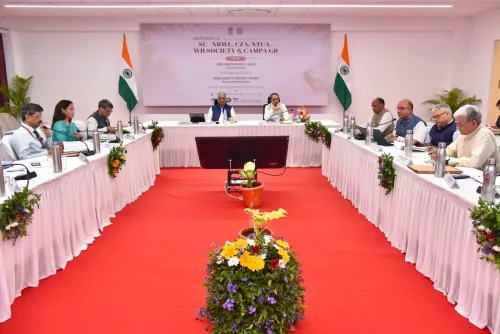
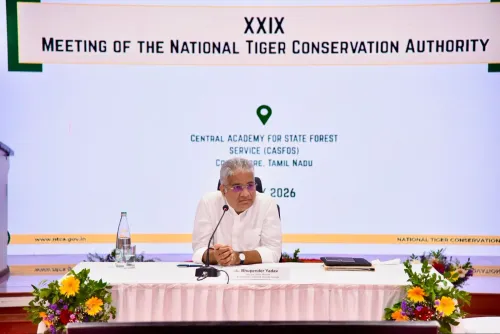
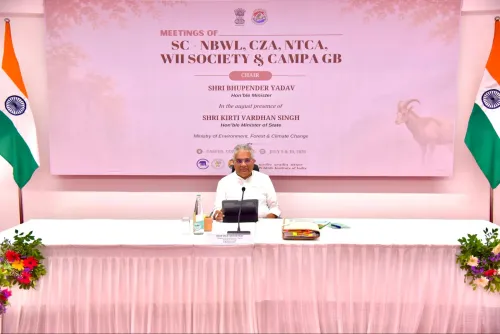
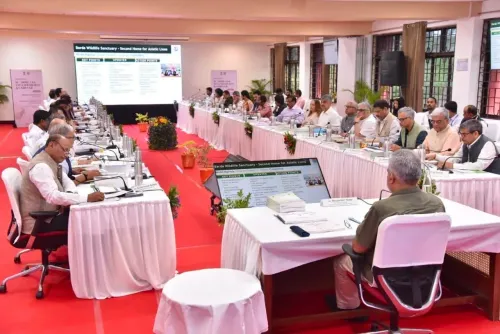
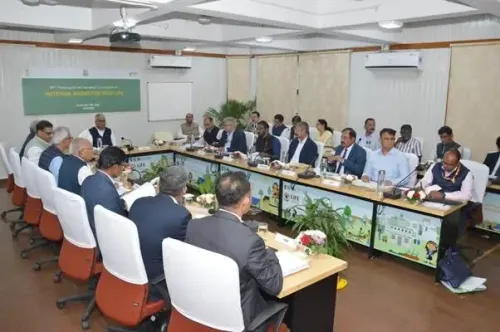
Union Environment Minister Bhupender Yadav chaired the 91st meeting of the Standing Committee of the National Board for Wildlife (SC-NBWL) on Thursday, 9 July 2026, at the Central Academy for State Forest Service in Coimbatore, Tamil Nadu. The high-level review covered infrastructure and defence proposals from state governments alongside critical species conservation programmes.
Context
The meeting took up 118 proposals related to infrastructure and defence received from state governments — a routine but consequential exercise under which the SC-NBWL examines requests for development activity inside or near protected areas. Such proposals span roads, railways, power transmission lines, and defence installations that intersect with wildlife corridors and sanctuary boundaries.
Beyond project clearances, the committee reviewed programmes and policies on species conservation, active management of tiger populations, and the progress of projects that had emanated from earlier NBWL meetings. The choice of Coimbatore — home to the Central Academy for State Forest Service — as the venue underscored the meeting's dual emphasis on regulatory oversight and institutional capacity.
Policy Backdrop
The National Board for Wildlife, constituted under the Wildlife (Protection) Act, 1972, is the apex statutory body advising the central government on conservation policy and protected-area management. Its Standing Committee is empowered to grant, defer, or reject clearances for development projects, often attaching mitigation conditions such as wildlife underpasses, compensatory afforestation, or corridor restoration.
Project Tiger, launched in 1973, remains the cornerstone of India's in-situ tiger conservation strategy. Active population management — including prey-base augmentation, anti-poaching operations, and habitat restoration — is periodically reviewed at the NBWL level to align field interventions with national recovery targets. India's obligations under the Convention on Biological Diversity also require periodic progress assessments of species recovery plans.
Species Focus: Bustard, Bear and Small Cats
A notable outcome of the meeting was the release of technical publications on three species: the Great Indian Bustard, the Sloth Bear, and Small Cats. The Great Indian Bustard is one of India's most critically endangered birds, with conservation efforts centring on its last strongholds in Rajasthan and Gujarat. Sloth Bears and Small Cats — a group that includes species such as the rusty-spotted cat and jungle cat — face mounting pressure from habitat fragmentation and human-wildlife conflict.
Technical publications of this kind are intended to serve as reference documents for state forest departments, guiding field-level interventions, monitoring protocols, and community engagement strategies. Their release at a national-level committee meeting signals an intent to standardise conservation approaches across states.
Stakeholders and What's Next
The decisions of the SC-NBWL directly affect state governments seeking project approvals, defence forces with infrastructure requirements in border and forest zones, infrastructure developers, and conservation organisations monitoring the health of protected areas. Approvals granted with conditions set the compliance baseline for project proponents.
Formal outcome notifications from the 91st SC-NBWL meeting — listing approved, deferred, and rejected proposals along with any new guidelines on tiger management — are expected to be published in due course. The uptake of the newly released technical publications by state forest departments will be a key indicator of how effectively the committee's conservation agenda translates into on-ground action.
Point of View
A forestry training hub, rather than New Delhi, signals a deliberate outreach to the state forest service cadre. The simultaneous release of technical publications on three distinct species suggests a broadening of the conservation agenda beyond flagship species like the tiger, addressing gaps in policy guidance for less-visible fauna. With 118 proposals on the table, the meeting's outcomes will be closely watched by both infrastructure proponents and conservation advocates as a barometer of how the committee weighs development urgency against ecological risk.
NationPress
8 Oct 2026
Frequently Asked Questions
What is the Standing Committee of NBWL and what does it do?
The Standing Committee of the National Board for Wildlife (SC-NBWL) is a statutory sub-committee constituted under the Wildlife (Protection) Act, 1972. It examines proposals for infrastructure and development projects inside or near protected areas and recommends approvals, deferrals, or rejections, often with mitigation conditions.
What happened at the 91st SC-NBWL meeting on 9 July 2026?
Union Environment Minister Bhupender Yadav chaired the 91st SC-NBWL meeting in Coimbatore, where 118 infrastructure and defence proposals from state governments were reviewed. The committee also discussed species conservation policies, tiger population management, and released technical publications on the Great Indian Bustard, Sloth Bear, and Small Cats.
Why is the Great Indian Bustard important for conservation in India?
The Great Indian Bustard is one of India's most critically endangered birds, with its remaining population concentrated primarily in Rajasthan and Gujarat. It faces threats from habitat loss and collision with power lines, making it a priority species under national and international conservation frameworks.
Where is the Central Academy for State Forest Service located?
The Central Academy for State Forest Service is located in Coimbatore, Tamil Nadu. It is the primary national training institute responsible for capacity building of state forest service officers across India.
How does the NBWL process work for infrastructure projects near forests?
State governments and project proponents submit proposals to the SC-NBWL for development activity inside or near protected areas. The committee reviews ecological impact, applies conditions such as compensatory afforestation or wildlife crossings, and then approves, defers, or rejects the proposals under the Wildlife (Protection) Act, 1972 and the Forest Conservation Act.