Rajasthan CM hails Mukundara Tunnel as engineering marvel
Synopsis
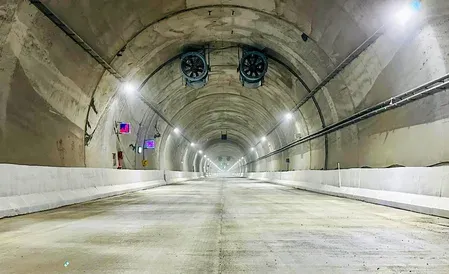
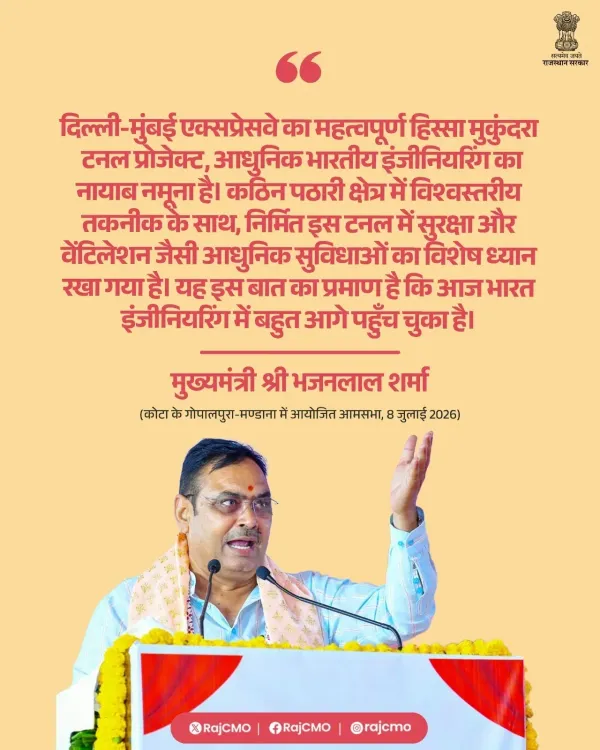
The Chief Minister's Office of Rajasthan on 9 July 2026 highlighted the Mukundara Tunnel Project — a twin-tube tunnel through the Mukundara Hills on the Delhi-Mumbai Expressway — as a landmark of modern Indian engineering, tagging CM Bhajan Lal Sharma under the 'Agrani Rajasthan' banner.
Key Takeaways
The Chief Minister's Office of Rajasthan on 9 July 2026 described the Mukundara Tunnel Project as 'an unparalleled example of modern Indian engineering.' The tunnel is a twin-tube structure through the Mukundara Hills in Rajasthan, one of the most challenging segments of the Delhi-Mumbai Expressway .
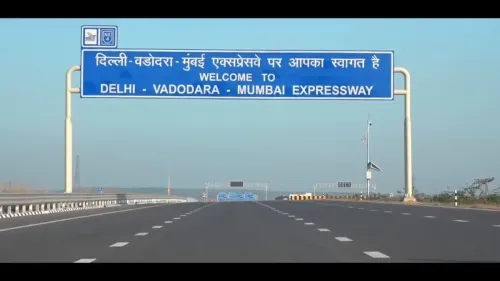
The Delhi-Mumbai Expressway spans 1,350 km and is being developed under Bharatmala Pariyojana Phase-I , with NHAI as the nodal agency.
Approximately 300 km of the expressway passes through Rajasthan , making it a key transit state in the corridor.
The post was tagged to Chief Minister Bhajan Lal Sharma and carried the hashtag #आपणो_अग्रणी_राजस्थान ('Our Leading Rajasthan'), signalling the government's intent to brand infrastructure gains as a state achievement.
The full expressway is expected to open in phases through 2025-2027 , with potential for associated industrial corridor development in Rajasthan.
The Chief Minister's Office of Rajasthan on Thursday, 9 July 2026, spotlighted the Mukundara Tunnel Project as a landmark achievement in modern Indian engineering, describing it as a critical component of the Delhi-Mumbai Expressway and a symbol of the state's infrastructure ambitions under Chief Minister Bhajan Lal Sharma.
The post, shared under the hashtag #आपणो_अग्रणी_राजस्थान ('Our Leading Rajasthan'), declared the Mukundara Tunnel Project 'an unparalleled example of modern Indian engineering' and tagged Chief Minister @BhajanlalBjp, signalling the administration's intent to own the infrastructure milestone as a political and developmental achievement.
Context
The Mukundara Tunnel Project is a twin-tube tunnel carved through the Mukundara Hills range in Rajasthan, one of the most technically demanding segments along the 1,350-kilometre Delhi-Mumbai Expressway. The Mukundara Hills, part of the ancient Aravalli range, presented significant geological and engineering challenges that required specialised tunnelling techniques to route a high-speed, access-controlled corridor through the terrain. The Delhi-Mumbai Expressway is designed to connect New Delhi to Mumbai, slashing travel time and freight transit costs between India's political capital and its financial capital. Approximately 300 km of the expressway's alignment passes through Rajasthan, making the state one of the most significant transit zones along the corridor.Policy Backdrop
The expressway was conceived under Bharatmala Pariyojana Phase-I, announced in 2015, which identified the Delhi-Mumbai corridor as a flagship greenfield expressway project. The alignment and its Rajasthan-specific stretches received final approvals from the Ministry of Road Transport and Highways between 2017 and 2019. The National Highways Authority of India (NHAI) is the nodal agency overseeing planning, construction, and maintenance of the expressway. Successive central governments have prioritised such greenfield expressways to reduce logistics costs, improve freight efficiency, and integrate regional economies into national supply chains. Rajasthan has been consistently positioned as a key transit state in both north-south and east-west economic corridors.Stakeholders and Impact
The Mukundara Tunnel and the broader Delhi-Mumbai Expressway are expected to benefit freight transporters, the Rajasthan logistics industry, and millions of highway users once fully operational. By bypassing congested stretches of older national highways, the expressway promises to reduce travel time significantly between the two metros and lower per-kilometre freight costs for goods moving through the western Indian corridor. For Rajasthan, the expressway also opens possibilities for industrial corridor development and wayside economic zones along its alignment, which could generate employment and attract investment to districts currently underserved by high-quality road infrastructure.What's Next
The full Delhi-Mumbai Expressway is expected to open in phases through 2025-2027. State-level announcements on associated industrial corridors, logistics hubs, or wayside amenities in Rajasthan are anticipated as construction milestones are achieved. The Rajasthan government's decision to amplify the Mukundara Tunnel Project through official channels suggests the administration will continue to highlight infrastructure completions as part of its broader 'Agrani Rajasthan' ('Leading Rajasthan') development narrative heading into the coming years.Point of View
Tangible infrastructure wins — particularly those funded and executed at the central level under Bharatmala. By tagging the Chief Minister directly and invoking the 'Agrani Rajasthan' brand, the government is positioning infrastructure delivery as a core political identity ahead of future electoral cycles. The move also fits a broader national pattern in which state governments amplify centrally-sponsored expressway projects to claim local credit for connectivity gains. For Rajasthan, whose large geographic footprint makes road infrastructure a perennial voter concern, the Mukundara Tunnel offers a compelling symbol of modernisation.
NationPress
8 Oct 2026
Frequently Asked Questions
What is the Mukundara Tunnel Project?
The Mukundara Tunnel Project is a twin-tube tunnel through the Mukundara Hills in Rajasthan, forming a critical and technically challenging segment of the 1,350-km Delhi-Mumbai Expressway developed under Bharatmala Pariyojana.
Where is the Mukundara Tunnel located?
The Mukundara Tunnel is located in the Mukundara Hills range in Rajasthan, through which approximately 300 km of the Delhi-Mumbai Expressway alignment passes.
What is Bharatmala Pariyojana?
Bharatmala Pariyojana Phase-I, announced in 2015, is a central government programme that identified the Delhi-Mumbai corridor as a flagship greenfield expressway project, with the National Highways Authority of India as the nodal agency.
When will the Delhi-Mumbai Expressway open?
The full Delhi-Mumbai Expressway is expected to open in phases through 2025-2027, though specific completion timelines for individual segments depend on ongoing construction progress.
Who is Bhajan Lal Sharma?
Bhajan Lal Sharma is a BJP politician who has been serving as the Chief Minister of Rajasthan since December 2023.