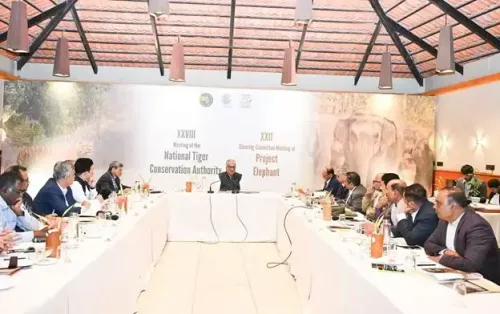
Bhupender Yadav Meets Kerala Forest Minister in Delhi

Synopsis
Union Environment Minister Bhupender Yadav met Kerala's Forest and Skill Development Minister Shibu Baby John in New Delhi on July 8, 2026. Their talks covered environmental conservation, wildlife protection, and skill development collaboration, reflecting the structural Centre-State coordination required under India's concurrent-list forest governance framework.
Key Takeaways
Bhupender Yadav , Union Environment Minister, met Kerala's Shibu Baby John in New Delhi on July 8, 2026 .
Discussions covered environmental conservation , wildlife protection , and skill development initiatives.
Kerala is a critical state for national wildlife policy, housing significant portions of the Western Ghats biodiversity hotspot, elephant corridors, and tiger reserves.
India's Forest Conservation Act, 1980 and Wildlife (Protection) Act, 1972 mandate ongoing Centre-State coordination on forest and wildlife governance.
The meeting's skill development component signals intent to integrate green livelihood programmes with conservation mandates.
Follow-up action may include joint proposals on CAMPA fund utilisation and wildlife corridor management.
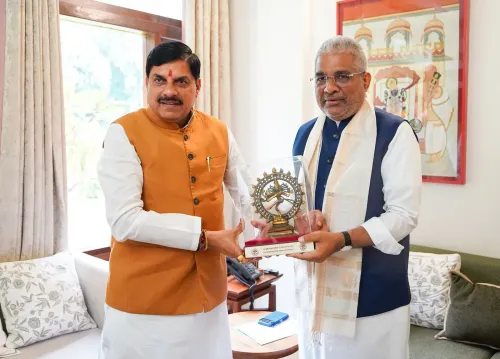
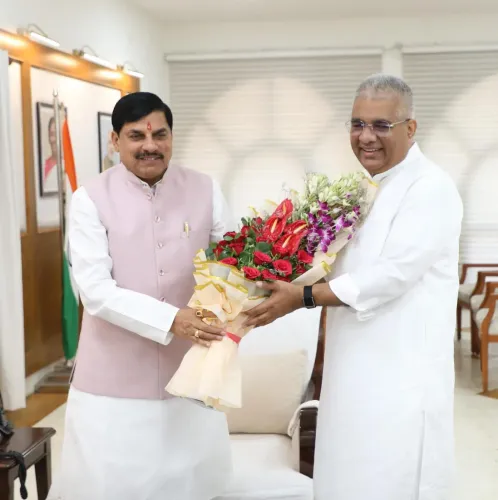
Union Environment Minister Bhupender Yadav met with Shibu Baby John, Kerala's Minister for Forests and Wildlife Protection and Skill Development, in New Delhi on Wednesday, July 8, 2026, for discussions centred on environmental conservation, wildlife protection, and skill development cooperation between the Centre and the state.
Context
The meeting brought together the two ministers to advance what Yadav described as a 'productive interaction' aimed at deepening collaboration across shared mandates. Kerala, home to a substantial stretch of the Western Ghats biodiversity hotspot, has long been a key partner for the Centre on forest and wildlife governance. The state manages critical elephant corridors and tiger reserves that fall under jointly administered frameworks.
Yadav posted about the meeting on X, noting that the discussions were 'focused on advancing collaboration for environmental conservation, wildlife protection, and skill development initiatives.' The pairing of conservation with skill development is notable, reflecting a wider push to link green livelihoods with ecological stewardship.
Policy Backdrop
Environmental governance in India sits under the concurrent list of the Constitution, making Centre-State coordination structurally necessary. The Wildlife (Protection) Act, 1972 and the Forest Conservation Act, 1980 both institutionalise joint decision-making: the latter requires central approval for any diversion of forest land, ensuring the Ministry of Environment, Forest and Climate Change remains a direct stakeholder in state-level forest decisions.
Kerala has historically engaged the Centre on sensitive ecological matters, including notifications related to Western Ghats ecology and the management of compensatory afforestation funds under the CAMPA (Compensatory Afforestation Fund Management and Planning Authority) framework. These funds, channelled back to states, are a significant lever for on-ground conservation and restoration work.
The inclusion of skill development in the agenda points to programmes that train forest-fringe communities in conservation-compatible livelihoods — an approach that has gained traction as a way to reduce human-wildlife conflict while building local capacity.
Stakeholders and Impact
State forest departments on both sides stand to benefit from clearer coordination on protected area management and species conservation protocols. Communities living along the Western Ghats — spanning Kerala's forest districts — are the most direct beneficiaries of any joint initiatives that address both ecological protection and livelihood security.
Wildlife protection in Kerala carries particular national significance given the state's tiger and elephant populations. Any agreements on corridor management or anti-poaching cooperation would have measurable conservation outcomes. Similarly, green skill programmes targeting forest-adjacent communities could reduce pressure on fragile ecosystems.
What's Next
The meeting is likely to be followed by technical-level discussions between the two ministries on specific proposals, potentially including CAMPA fund utilisation plans or joint wildlife management protocols. Parliament's next session could see questions or statements on Centre-State forest cooperation, particularly if formal agreements emerge from this bilateral engagement. The broader pattern of linking conservation mandates with skill development suggests that any follow-up framework may be positioned within the government's green economy agenda.
Point of View
This meeting could mark a substantive step in India's green federalism agenda.
NationPress
7 Oct 2026
Frequently Asked Questions
Why did Bhupender Yadav meet Kerala's forest minister?
Union Environment Minister Bhupender Yadav met Kerala's Forest and Skill Development Minister Shibu Baby John on July 8, 2026, in New Delhi to advance collaboration on environmental conservation, wildlife protection, and skill development initiatives.
Who is Shibu Baby John?
Shibu Baby John is Kerala's Minister holding the portfolios of Forests and Wildlife Protection and Skill Development, making him a key interlocutor for Centre-State coordination on forest governance.
Why is Kerala important for India's wildlife policy?
Kerala contains a significant portion of the Western Ghats, one of the world's biodiversity hotspots, and is home to major elephant corridors and tiger reserves, making it central to national wildlife conservation efforts.
What is CAMPA and how does it relate to Kerala?
CAMPA, or the Compensatory Afforestation Fund Management and Planning Authority, channels funds to states for afforestation and forest restoration. Kerala, with its large forest cover, is a significant recipient and stakeholder in how these funds are deployed.
What laws govern Centre-State forest cooperation in India?
The Forest Conservation Act, 1980 and the Wildlife (Protection) Act, 1972 are the primary laws that institutionalise joint Centre-State decision-making on forest land diversion and wildlife protection respectively.