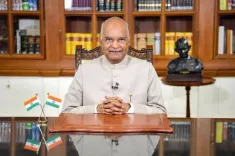
How is Forest Minister Bhupender Yadav Addressing Human-Elephant Conflict?
Synopsis
Union Minister Bhupender Yadav reviews human-elephant conflicts and conservation strategies in a crucial meeting, focusing on the recent tragedy involving elephants. Discover how India plans to tackle these conflicts effectively.
Key Takeaways
Human-elephant conflict is a pressing issue that needs immediate attention.
The recent train incident underscores the urgency for effective mitigation strategies.
Community involvement and scientific management are key to successful conservation efforts.
Strategies include the 'Management of Tigers Outside Tiger Reserves' project.
Integrated management plans for elephant reserves are crucial for species survival.
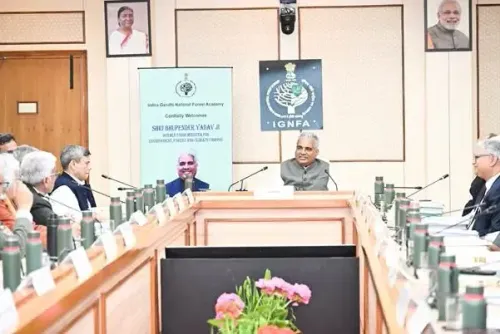
New Delhi, Dec 21 (NationPress) The Union Minister for Environment and Forest, Bhupender Yadav, initiated a comprehensive review of the human-elephant conflict situation across India on Sunday. This review focused on insights from ongoing investigations into the contributing factors of these conflicts and the methods of mitigation, as stated by an official.
The significance of this meeting was underscored by the recent incident involving the Sairang (Mizoram)-New Delhi Rajdhani Express, which tragically resulted in the deaths of seven elephants and the injury of a calf in Assam's Hojai district.
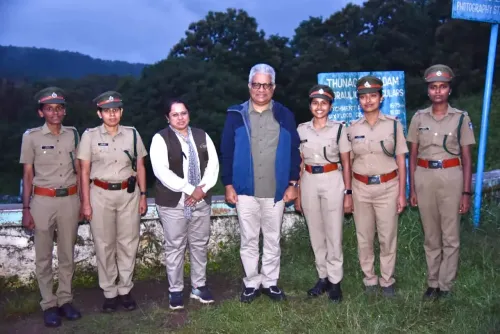
During this session, the Minister also collaborated with experts to enhance strategies for the conservation of tigers and elephants, taking place at the Sundarbans Tiger Reserve in West Bengal, according to the official.
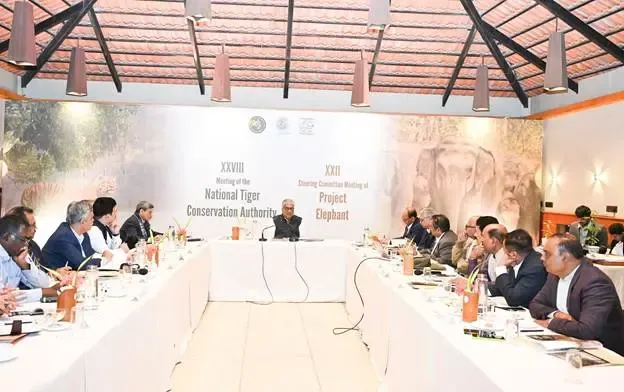
The 28th Meeting of the National Tiger Conservation Authority (NTCA) and the 22nd Steering Committee Meeting of Project Elephant convened senior government officials, scientists, and field specialists from regions where tigers and elephants are present, alongside representatives from key conservation organizations, to evaluate the progress of both Project Tiger and Project Elephant.
Minister Yadav highlighted India's renowned tiger conservation model and stressed the necessity for scientific management, planning at the landscape level, community involvement, inter-state cooperation, and international partnerships.
The minutes from the 27th Meeting held on April 18, 2025, were ratified, and the Action Taken Report regarding decisions made during that meeting was reviewed.
Discussions also included outcomes from four Regional Meetings, concentrating on the major challenges encountered by tiger reserves, as per an official statement.
Strategies to tackle human-tiger conflict, including a three-pronged approach and the launch of the initiative ‘Management of Tigers Outside Tiger Reserves’, were outlined. Challenges such as personnel shortages, financial limitations, habitat degradation, and management of invasive species were also assessed, with directives issued for appropriate follow-up by states and relevant authorities.
The meeting endorsed the agreements made in the Technical Committee Meetings of the NTCA, which included the endorsement of Tiger Conservation Plans; extension and expansion of Project Cheetah; tiger translocation; prey enhancement; landscape management planning; carnivore health management training programs; and inputs provided by the NTCA regarding project proposals to the Standing Committee of the National Board for Wildlife (NBWL).
A thorough review of the human-elephant conflict situation across India was also conducted, according to an official statement.
The committee examined findings from ongoing research into conflict drivers and mitigation techniques, alongside the status and adequacy of compensation mechanisms implemented by elephant range states.
The meeting also discussed evaluating methods for estimating elephant populations, progress on integrated conservation and management strategies for the Ripu-Chirang Elephant Reserve, and future action plans, as stated.
Future plans include conducting Management Effectiveness Evaluations for all Elephant Reserves with support from CAMPA funding and a proposed study on elephant corridors, habitat use, and conflict hotspots in the Bandhavgarh region.
The Steering Committee reiterated the Government of India’s dedication to science-based conservation, inter-state coordination, technological advancements, and community-focused approaches to secure a sustainable future for elephants and the communities residing in their habitats.
Point of View
Our unwavering commitment is towards presenting news that informs and engages the public. The review led by Bhupender Yadav signifies a proactive approach in addressing human-elephant conflicts, reflecting the government's dedication to wildlife conservation whilst also considering community safety. It's essential to balance ecological preservation with human needs.
NationPress
1 Oct 2026
Frequently Asked Questions
What is the main focus of the meeting led by Bhupender Yadav?
The main focus is on reviewing the status of human-elephant conflict and discussing strategies for mitigation and conservation.
Why is the meeting significant?
It follows a tragic incident where elephants were killed by a train, highlighting the urgent need for effective conflict management.
What are some challenges discussed in the meeting?
Challenges include staff shortages, financial constraints, habitat degradation, and managing invasive species.