Union Environment Minister Bhupender Yadav Reviews Infrastructure Proposals Impacting Wildlife Conservation
Synopsis
In a pivotal meeting, Union Environment Minister Bhupender Yadav led discussions on crucial infrastructure proposals affecting protected areas, emphasizing conservation efforts. Key agreements on geospatial technology and wildlife conservation were made, marking significant progress in national environmental initiatives.
Key Takeaways
Infrastructure proposals near protected areas were reviewed.
A MoU was signed to enhance tech applications in conservation.
Environmental flows in the Chambal River were addressed.
The importance of grasslands and rangelands for biodiversity was highlighted.
A conservation plan for wild water buffalo was recommended.
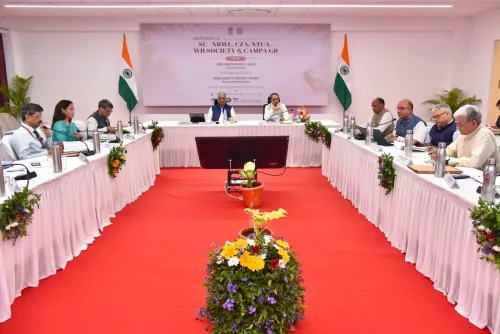
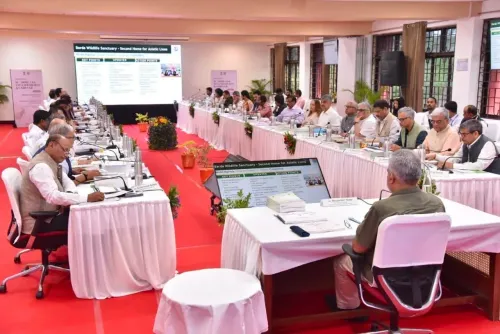
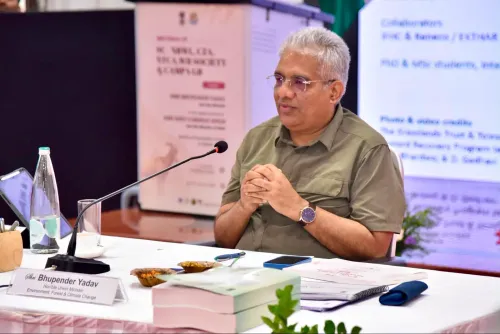
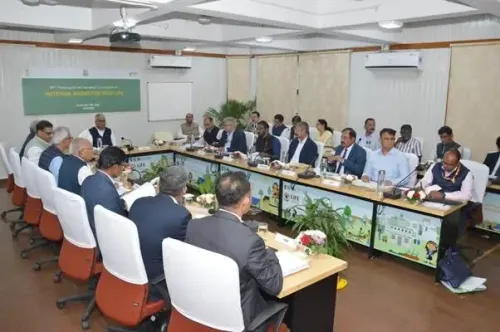
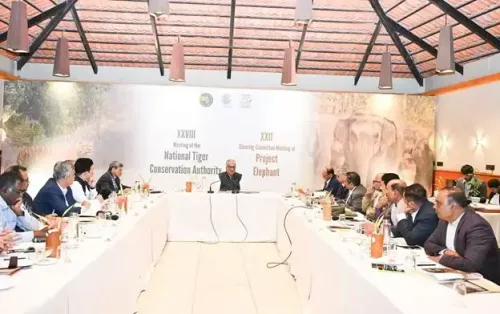
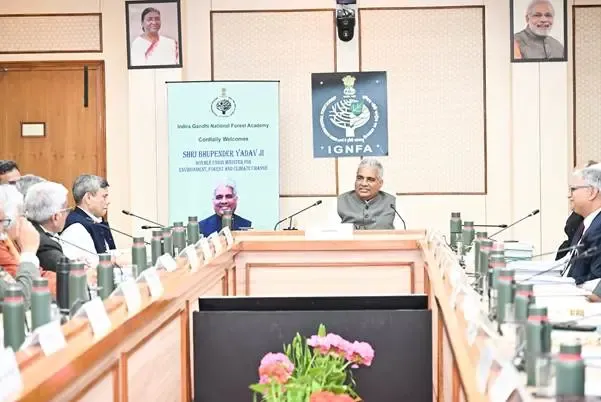
Dehradun, March 21 (NationPress) Union Environment Minister Bhupender Yadav presided over a meeting on Saturday that focused on various proposals concerning roadways, drinking water supply, defense, irrigation, and infrastructure projects adjacent to protected areas during the 90th session of the Standing Committee of the National Board for Wildlife, as reported by an official.
The Standing Committee of the National Board for Wildlife is a legally established entity formed under the Wildlife (Protection) Act of 1972, which provides guidance to the Union government on issues concerning the conservation and safeguarding of wildlife and forests, according to a statement from officials.
A significant development during this meeting included the signing of a Memorandum of Understanding (MoU) between the Forest Survey of India (FSI) and the Bhaskaracharya National Institute for Space Applications and Geo-informatics (BISAG-N). This agreement aims to enhance the application of geospatial technologies, remote sensing, and AI/machine learning tools in managing forest fires, conserving wildlife, and supporting decision-making processes, as mentioned by an official from the Ministry for Environment, Forest and Climate Change.
The Committee also examined the advancements made regarding the resolutions reached in the seventh meeting of the National Board for Wildlife and assessed the progress of essential national initiatives related to species recovery, habitat management, and institutional fortification.
During the meeting, Minister Yadav also addressed the topic of environmental flows in the Chambal River to ensure the survival of riverine species like dolphins, gharials, and other aquatic life forms, especially during dry periods.
Moreover, the Committee delved into the preservation of grasslands and rangelands, underscoring their significance for biodiversity, carbon sequestration, resilience in drylands, and the sustenance of pastoral communities.
It was noted that these ecosystems often go unacknowledged in planning frameworks and necessitate specific restoration strategies, enhanced mapping, and alignment with national commitments like Land Degradation Neutrality, according to the statement.
The Committee also discussed the reliance of nomadic and pastoral communities on protected areas.
It acknowledged the ecological and livelihood connections inherent in pastoral systems and stressed the importance of balanced strategies that meet conservation objectives while respecting traditional practices and socio-economic needs.
Additionally, the conservation status of the wild water buffalo was a topic of discussion, leading the committee to recommend a detailed conservation action plan for this species, as noted in the statement.
Point of View
The discussions led by Union Minister Bhupender Yadav signify a critical intersection of infrastructure development and wildlife conservation. The emphasis on integrating advanced technology into conservation strategies highlights a progressive approach to addressing ecological challenges while accommodating development needs.
NationPress
23 Sept 2026
Frequently Asked Questions
What was the purpose of the meeting led by Bhupender Yadav?
The meeting aimed to review infrastructure proposals impacting protected areas and discuss conservation strategies.
What is the role of the Standing Committee of the National Board for Wildlife?
It advises the Union government on wildlife and forest conservation matters.
What technology was discussed for enhancing wildlife conservation?
Geospatial technologies, remote sensing, and AI/machine learning tools were highlighted.
What issues were addressed regarding riverine species?
The meeting discussed environmental flows in the Chambal River for the conservation of riverine species.
What was recommended for the wild water buffalo?
The committee recommended a comprehensive conservation action plan for wild water buffalo.