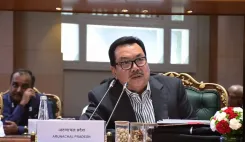
Union Minister Bhupender Yadav Leads 89th Wildlife Committee Meeting
Synopsis
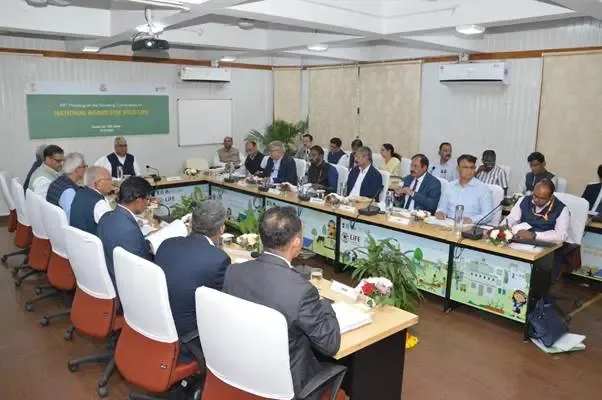
On February 28, Union Minister Bhupender Yadav led the 89th meeting of the National Board for Wildlife in Bhopal, focusing on vital wildlife conservation proposals and development projects near protected areas.
Key Takeaways
89th SC-NBWL meeting led by Bhupender Yadav in Bhopal.
58 new proposals were reviewed for wildlife conservation.
Discussion on ecological flow in Chambal River for aquatic species.
Emphasis on collaboration with scientific institutions.
Focus on balancing development and conservation.
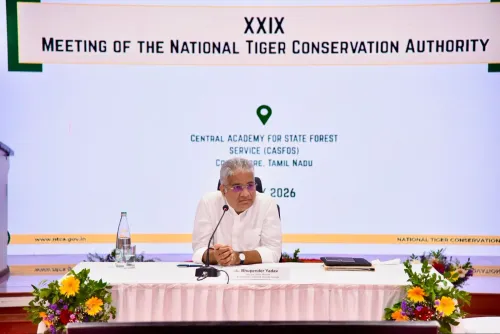
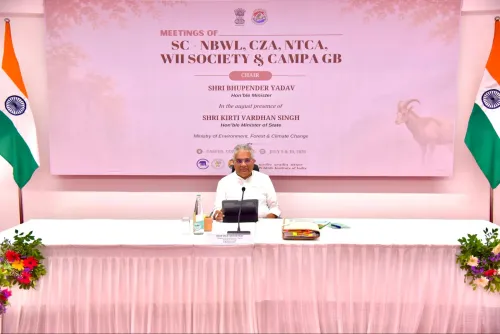
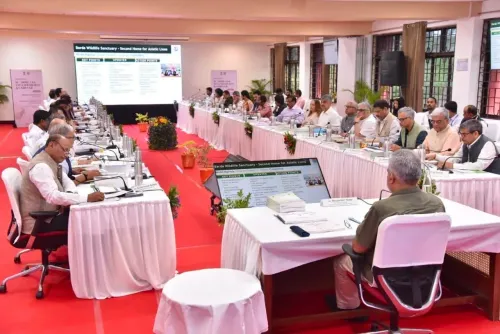
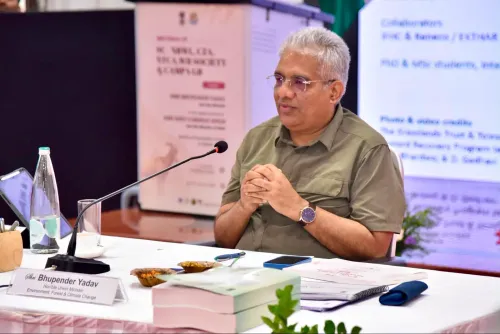
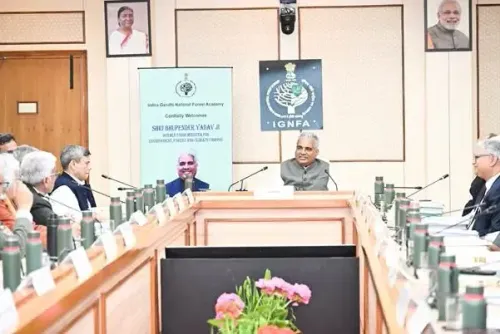
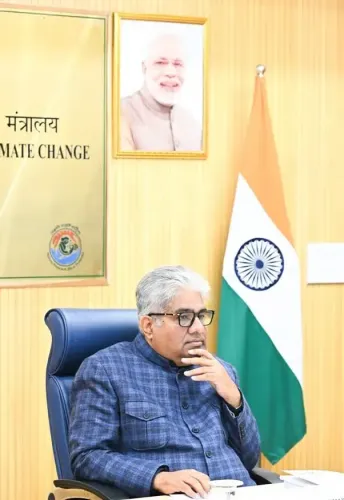
Bhopal, February 28 (NationPress) - On Saturday, Union Minister for Environment, Forest and Climate Change, Bhupender Yadav, presided over the 89th session of the Standing Committee of the National Board for Wildlife (SC-NBWL) in Bhopal, Madhya Pradesh. The meeting focused on various proposals aimed at enhancing wildlife conservation.
The Standing Committee reviewed development initiatives situated within and near protected zones, wildlife sanctuaries, tiger reserves, and eco-sensitive areas, adhering to the Wildlife (Protection) Act, 1972.
Each proposal was scrutinized in light of ecological sensitivity, legal obligations, and necessary mitigation strategies.
A total of 58 new proposals were assessed, spanning sectors including communication infrastructure, optical fiber networks, power transmission, road construction, drinking water supply, thermal power generation, defense, irrigation, and additional infrastructure.
The Committee also engaged in discussions on key policy issues, emphasizing the ecological significance of maintaining environmental flows in the Chambal River to protect aquatic species such as dolphins and gharials. Furthermore, it addressed the socio-economic and ecological conditions of villages within tiger reserves, the role of grasslands in wildlife management, and strategies to navigate the challenges posed by the human–leopard interface.
The meeting underscored the necessity for collaboration with scientific and technical organizations, including the Wildlife Institute of India, the Indian Council of Forestry Research and Education, and the Central Water Commission, to ensure that conservation policies are grounded in thorough research and inter-sectoral cooperation.
The Standing Committee of the National Board for Wildlife is a statutory entity established under the Wildlife (Protection) Act, 1972, tasked with advising the Union government on wildlife and forest conservation while ensuring that development projects in and around protected areas proceed sustainably.
Point of View
Ensuring that ecological integrity is maintained while addressing infrastructure demands.
NationPress
19 Sept 2026
Frequently Asked Questions
What was the main focus of the 89th SC-NBWL meeting?
The main focus was on wildlife conservation proposals and development projects in and around protected areas.
Who chaired the meeting?
The meeting was chaired by Union Minister Bhupender Yadav.
How many proposals were considered?
A total of 58 new proposals were assessed during the meeting.
What are some sectors these proposals cover?
The proposals cover sectors such as communication infrastructure, power transmission, road projects, and more.
What is the role of the Standing Committee?
The Standing Committee advises the Union government on wildlife and forest conservation matters.