PIL in Supreme Court seeks minimum wages for state-controlled temple priests
Synopsis
A Supreme Court PIL has exposed a stark contradiction: state governments control thousands of temples and their revenues — worth ₹1.34 lakh crore annually — yet deny the very priests who run them minimum wages, social security, or pension, with some earning as little as ₹750 a month. The case could redefine the legal status of temple workers across India.
Key Takeaways
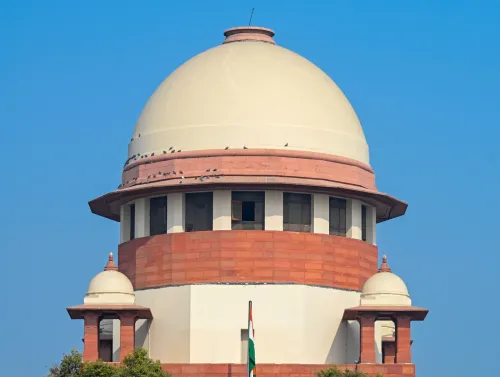
A PIL filed in the Supreme Court by advocate Ashwini Kumar Upadhyay seeks minimum wages and labour protections for priests and temple staff in state-controlled temples.
Temple priests in several states earn as little as ₹1,000–₹5,000 per month , with no pension, healthcare, or social security.
Hindu temples generate nearly ₹1.34 lakh crore in annual revenue, according to Ministry of Tourism data cited in the plea.
The petition invokes Articles 14, 21, 38, 39, and 43 of the Constitution and Section 2(k) of the Code on Wages, 2019 .
States including Tamil Nadu , Andhra Pradesh , Telangana , Karnataka , and Kerala are cited for exercising extensive control over temples while denying labour protections.
A Madras High Court bench had earlier flagged salaries as low as ₹750 per month for temple staff as incompatible with a dignified life.
A public interest litigation (PIL) has been filed in the Supreme Court seeking directions to the Centre and state governments to constitute a judicial commission or expert committee to review the wages and service conditions of priests, sevadars, and temple staff working in state-controlled temples across India. The petition was filed on 10 May by advocate Ashwini Kumar Upadhyay through advocate-on-record Ashwani Kumar Dubey.
What the PIL Demands
Filed under Article 32 of the Constitution, the plea seeks a declaration that priests and temple staff fall within the definition of "employee" under Section 2(k) of the Code on Wages, 2019, making them entitled to minimum wages and other labour welfare protections. It also seeks directions to establish a uniform wage framework and welfare mechanism for temple workers in state-controlled institutions.
The petition contends that once the state assumes administrative, financial, and economic control over a temple, an employer-employee relationship arises between temple administrations and their priests or workers. "The continued denial of fair wages, social security, and dignified service conditions to priests and temple staff, despite administrative, financial and economic control over thousands of temples, violates the fundamental rights under Articles 14 and 21 of the Constitution," the plea stated.
Ground Reality: Starvation Wages and No Social Security
According to the petition, priests and temple staff in several states survive on "arbitrary honorariums, dakshina-based payments and meagre remuneration", often ranging between ₹1,000 and ₹5,000 per month, without pension, healthcare, or social security protections. The PIL claimed that priests in low-income temples are frequently compelled to survive on "starvation wages", even as temples collectively generate significant revenue.
Citing Ministry of Tourism data, the plea submitted that Hindu temples generate nearly ₹1.34 lakh crore in annual revenue and play a major role in sustaining the tourism economy. "The revenue through tourism which these temples bring, is possible only due to the presence of the temple staff, including priests and sevadars. They not only look after the temple, but also keep its culture alive," the petition stated.
The PIL referenced the Madurai Bench of the Madras High Court, which had earlier observed that temple staff were receiving salaries as low as ₹750 per month, later revised to ₹2,984, and had remarked that it was impossible to lead a dignified life on such amounts.
States in the Spotlight
Referring to statutory frameworks governing temples in Tamil Nadu, Andhra Pradesh, Telangana, Karnataka, and Kerala, the plea argued that governments exercise pervasive control over appointments, service conditions, disciplinary supervision, and temple revenues, while simultaneously denying labour welfare protections to temple workers. "On one hand, States are controlling the functioning and funds of the temples, while, on the other, they refuse to grant the priests and temple staff even the minimum wages given under the labour laws," the petition said.
The PIL also cited recent protests by priests and temple staff in Andhra Pradesh and Telangana demanding minimum wages and better service conditions. It further referred to a Tamil Nadu Hindu Religious and Charitable Endowments (HR&CE) Department circular issued in February 2025 that prohibited priests at the Dandayuthapani Swami Temple in Madurai from accepting dakshina in aarti plates — a move that was later withdrawn following public outrage. "Although withdrawn due to public outrage, the incident highlights the State's arbitrary power over the survival of the priests," the plea added.
Constitutional and Legal Basis
The petition relied on constitutional directives under Articles 38, 39, and 43, which require the government to secure social and economic justice, adequate means of livelihood, and living wages for workers. It also cited judicial precedents including the Allahabad High Court's ruling in Shree Satya Narain Tulsi Manas Mandir v. Workman Compensation Commissioner and the Madras High Court's judgment in Periyanambi Narasimha Gopalan v. Secretary to Government.
"There exists no rational basis to distinguish priests from other classes of workers, as they perform comparable duties under similar conditions of economic dependence and vulnerability," the petition contended. With the matter now before the Supreme Court, the outcome could set a nationwide precedent for the labour rights of hundreds of thousands of temple workers across India.
Point of View
Revenues, and service conditions — and then disclaim all labour obligations. The ₹1.34 lakh crore annual revenue figure makes the 'starvation wages' argument almost unanswerable on equity grounds. What makes this case consequential is its potential to force a legal reckoning across southern states where government control of Hindu temples is most entrenched, even as minority religious institutions remain largely outside state oversight — a disparity the PIL does not explicitly raise, but which the Supreme Court may find difficult to ignore.
NationPress
23 Sept 2026
Frequently Asked Questions
What is the PIL filed in the Supreme Court about temple priests?
The PIL seeks directions to the Centre and state governments to establish a judicial commission to review wages and service conditions of priests, sevadars, and temple staff in state-controlled temples. It also seeks a declaration that these workers qualify as 'employees' under the Code on Wages, 2019, entitling them to minimum wages and social security.
How much are temple priests currently paid in state-controlled temples?
According to the petition, priests and temple staff in several states earn between ₹1,000 and ₹5,000 per month through arbitrary honorariums and dakshina-based payments, without pension or healthcare. The Madras High Court had earlier noted salaries as low as ₹750 per month, later revised to ₹2,984.
Which states are named in the PIL for controlling temples?
The PIL specifically references Tamil Nadu, Andhra Pradesh, Telangana, Karnataka, and Kerala as states that exercise pervasive control over temple appointments, revenues, and service conditions, while denying minimum wage protections to temple workers.
What is the legal basis for the PIL's demand for minimum wages?
The petition relies on Section 2(k) of the Code on Wages, 2019, and constitutional provisions under Articles 14, 21, 38, 39, and 43, arguing that state control over temples creates an employer-employee relationship that triggers statutory labour obligations.
What is the significance of the ₹1.34 lakh crore temple revenue figure?
Citing Ministry of Tourism data, the PIL argues that Hindu temples generate nearly ₹1.34 lakh crore in annual revenue, making the denial of minimum wages to the priests who sustain this ecosystem both economically unjustifiable and constitutionally suspect.