Is There a Need to Curb Communalism in Judicial Orders?

Synopsis
A PIL has been filed in the Supreme Court to protect judicial independence and prevent communalization of judicial orders, following controversial rulings by Justice G.R. Swaminathan. This legal move aims to uphold the rule of law amidst rising tensions and public backlash.
Key Takeaways
PIL filed to protect judicial independence.
Calls to prevent intimidation of judges.
Highlighting the need for lawful criticism.
Concerns over communal polarization.
Legal provisions exist but lack enforcement.
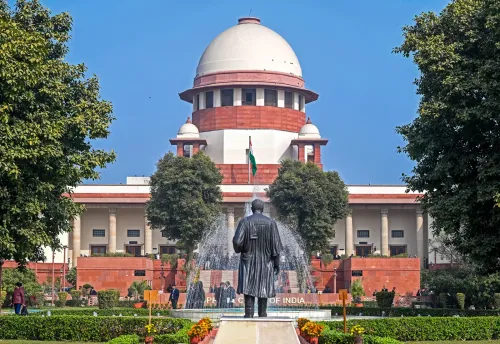
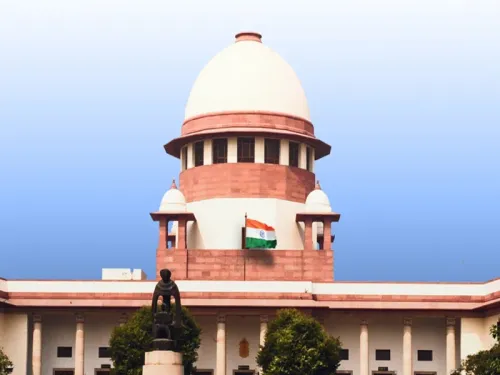
New Delhi, Dec 15 (NationPress) A public interest litigation (PIL) has been submitted to the Supreme Court, calling for immediate measures to safeguard the independence of the judiciary and to avert the intimidation and communalisation of judicial orders. This comes in the wake of recent decisions made by Justice G.R. Swaminathan of the Madras High Court.
The PIL, lodged by advocate G.S. Mani under Article 32 of the Constitution, emphasizes that the petition aims not to advocate for any specific judge but instead seeks to protect the judiciary as an institution, uphold the rule of law, prevent communal division, and ensure standardized application of constitutional principles throughout the nation.
In light of the uproar following Justice Swaminathan's rulings related to the Thiruparankundram Deepam matter, the petitioner asserts that the significant public reaction—including political remarks, protests, legal demonstrations, and online movements—has transcended acceptable bounds of criticism, venturing into scandalizing the judiciary, communalizing judicial actions, and disrupting the administration of justice.
The petition further contends that judges should not endure coercion via public protests or online harassment regarding their judicial choices, reiterating that the only constitutionally sanctioned recourse against a judicial ruling is through appeal, review, or other lawful mechanisms.
The PIL warns that permitting such campaigns against active judges could create a chilling effect on judicial autonomy and deter judges from performing their responsibilities without fear.
The plea argues that framing a judicial decision as religiously biased erodes public confidence in constitutional courts and fuels mob-driven justice, thus posing a genuine and imminent threat to public order and communal harmony in Tamil Nadu.
Despite existing legal provisions in the Bharatiya Nyaya Sanhita, the Information Technology Act, and the Contempt of Courts Act, no substantial preventive or corrective measures have been enacted to limit unlawful gatherings near the Madras High Court or to address online hate speech directed at Justice Swaminathan, who is a constitutional authority.
The petitioner noted that comprehensive representations were made to the Tamil Nadu Chief Secretary, Home Secretary, Director General of Police, senior police officials, and the Registrar General of the Madras High Court, but to date, there has been no response or action on these representations.
Seeking the apex court's intervention, the PIL requests the issuance of orders to prevent unlawful demonstrations against courts and judges, protect judicial independence from political and communal influences, ensure accountability for hate speech and the communalization of judicial orders, and instruct law enforcement to maintain public order and constitutional integrity.
Earlier this month, Tamil Nadu BJP president Nainar Nagenthran accused members of the INDIA bloc of trying to intimidate and undermine the judiciary through their initiative to start impeachment procedures against Justice Swaminathan, labeling their actions as shameful and politically motivated and an attempt to instill fear in judges.
Recently, a coalition of former Supreme Court judges, past Chief Justices of High Courts, and senior High Court judges released a joint statement denouncing the impeachment attempt as a blatant effort to pressure a sitting judge for judicial reasoning that does not conform to specific ideological or political expectations.
They cautioned that such actions undermine the fundamentals of democracy, asserting that in a constitutional framework governed by the rule of law, judgments should be evaluated through appeals and reasoned legal critique rather than political coercion or threats of impeachment.
Point of View
I assert that the safeguarding of judicial independence is paramount for preserving the rule of law in our democracy. The ongoing attempts to politicize judicial decisions threaten the very fabric of our constitutional framework. We must remain vigilant to ensure that the judiciary operates free from external pressures, fostering trust in our legal institutions.
NationPress
30 Sept 2026
Frequently Asked Questions
What is the main purpose of the PIL filed in the Supreme Court?
The primary aim of the PIL is to protect the independence of the judiciary and prevent the intimidation and communalization of judicial orders following recent controversial rulings.
Who filed the PIL and under which article of the Constitution?
The PIL was filed by advocate G.S. Mani under Article 32 of the Constitution.
What specific actions does the PIL seek from the Supreme Court?
The PIL seeks directions to prevent unlawful protests against judges, safeguard judicial independence, ensure accountability for hate speech, and direct law enforcement to maintain public order.
What has been the public response to Justice Swaminathan's rulings?
The public response has included protests, political statements, and social media campaigns, which have raised concerns about crossing the limits of acceptable criticism of the judiciary.
What are the potential consequences of communalizing judicial decisions?
Communalizing judicial decisions undermines public faith in the legal system and poses a threat to public order and communal harmony.