Madhya Pradesh Chief Minister Releases Endangered Vultures at Halali Dam
Synopsis
On February 23, CM Mohan Yadav released five endangered vultures into Raisen's Halali Dam wetland, underscoring the state's commitment to wildlife conservation. This initiative not only highlights the cultural significance of vultures in India but also enhances efforts in vulture monitoring and protection.
Key Takeaways
Five endangered vultures released in Halali Dam water wetland.
Madhya Pradesh's commitment to wildlife conservation is highlighted.
Vultures are crucial for ecological balance and disease prevention.
Satellite telemetry aids in understanding vulture populations and threats.
Significant vulture counts recorded in recent years.
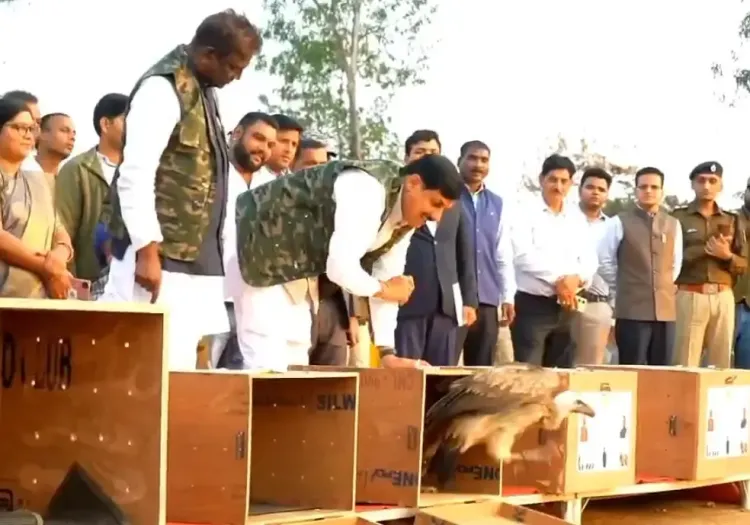
On February 23, in Raisen, Chief Minister Mohan Yadav took a significant step in wildlife conservation by releasing five endangered vultures into the Halali Dam water wetland, a vital reservoir located about 40 kilometers from Bhopal, the state capital.
Yadav remarked that in Indian culture, vultures represent strength and sacrifice. He praised the forest department for their dedication to vulture conservation, emphasizing the government's unwavering commitment to protecting animal and bird species essential for ecological balance.
He referenced the Ramayana, highlighting the story of Jatayu, who heroically sacrificed his life to save Sita from Ravana, and his brother Sampati, who shielded him from the sun, illustrating themes of courage and sacrifice.
The released vultures comprised four Indian Vultures (Gyps indicus) and one Cinereous Vulture (Aegypius monachus), as per an official statement from the Madhya Pradesh forest department.
These five rare vultures were fitted with advanced GPS-GSM satellite transmitters following a structured acclimatization and observation period at the Vulture Conservation Breeding Centre in Bhopal.
The process of tagging was conducted with oversight from wildlife veterinarians from Wildlife SOS, alongside representatives from other relevant institutions and the Forest Department.
This initiative is a crucial step toward understanding the changing vulture landscape in Central India.
According to the statement, while Indian Vultures typically remain within localized territories, Cinereous Vultures migrate long distances along the Central Asian Flyway, one of the globe's most significant migratory bird corridors, which spans over 30 countries.
Moreover, to enhance bird conservation efforts, the Madhya Pradesh Forest Department has initiated a satellite telemetry program in partnership with WWF-India and the Bombay Natural History Society.
This telemetry data will provide vital insights into vulture habitat usage, movement patterns, responses to anthropogenic pressures, identification of key roosting and feeding sites, and high-risk areas such as electrocution, poisoning, and habitat degradation.
The scientific findings from this initiative will inform more effective strategies to mitigate threats and bolster cross-border conservation efforts.
By implementing satellite telemetry, Madhya Pradesh has established a comprehensive, data-driven conservation approach, ensuring the long-term protection of endangered vulture species and reinforcing their role as indicators of environmental health.
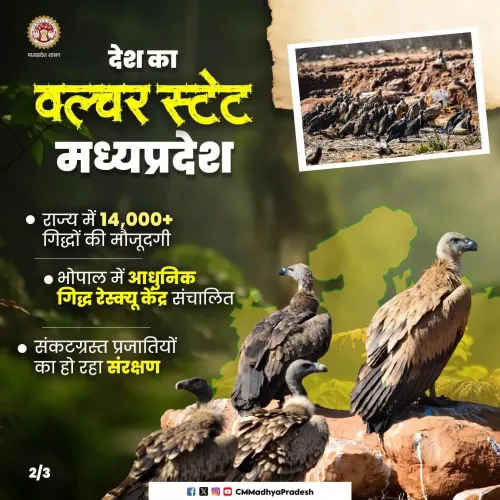
Vultures play a critical ecological role as nature's sanitation workers, maintaining environmental balance and curbing disease spread. Madhya Pradesh has historically been a sanctuary for vulture populations in India.
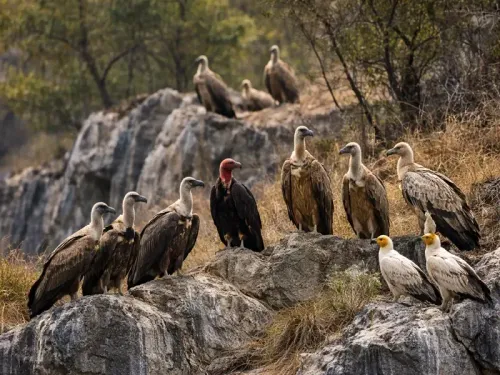
Notable species found within the state include the Indian Vulture (Long-billed Vulture), Cinereous Vulture (Black Vulture), Egyptian Vulture (White Scavenger Vulture), and Himalayan Griffon.
Importantly, on the inaugural day of Vulture Estimation-2026, over 1,000 vultures were counted in the South Panna Forest Division, marking the highest tally observed in recent years.
Point of View
The government is taking decisive action to protect these important avian species while fostering public awareness about their ecological role.
NationPress
30 Sept 2026
Frequently Asked Questions
What species of vultures were released?
The release included four Indian Vultures (Gyps indicus) and one Cinereous Vulture (Aegypius monachus).
Why are vultures important to the ecosystem?
Vultures play a crucial role in maintaining environmental balance by acting as nature's sanitation workers, preventing the spread of diseases.
What is the significance of satellite telemetry in this initiative?
Satellite telemetry will provide vital data on vulture movements, habitat usage, and threats they face, aiding in more effective conservation strategies.
Where is Halali Dam located?
Halali Dam is located in Raisen, approximately 40 km from Bhopal, the capital of Madhya Pradesh.
What cultural significance do vultures hold in India?
In Indian tradition, vultures symbolize strength and sacrifice, as illustrated in ancient texts like the Ramayana.