Celebrating Mukhi: India's First Wild-Born Cheetah Turns Three
Synopsis
Mukhi, the first cheetah born in the wild in India, celebrates her third birthday today, marking a crucial milestone for wildlife conservation under Project Cheetah. This achievement is celebrated not only in Madhya Pradesh but across the nation.
Key Takeaways
Mukhi is the first cheetah born in the wild in India.
She celebrates her third birthday today, a significant milestone.
The Kuno National Park is crucial for cheetah conservation.
Project Cheetah aims to restore cheetah populations in India.
Madhya Pradesh leads national efforts in wildlife conservation.
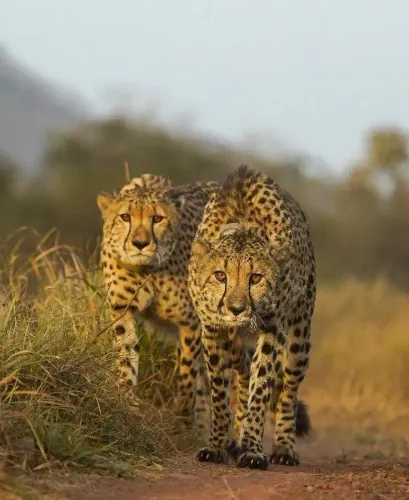
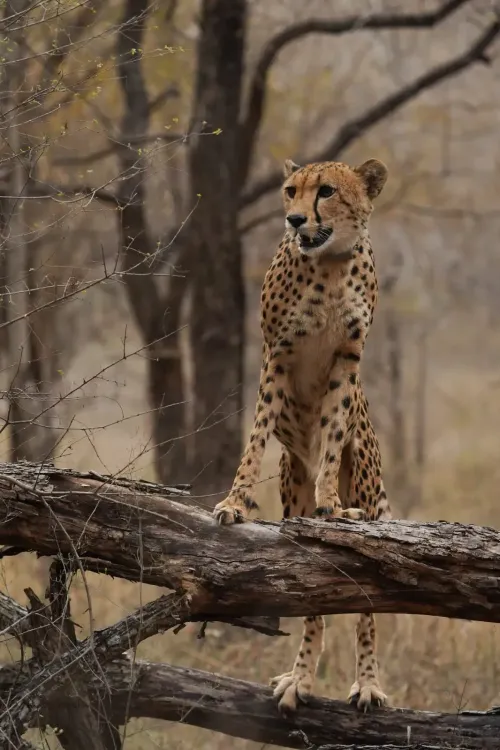
Bhopal, March 29 (NationPress) Mukhi, the first cheetah born in the wild in India under the pioneering 'Project Cheetah', has celebrated her third birthday this Sunday, as reported by officials.
This remarkable milestone is being hailed as a significant victory for wildlife conservation efforts in Madhya Pradesh, as well as a crucial step in the national initiative to revive an extinct species.
Chief Minister Mohan Yadav took to social media to share the joyous occasion, posting stunning images of Mukhi, and expressing that this moment brings immense pride not only to the state but to the entire nation.
In his announcement on X, Chief Minister Yadav noted that Mukhi's third birthday signifies the positive trajectory of the conservation program, garnering international recognition for Madhya Pradesh's efforts.
Forest officials are diligently monitoring the cheetah population while ensuring habitat preservation and community engagement.
This milestone raises hopes that cheetahs will once again thrive across suitable regions in India, restoring an essential aspect of the country’s natural heritage.
Mukhi was born on March 29, 2023, to a Namibian cheetah named Jwala at the Kuno National Park.
She is the first cheetah cub born on Indian soil since the species vanished from the country over seventy years ago.
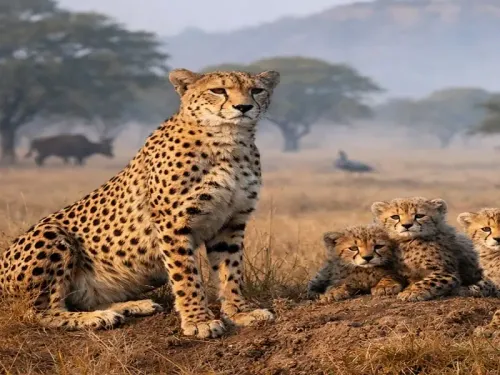
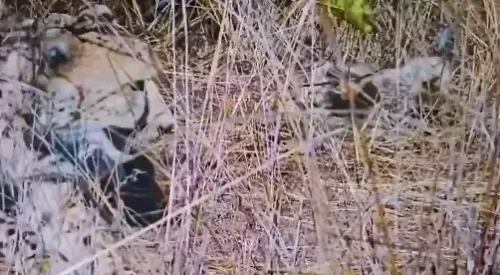
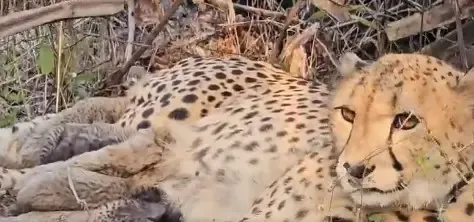
From being a vulnerable cub initially abandoned by her mother to a thriving adult that gave birth to five cubs in November 2025, Mukhi's journey is a testament to the success of Project Cheetah.
Her successful upbringing and reproduction have instilled renewed hope in the reintroduction campaign.
Kuno National Park, located in the Sheopur and Morena districts of Madhya Pradesh, is situated along the banks of the Kuno river.
Designated as a national park in 2018, it encompasses nearly 748 square kilometers, with the original core zone covering about 344 square kilometers.
Its expansive grasslands interspersed with dry deciduous forests make it uniquely suitable for cheetahs, setting it apart from other renowned parks like Kanha and Bandhavgarh.
The ecosystem here is rich with prey, including nilgai, sambar, chital, blackbuck, and over two hundred species of birds.
Prominent tree species such as khair, kardhai, and salai flourish in this region, with kardhai renowned for its ability to draw moisture directly from the atmosphere.
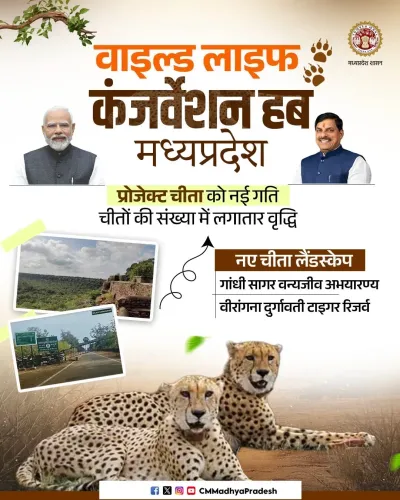
The cheetah reintroduction initiative commenced on September 17, 2022, when eight cheetahs from Namibia were released into Kuno National Park by Prime Minister Narendra Modi, marking seventy years since the species was locally extinct.
Since that moment, the park has gained global attention as more animals from South Africa and Botswana have arrived, leading to the birth of several litters of cubs.
Project Cheetah has shown consistent progress, with numerous cubs born in India now contributing to a growing population.
The ancient forests of Kuno National Park have a rich history of wildlife significance.
Historical records from the Mughal era, during Emperor Akbar's reign, mention elephants and lions inhabiting the area.
In the early 20th century, there were attempts to introduce African lions here under the auspices of Madhavrao Scindia and Lord Curzon, although those efforts were unsuccessful.
Subsequently, the region was developed for the rehabilitation of Asiatic lions before being dedicated exclusively to cheetah conservation.
Point of View
It is clear that her birth signifies a monumental step in wildlife conservation in India. The efforts of Project Cheetah are crucial for restoring biodiversity, and Mukhi embodies the success of these initiatives. The collective pride felt by Madhya Pradesh and the country at large showcases the importance of conservation practices.
NationPress
7 Oct 2026
Frequently Asked Questions
What is Project Cheetah?
Project Cheetah is an initiative aimed at reintroducing cheetahs to India, which had seen the species become extinct for over seventy years.
Where was Mukhi born?
Mukhi was born at Kuno National Park in Madhya Pradesh.
Why is Mukhi's birthday significant?
Mukhi's third birthday marks a significant milestone in wildlife conservation efforts and the success of Project Cheetah.
What role does Kuno National Park play in conservation?
Kuno National Park provides a suitable habitat for cheetahs, supporting a rich ecosystem that enhances wildlife conservation efforts.
Who released the first cheetahs under Project Cheetah?
Prime Minister Narendra Modi released the first cheetahs from Namibia into Kuno National Park on September 17, 2022.