India-ASEAN bilateral trade hits $128 billion in 2025–26 amid AITIGA review push
Synopsis
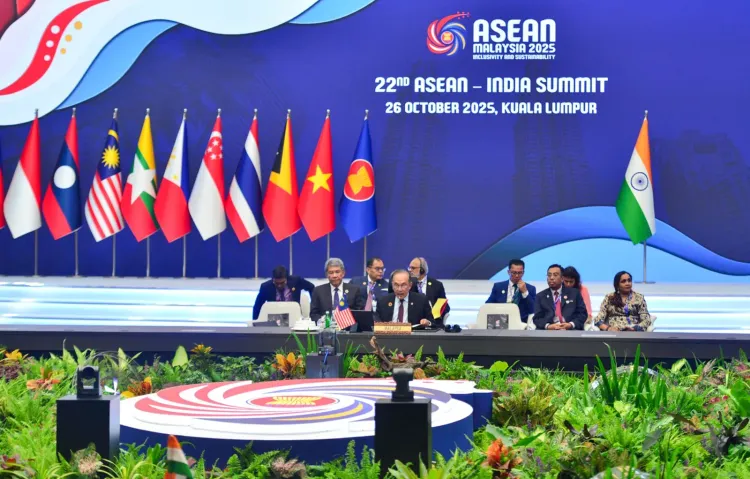
India-ASEAN two-way trade crossed $128 billion in 2025–26 — but the bigger story is what happens next. With the 13th AITIGA Joint Committee meeting underway in New Delhi, both sides are racing to finalise a revised trade-in-goods pact that could reshape tariff terms, rules of origin, and market access for the first time since 2010.
Key Takeaways
India-ASEAN bilateral trade reached $128 billion in 2025–26 , according to the Ministry of Commerce and Industry.
ASEAN accounts for approximately 11% of India's total global trade.
India is hosting the 13th AITIGA Joint Committee meeting from 6–10 July 2025 in New Delhi .
Three Sub-Committees — on Customs Procedures , Market Access , and Rules of Origin — are meeting on the sidelines.
Sub-Committees have been assigned time-bound deliverables to expedite finalisation of outstanding AITIGA review chapters.
The meeting was co-chaired by Nitin Kumar Yadav (India) and Mastura Ahmad Mustafa (Malaysia/ASEAN).
India-ASEAN bilateral trade reached $128 billion in 2025–26, underscoring the depth of the economic partnership between the two sides and opening fresh avenues for expanded trade and investment cooperation, according to an official statement issued on Wednesday, 8 July 2025. The milestone was highlighted as the two sides convened for a key round of trade negotiations in New Delhi.
ASEAN's Weight in India's Trade Basket
ASEAN accounts for approximately 11 per cent of India's total global trade, making the bloc one of New Delhi's most significant commercial partners. The $128 billion figure reflects cumulative two-way flows across goods and services, and comes at a moment when both sides are actively working to deepen the legal architecture underpinning that relationship.
13th AITIGA Joint Committee Meeting
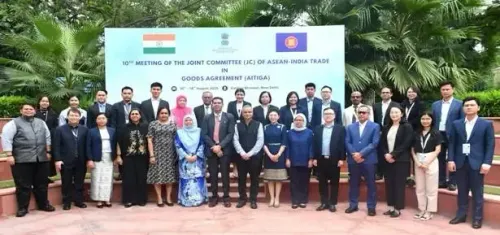
India is hosting the 13th ASEAN-India Trade in Goods Agreement (AITIGA) Joint Committee (JC) and associated meetings from 6–10 July, focused on advancing the ongoing review of the AITIGA framework. The Joint Committee provided strategic direction to its Sub-Committees and urged them to accelerate finalisation of outstanding chapters under the review. According to the official statement, Sub-Committees were assigned time-bound deliverables and directed to work towards 'tangible outcomes within the agreed timelines.'
Three Sub-Committees in Active Session
Three of the eight Sub-Committees under the AITIGA Joint Committee are meeting on the sidelines of the 13th JC session. These are the Sub-Committee on Customs Procedures and Trade Facilitation (SC-CPTF), the Sub-Committee on National Treatment and Market Access (SC-NTMA), and the Sub-Committee on Rules of Origin (SC-ROO). The Ministry of Commerce and Industry described the sessions as an important platform to deepen cooperation, strengthen mutual understanding, and advance constructive dialogue between India and ASEAN member states.
Leadership and Co-Chairs
The 13th AITIGA Joint Committee meeting was co-chaired by Nitin Kumar Yadav, Additional Secretary, Department of Commerce, on the Indian side, and Mastura Ahmad Mustafa, Deputy Secretary General (Trade), Ministry of Investment, Trade and Industry, Malaysia, representing ASEAN. The joint leadership signals the bilateral salience of the review process, with Malaysia currently holding a prominent coordinating role within the bloc.
What Comes Next
The AITIGA review, if concluded, could recalibrate tariff schedules, rules of origin norms, and market access commitments that have been in place since the original agreement came into force in 2010. Notably, India has long sought a rebalancing of the pact, which critics argue has contributed to a persistent trade deficit with ASEAN — a concern that the ongoing review is expected to address. The outcome of the current round of negotiations will be closely watched by exporters in sectors such as electronics, textiles, and pharmaceuticals.
Point of View
But the structural story is more complicated. India has run a persistent goods trade deficit with ASEAN since the original 2010 agreement — a point that domestic industry has raised repeatedly. The AITIGA review is, in part, an attempt to correct that imbalance through tighter rules of origin and more reciprocal market access. Whether the current round of negotiations delivers that rebalancing, or produces another round of incremental commitments, will determine whether the trade relationship deepens on equitable terms or simply continues to widen the deficit.
NationPress
7 Oct 2026
Frequently Asked Questions
What is the current state of India-ASEAN bilateral trade?
India-ASEAN bilateral trade reached $128 billion in 2025–26, according to the Ministry of Commerce and Industry. ASEAN accounts for around 11% of India's total global trade, making it one of New Delhi's most important trading partners.
What is the AITIGA and why is it being reviewed?
The ASEAN-India Trade in Goods Agreement (AITIGA) is a preferential trade pact that has been in force since 2010. It is being reviewed to update tariff schedules, rules of origin, and market access commitments, with India seeking a more balanced framework to address a persistent trade deficit with ASEAN.
What is being discussed at the 13th AITIGA Joint Committee meeting?
The 13th AITIGA Joint Committee meeting, hosted in New Delhi from 6–10 July 2025, is reviewing progress on outstanding chapters of the AITIGA review. Three Sub-Committees — on Customs Procedures and Trade Facilitation, National Treatment and Market Access, and Rules of Origin — are meeting on the sidelines with time-bound deliverables.
Who is chairing the 13th AITIGA Joint Committee meeting?
The meeting is co-chaired by Nitin Kumar Yadav, Additional Secretary in India's Department of Commerce, and Mastura Ahmad Mustafa, Deputy Secretary General (Trade) at Malaysia's Ministry of Investment, Trade and Industry, representing ASEAN.
What are the expected outcomes of the AITIGA review?
The review aims to finalise outstanding chapters of the agreement, with Sub-Committees assigned time-bound deliverables to achieve tangible outcomes. Key areas include customs facilitation, market access, and rules of origin — changes that could significantly affect Indian exporters in sectors such as electronics, textiles, and pharmaceuticals.