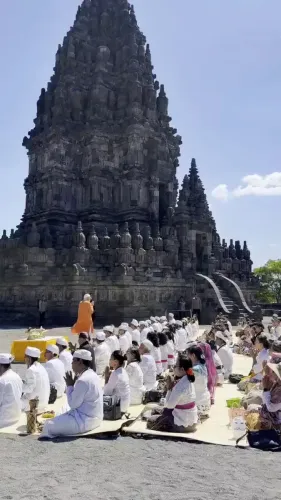
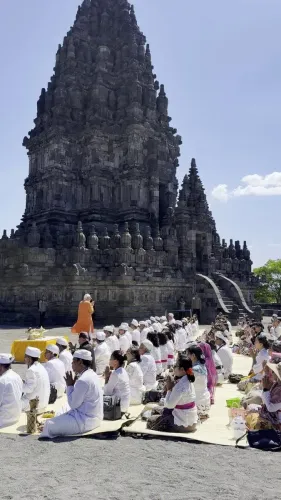
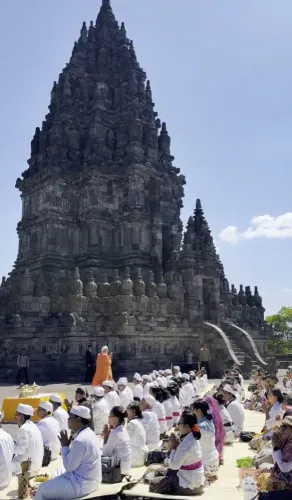
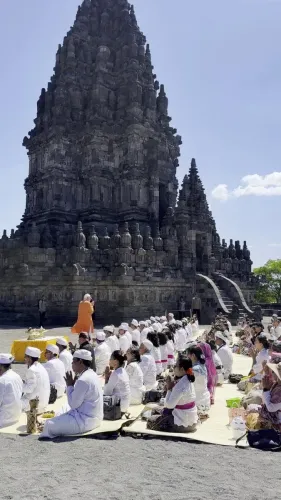
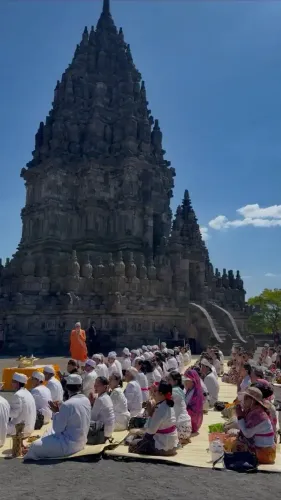
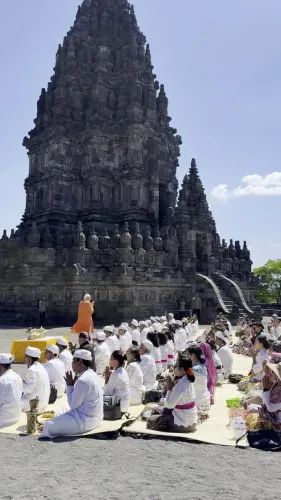
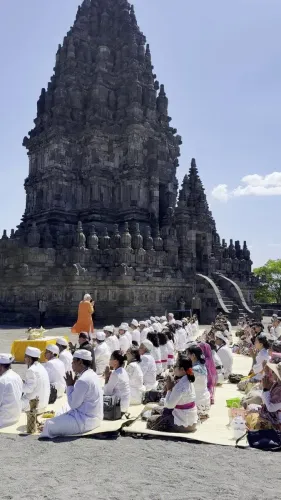
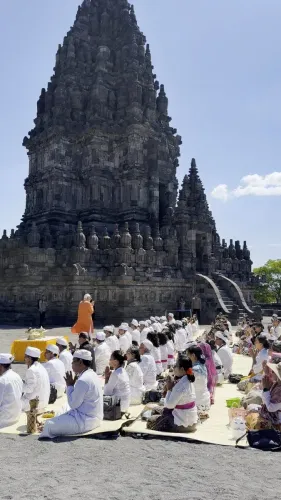
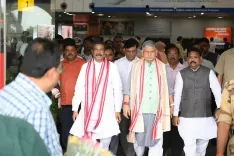
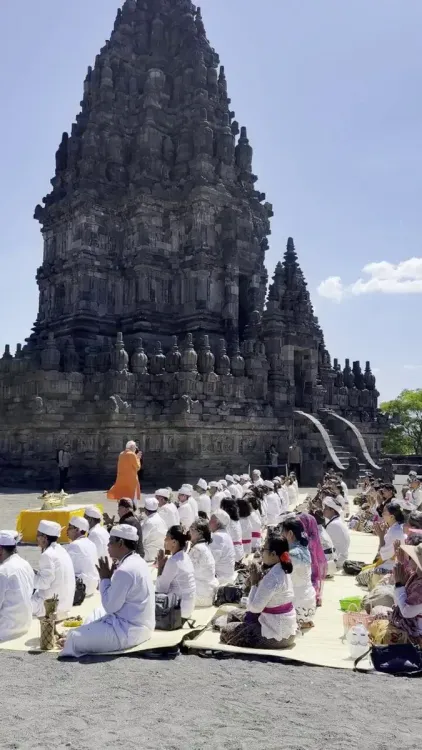
Kishan Reddy hails 'Om Namah Shivaya' at Prambanan during Modi visit
Synopsis
Union Minister G. Kishan Reddy hailed the chanting of 'Om Namah Shivaya' at Indonesia's UNESCO-listed Prambanan Temple during PM Modi's visit, calling it a testament to India's shared civilisational heritage with Southeast Asia and the enduring reach of Bharat's spiritual traditions.
Key Takeaways
Kishan Reddy posted on 8 July 2026 highlighting the chanting of 'Om Namah Shivaya' at Prambanan Temple during PM Modi 's visit to Indonesia .
The Prambanan Temple complex in Central Java is a 9th-century Hindu site and a UNESCO World Heritage Site .
The visit aligns with India's Act East Policy (upgraded from Look East in 2014 ), which uses cultural diplomacy alongside strategic engagement with ASEAN nations.
Indonesia shares deep historical ties with India through ancient maritime trade and the legacy of Hindu-Buddhist kingdoms such as Majapahit and Srivijaya .
The moment carries symbolic weight for Indonesian Hindus and reinforces India's projection as a civilisational state with cultural influence across the Indo-Pacific .
Upcoming ASEAN-India engagements are expected to feature heritage and people-to-people connectivity themes prominently.
Union Coal and Mines Minister G. Kishan Reddy on Wednesday, 8 July 2026, invoked the resonance of the sacred chant 'Om Namah Shivaya' echoing through Indonesia's Prambanan Temple during Prime Minister Narendra Modi's visit, calling it a 'moving testament to our shared civilisational heritage.'
Context
PM Modi's visit to the Prambanan Temple complex in Central Java, Indonesia, drew wide attention as the ancient Hindu shrine became the backdrop for a moment of cultural diplomacy. Kishan Reddy, posting on X, described the chanting of 'Om Namah Shivaya' at the site as evidence that 'Bharat's timeless spiritual traditions continue to unite hearts and cultures across the world.'
The Prambanan Temple is a 9th-century Hindu temple complex recognised as a UNESCO World Heritage Site, standing as one of the most prominent symbols of ancient Hindu-Buddhist heritage outside the Indian subcontinent.
Policy Backdrop
The visit fits squarely within India's Act East Policy, which was upgraded from the earlier 'Look East' framework in 2014 and prioritises cultural diplomacy alongside strategic and economic engagement with ASEAN nations. Successive governments have framed pre-colonial Hindu-Buddhist linkages across the Indo-Pacific as living evidence of India's civilisational reach.
Indonesia holds a particularly significant place in this narrative, given its deep historical ties with India through ancient maritime trade routes, the legacy of Hindu-Buddhist kingdoms such as Majapahit and Srivijaya, and ongoing bilateral cultural exchanges. Sites like Prambanan serve as tangible anchors for this diplomatic framing.
Kishan Reddy, as BJP Telangana president and a senior Union minister, has consistently amplified cultural and civilisational themes tied to the Prime Minister's foreign engagements, reinforcing the ruling party's projection of India as a civilisational state with influence extending well beyond its borders.
Stakeholders and Impact
The moment carries significance for Indonesian Hindus, a community concentrated in Bali and parts of Java, who view such high-profile visits as international recognition of their living heritage. Cultural diplomats and scholars tracking India-ASEAN relations see the temple visit as a soft-power signal that complements security and economic cooperation.
For the BJP, the imagery of a sitting Prime Minister participating in Hindu religious traditions at a UNESCO site abroad reinforces a domestic and international narrative of civilisational pride and Hindu cultural continuity across Asia.
What's Next
Attention will now turn to whether PM Modi's Indonesia visit produces concrete announcements on expanded India-Indonesia cultural exchange programmes, joint heritage conservation initiatives, or new bilateral agreements under the Act East framework. The next ASEAN-India Summit is also expected to feature heritage and people-to-people connectivity themes prominently.
As India deepens its Indo-Pacific partnerships, the strategic use of shared civilisational symbols — from Prambanan to Angkor Wat — is likely to remain a defining instrument of New Delhi's cultural foreign policy playbook.
Point of View
The party reinforces a domestic narrative of Hindu cultural pride with an international canvas. This approach also serves India's Act East Policy by lending soft-power depth to what are otherwise transactional bilateral relationships. The pattern — senior ministers amplifying the cultural optics of PM visits in real time — has become a consistent feature of the current government's foreign policy communication strategy.
NationPress
8 Jul 2026
Frequently Asked Questions
Why did PM Modi visit Prambanan Temple in Indonesia?
PM Modi visited the Prambanan Temple in Central Java, Indonesia , as part of a bilateral engagement that underscored the deep civilisational and cultural ties between India and Indonesia, rooted in centuries of Hindu-Buddhist heritage.
What is the Prambanan Temple and why is it significant?
Prambanan is a 9th-century Hindu temple complex in Central Java, Indonesia , recognised as a UNESCO World Heritage Site . It is one of the largest Hindu temples in Southeast Asia and a symbol of the region's ancient links with Indian civilisation.
What is India's Act East Policy?
India's Act East Policy , upgraded from the earlier 'Look East' framework in 2014 , prioritises strategic, economic, and cultural engagement with ASEAN nations and the broader Indo-Pacific region, with civilisational diplomacy as a key pillar.
Who is G. Kishan Reddy?
G. Kishan Reddy is India's Union Minister of Coal and Mines and the BJP Telangana state president . He is a senior leader of the Bharatiya Janata Party and frequently comments on cultural and diplomatic events involving the Prime Minister.
What is the significance of 'Om Namah Shivaya' being chanted at Prambanan?
The chanting of 'Om Namah Shivaya' — a sacred Shaivite mantra — at Prambanan , a Hindu temple built outside India over a thousand years ago, symbolises the living continuity of Indian spiritual traditions across Southeast Asia and is central to India's civilisational diplomacy narrative.