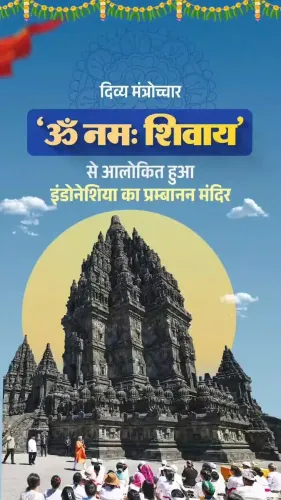
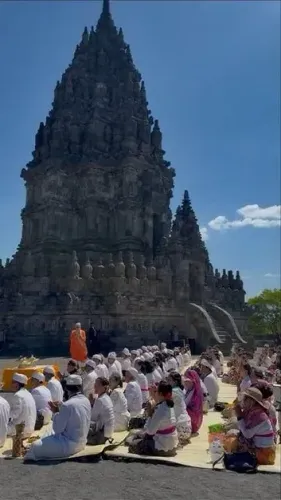
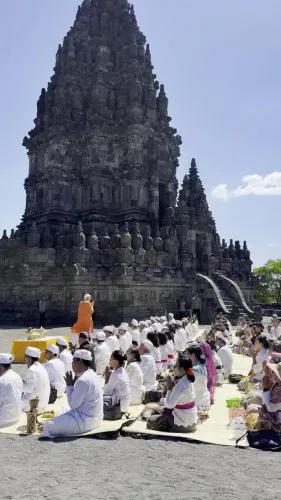
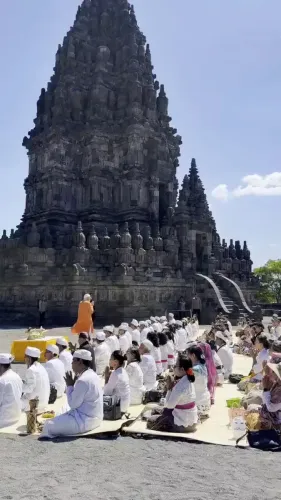
PM Modi Chants 'Om Namah Shivaya' at Prambanan Temple
Synopsis
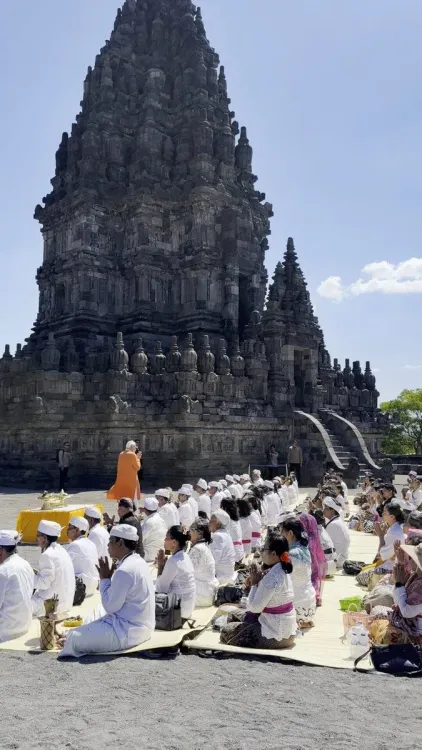
Prime Minister Narendra Modi posted a devotional video from the 9th-century Prambanan Temple in Central Java, Indonesia, chanting 'Om Namah Shivaya' — a gesture that blends spiritual reverence with India's soft-power diplomacy in the Indo-Pacific.
Key Takeaways
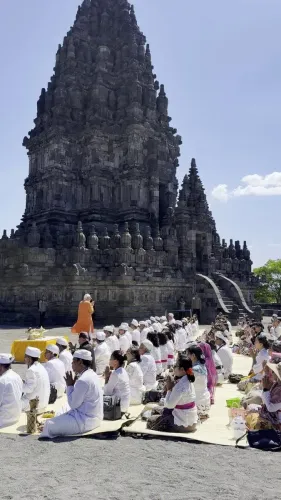
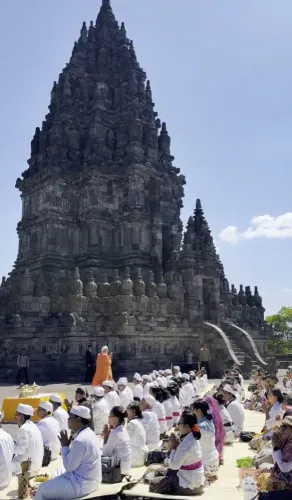
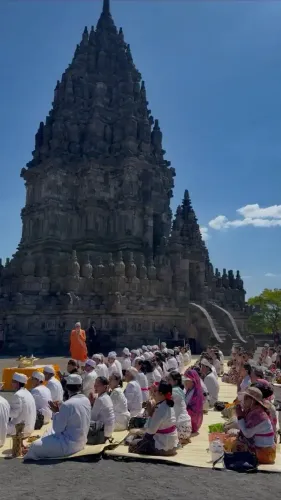
PM Modi posted a devotional video from Prambanan Temple , a 9th-century UNESCO World Heritage Site in Central Java, Indonesia, on 8 July 2026 .
The post carried the Sanskrit invocation 'Om Namah Shivaya' , a salutation to Lord Shiva, reflecting the temple's Shaivite dedication.
Prambanan is one of the largest Hindu temple complexes in Southeast Asia , symbolising ancient Indic cultural reach into the region.
The gesture aligns with India's Act East Policy (upgraded 2014 ), which prioritises cultural diplomacy with ASEAN nations.
India and Indonesia share growing cooperation in defence, maritime security, and digital infrastructure , with cultural ties reinforcing the strategic relationship.
Analysts will watch for follow-up cultural or tourism MoUs at upcoming ASEAN-India or bilateral summits.
Prime Minister Narendra Modi on Wednesday, 8 July 2026 shared a devotional moment from the Prambanan Temple complex in Central Java, Indonesia, posting a video on X with the Sanskrit invocation ॐ नमः शिवाय ('Om Namah Shivaya') — a sacred salutation to Lord Shiva.
Context
The post, written in Hindi, reads: 'इंडोनेशिया के प्रम्बानन मंदिर में ॐ नमः शिवाय!' — translated as 'Om Namah Shivaya at the Prambanan Temple in Indonesia!' The brevity of the message underscores its devotional, rather than political, character, yet it carries significant diplomatic weight given the setting.
Prambanan is a 9th-century Hindu temple complex dedicated to the Trimurti — Brahma, Vishnu, and Shiva — and is a UNESCO World Heritage Site. Located near Yogyakarta in Central Java, it stands as one of the largest Hindu temple compounds in Southeast Asia and a living symbol of the ancient Indic civilisational reach across the Indo-Pacific.
Policy Backdrop
India's Act East Policy, upgraded significantly in 2014 under the Modi government, places cultural diplomacy and people-to-people connectivity at the heart of engagement with ASEAN nations. Indonesia, as the world's largest Muslim-majority nation, nonetheless carries deep Hindu-Buddhist cultural strata — from the Ramayana ballet performed at Prambanan's open-air theatre to the island of Bali's living Hindu traditions.
Modi has consistently used visits to historic Hindu and Buddhist sites abroad to reinforce India's soft-power narrative, framing shared heritage as a civilisational bridge rather than merely a bilateral formality. Prambanan, with its direct Shaivite lineage, offers a particularly resonant backdrop for such messaging.
Stakeholders and Impact
The gesture carries meaning for Indonesia's Hindu community — concentrated largely in Bali and parts of Java — as well as for the broader Indian diaspora across Southeast Asia. Cultural organisations tracking India-Indonesia exchanges view such high-profile visits to heritage sites as reinforcing momentum for tourism, academic, and archaeological cooperation between the two countries.
For the Indonesian government, a sitting Indian Prime Minister paying homage at Prambanan elevates the site's international profile and aligns with Jakarta's own efforts to promote its Hindu-Buddhist heritage as a tourism and identity asset. India and Indonesia share growing cooperation across defence, maritime security, and digital infrastructure, and cultural gestures of this kind complement the strategic relationship.
What's Next
Observers will watch for any follow-up announcements on cultural or tourism memoranda of understanding linked to this engagement. ASEAN-India summits and bilateral meetings between New Delhi and Jakarta have in the past produced agreements on heritage conservation, people-to-people exchanges, and Ramayana circuit tourism. A visit of this symbolic weight often precedes or accompanies substantive diplomatic deliverables.
As India deepens its Indo-Pacific partnerships, the invocation of shared Shaivite heritage at a site like Prambanan signals that civilisational diplomacy will remain a durable instrument in New Delhi's strategic toolkit.
Point of View
New Delhi reinforces a narrative that frames the India-Indonesia relationship as rooted in millennia of cultural kinship, not merely modern statecraft. This fits a consistent pattern in Modi's foreign engagements: devotional gestures at historic sites function as soft-power instruments that resonate with domestic audiences while simultaneously communicating India's Indo-Pacific ambitions. The timing and optics suggest that culture, for this government, is not incidental to foreign policy — it is foreign policy.
NationPress
6 Oct 2026
Frequently Asked Questions
Why did PM Modi visit Prambanan Temple in Indonesia?
PM Modi visited the Prambanan Temple complex as part of his engagement with Indonesia, using the occasion to highlight the shared Hindu civilisational heritage between India and Southeast Asia — a recurring element of India's Act East Policy and cultural diplomacy.
What is Prambanan Temple and why is it significant?
Prambanan is a 9th-century Hindu temple complex in Central Java, Indonesia, dedicated to the Trimurti (Brahma, Vishnu, and Shiva). It is a UNESCO World Heritage Site and one of the largest Hindu temple compounds in Southeast Asia, reflecting the ancient Indic cultural influence in the region.
What does 'Om Namah Shivaya' mean?
'Om Namah Shivaya' is a Sanskrit mantra and salutation meaning 'I bow to Shiva.' It is one of the most widely chanted Shaivite devotional phrases in Hinduism and holds deep spiritual significance across South and Southeast Asia.
How does this fit India's Act East Policy?
India's Act East Policy, upgraded in 2014, prioritises cultural and people-to-people ties with ASEAN nations alongside strategic and economic cooperation. Modi's devotional gesture at a UNESCO Hindu heritage site in Indonesia is consistent with using shared civilisational history as a diplomatic bridge.
What could follow PM Modi's visit to Prambanan?
Observers expect potential announcements on cultural exchange programmes, heritage conservation partnerships, or Ramayana circuit tourism agreements between India and Indonesia, possibly at upcoming ASEAN-India summits or bilateral meetings.