Pradhan Shares 'Om Namah Shivaya' Chant at Prambanan Temple
Synopsis
Union Education Minister Dharmendra Pradhan shared a video of the chant 'Om Namah Shivaya' echoing through Indonesia's UNESCO-listed Prambanan Temple, framing it as the eternal voice of Sanatana civilisation and reinforcing India's cultural diplomacy in Southeast Asia.
Key Takeaways
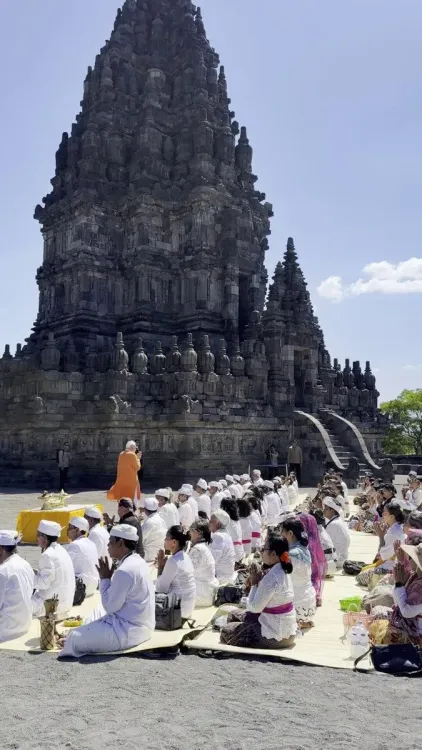
Dharmendra Pradhan posted a video on 8 July 2026 of 'Om Namah Shivaya' being chanted at the Prambanan Temple in Central Java, Indonesia .
Prambanan is a 9th-century Shaivite Hindu temple complex and a UNESCO World Heritage Site , reflecting the historical spread of Indian civilisation to Southeast Asia.
The post aligns with India's Act East Policy (launched 2014 ), which uses shared Hindu-Buddhist heritage as a pillar of ASEAN engagement.
PM Modi 's 2018 Indonesia visit similarly emphasised shared temple traditions and civilisational links between the two nations.
The gesture targets multiple audiences: Hindu communities in India, cultural diplomacy circles, and observers of India-Indonesia bilateral ties.
Possible follow-up outcomes include heritage or education cooperation agreements at upcoming ASEAN-India summits .
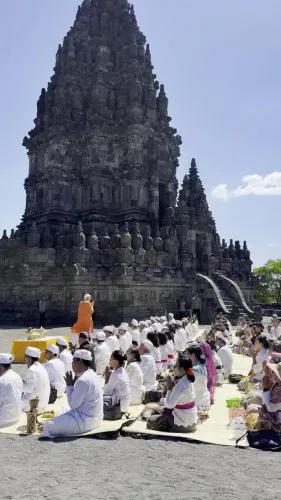
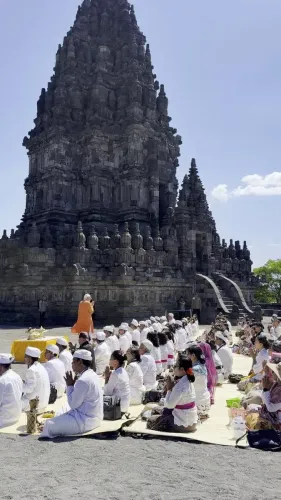
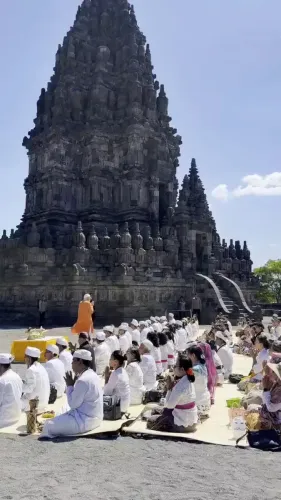
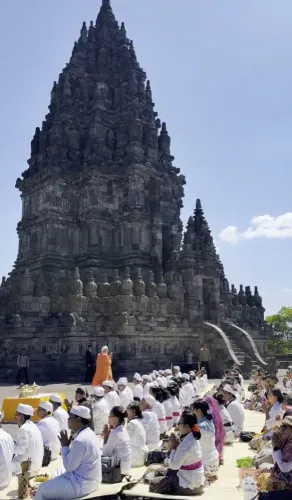
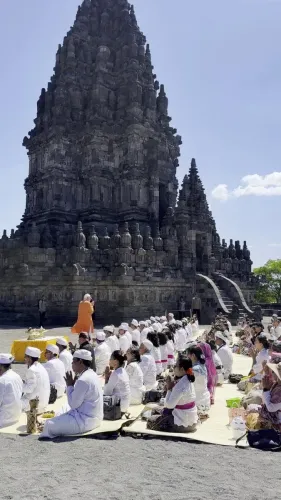
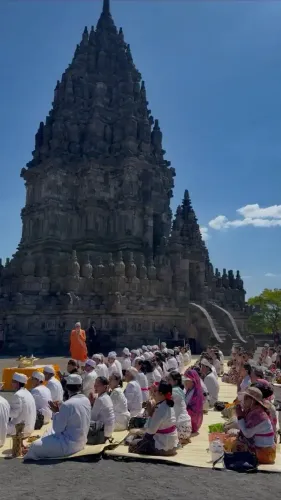
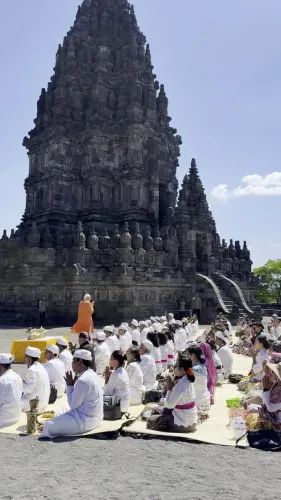
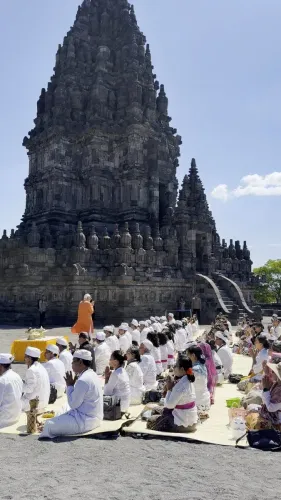
Union Education Minister Dharmendra Pradhan on Wednesday, 8 July 2026, shared a video of the chant 'ॐ नमः शिवाय' ('Om Namah Shivaya') resonating at the Prambanan Temple in Indonesia, calling it 'the divine voice of Sanatana's eternal consciousness.' The post, shared on his official X account, drew attention to the living continuity of ancient Indian civilisational traditions beyond the subcontinent.
Context
Pradhan's post, written in Hindi, described the moment as 'सनातन की शाश्वत चेतना का दिव्य स्वर' — 'the divine voice of Sanatana's eternal consciousness' — as the Shaivite chant echoed through the Prambanan Temple complex in Central Java. The video captured what the minister framed as a profound civilisational connection between India and Indonesia, expressed through one of Hinduism's most recognisable devotional mantras.
Prambanan is a 9th-century Hindu temple complex primarily dedicated to Lord Shiva and is a UNESCO World Heritage Site. It stands as one of the most prominent symbols of the historical maritime spread of Shaivite traditions from the Indian subcontinent to the Indonesian archipelago.
Policy Backdrop
The post sits within a well-established pattern of Indian cultural diplomacy in Southeast Asia. India's Act East Policy, launched in 2014, has consistently sought to deepen cultural, economic, and people-to-people ties with ASEAN nations, with shared Hindu-Buddhist heritage serving as a foundational pillar of that engagement.
Prime Minister Narendra Modi's 2018 visit to Indonesia had similarly foregrounded the two countries' shared temple traditions and civilisational links. Pradhan, as a senior BJP leader and Union Minister, has regularly amplified India's cultural heritage narrative alongside his education portfolio, making this post consistent with his public communication style.
Prambanan, alongside Borobudur, represents Indonesia's most visible inheritance of ancient Indian cultural influence — a point that Indian policymakers have repeatedly invoked to frame the bilateral relationship as rooted in history rather than purely transactional interests.
Stakeholders and Impact
The post is directed at multiple audiences simultaneously: Hindu communities in India who find resonance in seeing their devotional traditions honoured abroad, cultural diplomacy circles tracking India's soft-power outreach, and ASEAN-watchers monitoring the texture of India-Indonesia bilateral ties. For Indonesia, which has a significant Hindu minority — particularly in Bali — such gestures carry symbolic weight on both sides.
Cultural connectivity has increasingly been positioned as a strategic asset in India's Indo-Pacific engagement, complementing security and trade frameworks. A senior minister publicly amplifying a Shaivite chant at a UNESCO-listed Hindu site in a majority-Muslim nation signals the confidence with which New Delhi pursues this civilisational diplomacy.
What's Next
Observers of India-ASEAN relations will watch for whether this cultural moment translates into institutional outcomes — such as education or heritage cooperation agreements between India and Indonesia at upcoming ASEAN-India summits. As Education Minister, Pradhan's engagement with Indonesian heritage sites could also foreshadow academic or archaeological collaboration. The broader arc suggests that cultural diplomacy will remain a consistent instrument of India's Indo-Pacific strategy, with ancient shared heritage serving as both a narrative and a policy anchor.
Point of View
Such imagery serves a dual purpose: it resonates with a domestic Hindu audience while simultaneously advancing New Delhi's Act East diplomacy by framing the India-Indonesia relationship as rooted in shared sacred heritage. The choice of Prambanan — a Shaivite monument in the world's most populous Muslim-majority nation — is itself a pointed statement about the universality and reach of Sanatan traditions. Whether this remains symbolic or catalyses concrete cultural or educational agreements will be the real measure of its diplomatic weight.
NationPress
8 Jul 2026
Frequently Asked Questions
What is the Prambanan Temple in Indonesia?
Prambanan is a 9th-century Hindu temple complex in Central Java, Indonesia , dedicated primarily to Lord Shiva. It is a UNESCO World Heritage Site and one of the most significant examples of ancient Indian civilisational influence in Southeast Asia.
Why did Dharmendra Pradhan post about Prambanan Temple?
Dharmendra Pradhan shared a video of the chant 'Om Namah Shivaya' resonating at Prambanan Temple , describing it as 'the divine voice of Sanatana's eternal consciousness.' The post highlights India's cultural and civilisational connections with Indonesia as part of broader soft-power diplomacy.
What is India's Act East Policy and how does it relate to Indonesia?
India's Act East Policy , launched in 2014 , aims to deepen cultural, economic, and people-to-people ties with ASEAN nations including Indonesia. Shared Hindu-Buddhist heritage — exemplified by sites like Prambanan — is a key pillar of this engagement.
Is there a Hindu connection between India and Indonesia?
Yes. Indonesia has significant Hindu heritage, particularly in Bali , and monuments like Prambanan and Borobudur reflect the historical maritime spread of Indian civilisation to the archipelago. These shared roots form the basis of India's cultural diplomacy with Indonesia.
What could follow from Pradhan's Prambanan post diplomatically?
Observers are watching for possible heritage or education cooperation agreements between India and Indonesia at upcoming ASEAN-India summits , as well as potential academic or archaeological collaboration tied to the Education Minister's engagement with Indonesian heritage sites.