CM Yogi Targets 'Right to Copy' Era in UP Exam Reforms Push
Synopsis
CM Yogi Adityanath invoked an unnamed past UP leader's alleged 'birthright to copy' remark to highlight his government's strict anti-cheating stance, framing examination reform as a defining break from decades of institutional laxity in Uttar Pradesh.
Key Takeaways
CM Yogi Adityanath posted on July 8, 2026 , quoting a past Uttar Pradesh leader as having called copying in exams a 'birthright.' The quoted remark — nakal karna hamara janmasiddh adhikar hai — is framed as emblematic of pre-2017 political tolerance of examination malpractice.
The identity of the referenced leader is not named in the post and remains unverified.
Uttar Pradesh board examinations involve tens of millions of students annually, making credible enforcement a high-stakes governance issue.
The Yogi Adityanath government has pursued stricter invigilation, surveillance technology, and zero-tolerance policies at exam centres since 2017 .
The post signals continued political priority on anti-cheating measures ahead of the 2026-27 board examination cycle.
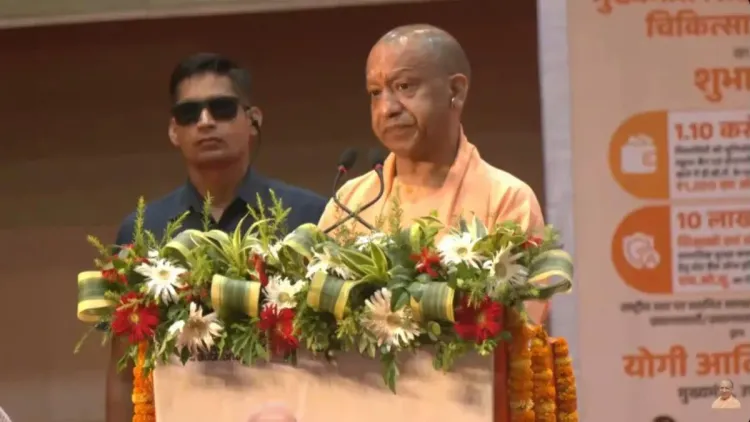
Uttar Pradesh Chief Minister Yogi Adityanath on Wednesday, July 8, 2026, took a pointed jab at past political culture in the state, recalling a remark attributed to a former Uttar Pradesh leader who had allegedly declared that copying in examinations was a birthright of students.
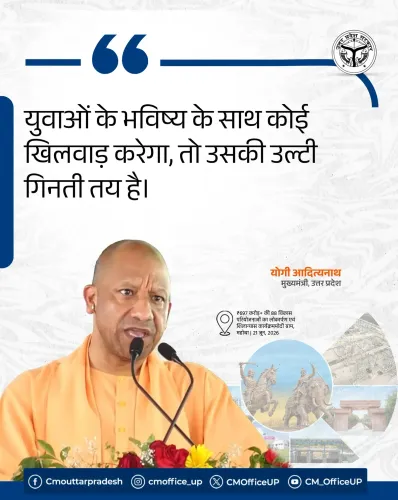
In the post, written in Hindi, the Chief Minister quoted an unnamed leader as having said: 'Nakal karna hamara janmasiddh adhikar hai' ('Copying is our birthright'). The remark, framed as a symbol of institutional decay, was used to draw a sharp contrast with the anti-cheating governance posture his administration has adopted since 2017.
Context
Examination malpractice has been a stubborn problem in Uttar Pradesh for decades. Mass copying incidents during school and university board exams were widely reported through the 1990s and 2000s, with allegations that political patronage shielded violators from accountability. The phrase 'birthright to copy' encapsulates that era of perceived official indifference — and in some accounts, active facilitation — of cheating in state examinations.
The Chief Minister's post does not identify the leader by name, and the precise origin and context of the quoted statement remain unverified. However, the rhetorical device — invoking a past political figure's words to anchor a governance contrast — is a well-established pattern in Yogi Adityanath's public communication on education and law-and-order.
Policy Backdrop
Since taking charge in March 2017, the Yogi Adityanath government has pursued a series of administrative measures aimed at restoring credibility to state board examinations. These have included stricter invigilation protocols, deployment of surveillance technology at examination centres, and cancellation of compromised papers.
The Uttar Pradesh Madhyamik Shiksha Parishad (UPMSP) and other state examination bodies have been directed to maintain zero tolerance toward copying. Mass disqualifications and FIRs against paper-leak accused in previous examination cycles have been cited by the administration as evidence of a cultural shift in enforcement.
Stakeholders and Impact
The primary stakeholders are the millions of students who appear in UP board and university examinations each year — a cohort that numbers in the tens of millions across classes 10 and 12 alone. For honest students, stricter enforcement translates directly into more credible certificates and fairer competition for college admissions and government jobs.
Examination boards, invigilators, and district administrations bear the operational burden of enforcement. The post signals continued political will from the top, which typically reinforces compliance down the administrative chain. Opposition parties, meanwhile, are likely to contest the implicit attribution of the 'birthright' remark to their ranks.
What's Next
With the 2026-27 state board examination cycle approaching, the Chief Minister's post is widely read as a preemptive signal that anti-cheating measures will remain a priority. Legislative or administrative tightening of invigilation rules — including possible updates to the law governing examination malpractice — remains a policy option on the table.
The broader implication is that Uttar Pradesh's examination reform push is being positioned not merely as administrative housekeeping but as a defining political legacy: a state that once tolerated, or even celebrated, copying is being held up as proof that governance culture can change.
Point of View
And implicitly indicting rival political legacies without naming individuals. The framing fits a broader BJP narrative in Uttar Pradesh that contrasts 'jungle raj' governance of the past with present-day institutional discipline. For voters in a state where examination credibility directly affects livelihoods — government job eligibility, college admissions — this rhetoric carries concrete electoral resonance. Whether the administration can sustain enforcement momentum through the 2026-27 cycle will determine how much political capital the messaging ultimately yields.
NationPress
8 Jul 2026
Frequently Asked Questions
What did the UP leader say about copying in exams?
An unnamed past Uttar Pradesh leader was quoted by CM Yogi Adityanath as having said 'nakal karna hamara janmasiddh adhikar hai,' meaning 'copying is our birthright.' The exact identity of the leader and the original context of the remark have not been independently verified.
What has Yogi Adityanath done to stop cheating in UP board exams?
Since 2017, the Yogi Adityanath government has introduced stricter invigilation protocols, CCTV surveillance at examination centres, cancellation of compromised question papers, and filing of FIRs against those accused of facilitating paper leaks or mass copying.
Why is exam cheating such a big issue in Uttar Pradesh?
Uttar Pradesh has one of the largest examination systems in the world, with tens of millions of students appearing in Class 10 and 12 board exams annually. Credible results directly affect eligibility for government jobs and college admissions, making malpractice a high-stakes social and political issue.
Who is Yogi Adityanath?
Yogi Adityanath is the Chief Minister of Uttar Pradesh, serving since March 2017. He is a senior BJP leader and the head of the Gorakhnath Math religious institution in Gorakhpur.
When are the next UP board exams in 2026-27?
The exact dates for the 2026-27 Uttar Pradesh board examination cycle had not been officially announced as of the date of this report. The state typically schedules Class 10 and 12 board exams in the early months of the calendar year.