Trump Joins NATO Leaders' Working Session at 2026 Summit
Synopsis
President Trump joined a NATO Leaders' Working Session on July 8, 2026, as confirmed by the White House. The session comes amid longstanding US pressure on allies to meet the 2 percent GDP defense-spending benchmark and heightened alliance focus on deterring Russian aggression since 2022.
Key Takeaways
President Trump participated in a NATO Leaders' Working Session on July 8, 2026 , confirmed by the White House .
NATO is a 32-member mutual-defense alliance bound by Article 5 collective-defense commitments.
The 2 percent of GDP defense-spending benchmark, set at the 2014 Wales Summit , remains the central measure of allied burden-sharing.
Trump's first term ( 2017–2021 ) featured sustained pressure on European allies over defense spending, most sharply at the 2018 Brussels Summit .
Russia's full-scale invasion of Ukraine in 2022 accelerated European rearmament and refocused NATO on eastern-flank deterrence.
Upcoming NATO defense-spending reports and summit communiqués will indicate whether new capability targets or US force-posture changes are forthcoming.
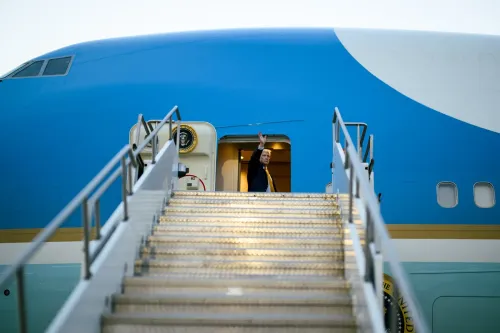
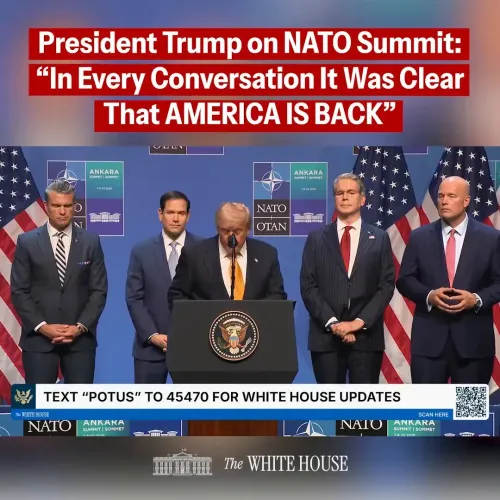
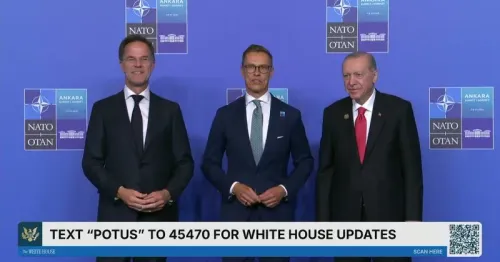
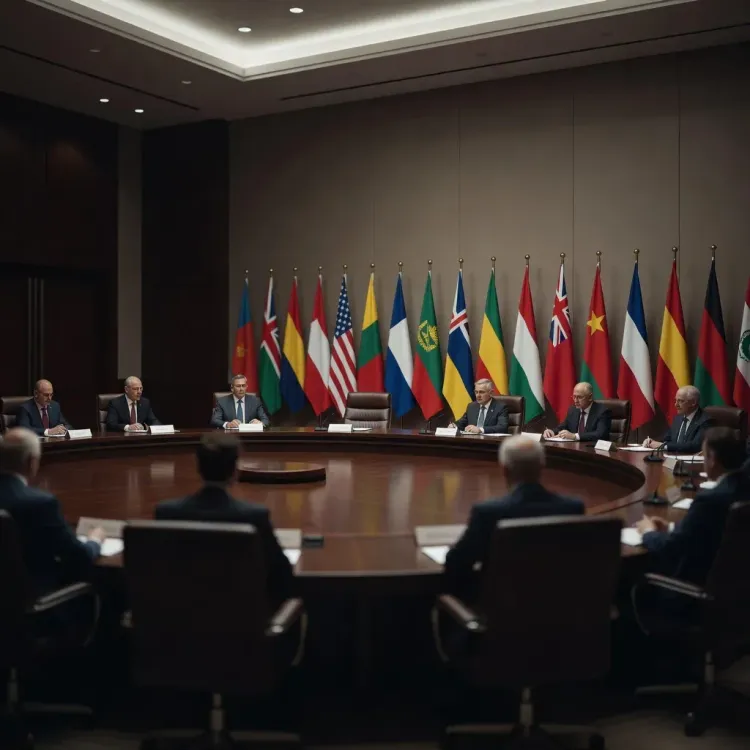
US President Donald Trump participated in a NATO Leaders' Working Session on Wednesday, July 8, 2026, as the White House confirmed the engagement via its official communications channel. The session brought together heads of state and government from across the 32-member alliance to deliberate on collective defense priorities.
Context
The NATO Leaders' Working Session is a core format within alliance summits, designed for frank, closed-door deliberations among heads of state on strategic direction, capability commitments, and shared threat assessments. President Trump's participation signals continued US engagement at the highest level of alliance leadership, even as Washington has historically coupled that engagement with pressure on European partners over defense spending.
NATO, founded in 1949 under the principle of collective defense enshrined in Article 5, now counts 32 member states. The alliance has been on a heightened footing since Russia's full-scale invasion of Ukraine in 2022, which accelerated European rearmament and renewed focus on eastern-flank deterrence.
Policy Backdrop
The 2 percent of GDP defense-spending benchmark, formally established at the 2014 Wales Summit, has been the central axis of US-NATO burden-sharing debates for over a decade. During his first term (2017–2021), President Trump repeatedly conditioned robust US support on allies meeting this target, most visibly at the 2018 Brussels NATO Summit where he publicly confronted European leaders over what he characterised as inadequate contributions.
The 2022 Madrid Summit reaffirmed the 2 percent target and broadened the alliance's collective-defense agenda in response to Russian aggression. By 2026, a larger share of European allies have crossed or approached the spending threshold, partly driven by post-2022 rearmament programmes — a shift that alters the political dynamics Trump navigated in his first term.
Trump's second-term approach has continued to combine rhetorical emphasis on burden-sharing with sustained US troop presence and leadership within NATO's integrated command structure, consistent with a broader pattern across successive US administrations seeking greater European contributions without dismantling the alliance architecture.
Stakeholders and Impact
The working session directly involves the governments of all 32 NATO allies, whose defense budgets, force contributions, and political commitments are shaped by summit-level decisions. US taxpayers and American defense forces remain central stakeholders, given that the United States accounts for the largest share of NATO's combined defense expenditure.
European governments, many of which have undertaken significant rearmament since 2022, are keenly attentive to any signals from Washington on future US force posture in Europe and on evolving capability targets. Shifts in US strategic emphasis toward the Indo-Pacific add a further layer of complexity to allied planning.
What's Next
Observers will watch closely for any statements or communiqués emerging from the working session regarding new collective capability targets, updated defense-spending expectations, or shifts in US force posture commitments on NATO's eastern flank. Upcoming NATO defense-spending reports and foreign-ministerial meetings will serve as the next indicators of where alliance priorities are heading under the current US administration.
The outcome of this session could set the tone for allied defense planning through the remainder of 2026 and into the next NATO summit cycle, particularly as the alliance balances its eastern-flank commitments with broader strategic competition.
Point of View
Despite years of rhetorical friction over burden-sharing, the United States continues to engage at the highest level of alliance leadership. The timing is significant: more European allies now meet or approach the 2 percent GDP spending target than at any point in recent history, partly because Trump-era pressure accelerated national rearmament decisions. This shifts the political terrain — Washington can claim vindication on burden-sharing while European capitals seek reassurance on long-term US commitment amid Indo-Pacific strategic reorientation. The session's outcomes will be read as a barometer of whether the alliance is consolidating post-2022 gains or entering a new phase of internal negotiation over priorities and resources.
NationPress
7 Oct 2026
Frequently Asked Questions
What is a NATO Leaders' Working Session?
A NATO Leaders' Working Session is a closed-door meeting format at alliance summits where heads of state and government discuss strategic priorities, defense commitments, and shared threats without a formal public agenda.
Why does Trump attend NATO summits if he has criticised the alliance?
President Trump has consistently attended and engaged with NATO while using that platform to pressure allies on defense spending; his position combines rhetorical criticism of burden-sharing shortfalls with continued US participation in alliance leadership and operations.
What is NATO's 2 percent defense spending rule?
The 2 percent of GDP defense-spending guideline was formally adopted at the 2014 Wales Summit as a benchmark for all NATO allies; it has been the central metric in US demands for greater European contributions to collective defense.
How has Russia's invasion of Ukraine affected NATO?
Russia's full-scale invasion of Ukraine in 2022 prompted NATO allies to accelerate defense spending, reinforced the alliance's eastern-flank deterrence posture, and led the 2022 Madrid Summit to reaffirm the 2 percent spending target with renewed urgency.
How many countries are in NATO in 2026?
NATO comprises 32 member states as of 2026, following a series of enlargements that most recently included Finland and Sweden joining the alliance.