Trump Arrives in Ankara, Met by Erdogan Ahead of NATO Summit
Synopsis
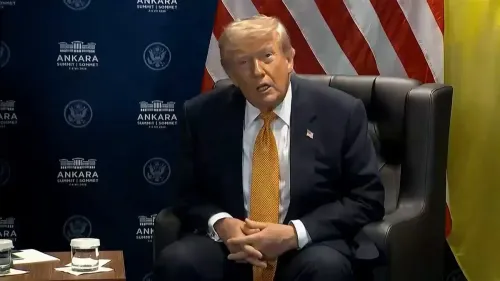
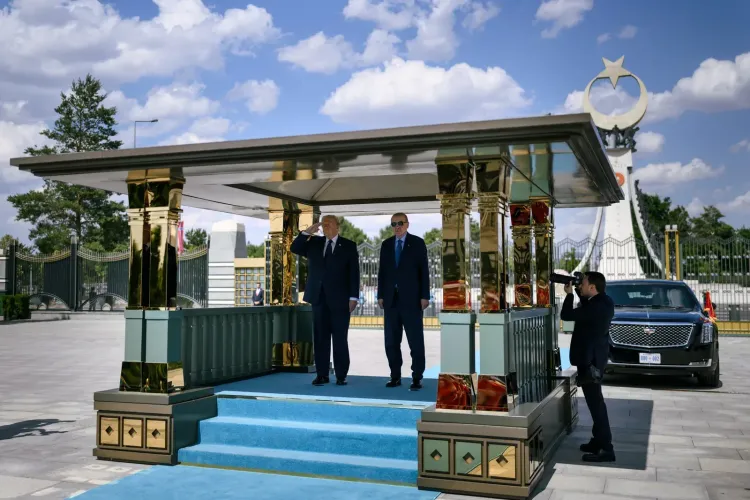
US President Donald Trump landed in Ankara on 7 July 2026 and was welcomed by Turkish President Erdoğan ahead of the NATO Summit. The White House declared 'America is back on the world stage,' signalling renewed US engagement with the alliance and a key bilateral meeting between the two NATO allies.
Key Takeaways
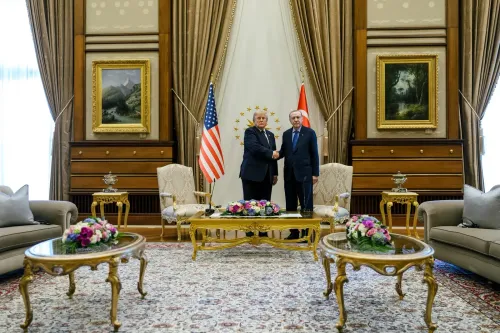
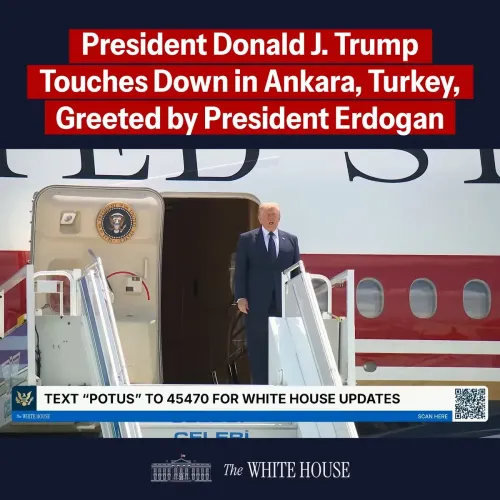
Donald Trump arrived in Ankara, Turkey on 7 July 2026 , received by President Recep Tayyip Erdoğan .
The visit is timed to the NATO Summit , with the White House framing it as America reasserting its global presence.
Turkey has been a NATO member since 1952 and occupies a strategic position at the crossroads of Europe, Asia, and the Middle East.
US-Turkey ties have been complicated by CAATSA sanctions imposed in 2020 over Ankara's purchase of Russian S-400 air defence systems.
Trump and Erdoğan previously met at the 2019 NATO Leaders Meeting in London , making this a significant resumption of direct bilateral engagement.
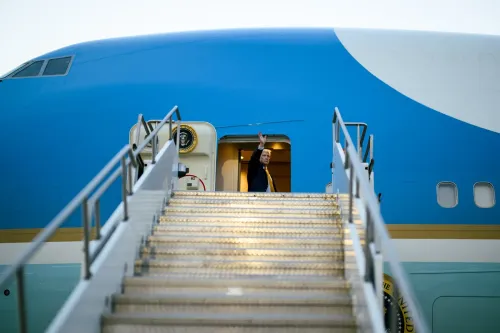
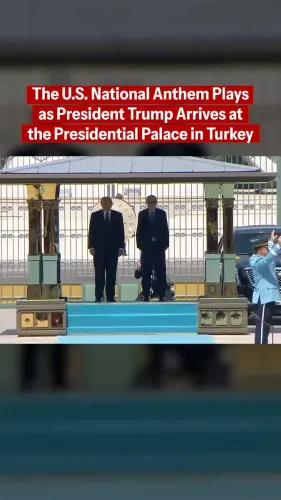
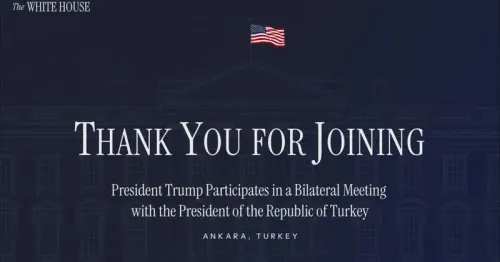
US President Donald J. Trump arrived in Ankara, Turkey on Tuesday, 7 July 2026, where he was received by Turkish President Recep Tayyip Erdoğan ahead of the NATO Summit. The White House announced the arrival on X, declaring 'America is back on the world stage.'
Context
Trump's landing in Ankara marks a high-profile engagement between the leaders of two NATO allies whose relationship has oscillated between cooperation and friction. Erdoğan, who has led Turkey as president since 2014, greeted Trump in what the White House framed as a restoration of assertive American diplomacy on the global stage. The visit underscores the significance of Turkey's role as a NATO member straddling Europe, Asia, and the Middle East.
Policy Backdrop
US-Turkey ties within NATO have carried persistent tensions alongside strategic cooperation. A notable flashpoint came in 2020, when Washington imposed CAATSA sanctions on Ankara following Turkey's acquisition of Russian S-400 air defence systems — a procurement that strained alliance cohesion. The two leaders had previously met on the sidelines of the 2019 NATO Leaders Meeting in London, where defence and regional security dominated the agenda.
Trump's second term, which began in 2025, has been marked by a stated emphasis on direct leader-to-leader diplomacy and renewed engagement with multilateral security structures. The White House's framing — 'America is back on the world stage' — is consistent with this rhetorical posture, signalling a deliberate contrast with perceptions of US retrenchment from global alliances.
Stakeholders and Impact
NATO, founded in 1949 and anchored on collective defence under Article 5, counts Turkey among its members since 1952. Alliance partners across Europe and North America will watch the Trump-Erdoğan interaction closely, particularly on questions of burden-sharing and cohesion on regional security. The US State Department and Turkish foreign policy establishment are the principal institutional actors managing the bilateral relationship.
For India and other nations navigating ties with both Washington and Ankara, the tenor of the summit and any bilateral deliverables will carry implications for the broader geopolitical order, including postures on Russia, energy security, and defence supply chains.
What's Next
The immediate focus turns to the NATO Summit itself and any bilateral communiqué or joint statement emerging from the Trump-Erdoğan meeting. Observers will track whether the two sides address unresolved issues such as the S-400 procurement and its sanctions fallout, as well as any new initiatives on alliance commitments or regional security. Summit-level deliverables on Article 5 obligations and defence spending pledges are expected to be central to the agenda.
Point of View
Particularly within NATO. The choice of Turkey — a member whose S-400 purchase once triggered US sanctions — as an early stop underscores both the strategic weight Ankara carries in the alliance and Trump's preference for personal summitry over institutional process. For NATO allies, the optics of a warm Erdoğan welcome alongside the 'America is back' declaration will be parsed as much for what it implies about US-Russia dynamics as for the bilateral relationship itself. The summit outcome will be a litmus test for whether renewed engagement translates into concrete alliance deliverables or remains largely rhetorical.
NationPress
6 Oct 2026
Frequently Asked Questions
Why did Trump visit Ankara in July 2026?
Trump arrived in Ankara on 7 July 2026 to meet Turkish President Erdoğan ahead of the NATO Summit, as part of renewed US high-level engagement with the alliance.
What is the relationship between the US and Turkey in NATO?
Turkey has been a NATO member since 1952 and is a key strategic ally, though US-Turkey ties have faced friction over issues such as Turkey's purchase of Russian S-400 systems, which triggered US CAATSA sanctions in 2020.
What does 'America is back on the world stage' mean?
The phrase, used by the White House on X, signals Trump's intent to reassert assertive US leadership in multilateral security structures like NATO after periods perceived as US retrenchment from global alliances.
Have Trump and Erdoğan met before?
Yes, the two leaders met on the sidelines of the 2019 NATO Leaders Meeting in London, where defence cooperation and regional security were key discussion points.
What should India watch from the Trump-Erdoğan NATO meeting?
India should track any joint statements on NATO burden-sharing, the S-400 sanctions status, and broader US postures on Russia and regional security, all of which carry implications for global geopolitical alignments.