Trump Meets Erdogan in High-Level US-Turkey Bilateral
Synopsis
The White House confirmed a high-level meeting between President Donald J. Trump and Turkish President Recep Tayyip Erdogan on 8 July 2026. The bilateral engagement between the two NATO allies comes against a backdrop of unresolved disputes over Russia's S-400 system and Syria policy, with both sides maintaining strategic cooperation despite recurring friction.
Key Takeaways
The White House confirmed a meeting between President Trump and Turkish President Erdogan on 8 July 2026 .
Turkey is a NATO member state with a critical geographic position bordering Syria, Iraq, Iran , and the Black Sea .
Previous Trump-Erdogan meetings took place at the White House in 2017 and on the G20 sidelines in Osaka in 2019 .
Outstanding disputes include Turkey's purchase of the Russian S-400 missile system and diverging policies on Kurdish forces in Syria .
Follow-up statements from the US State Department and Turkish Foreign Ministry are expected to detail outcomes.
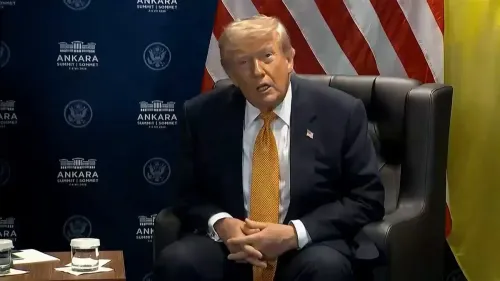
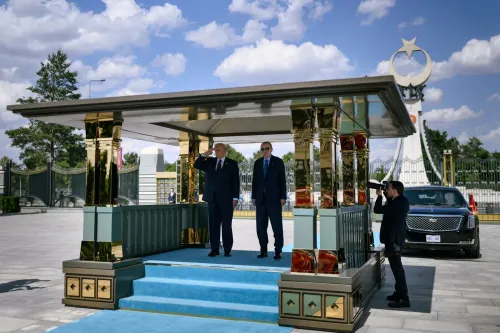
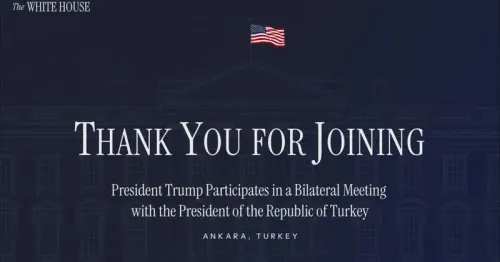
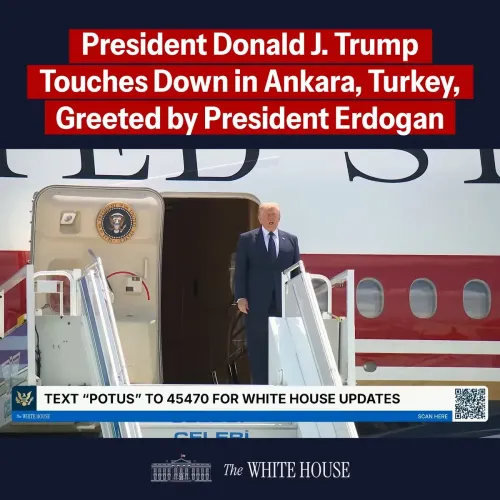
The White House on Tuesday, 8 July 2026 confirmed a meeting between President Donald J. Trump and Turkish President Recep Tayyip Erdogan, signalling a fresh round of direct engagement between the two NATO allies at the highest level.
Context
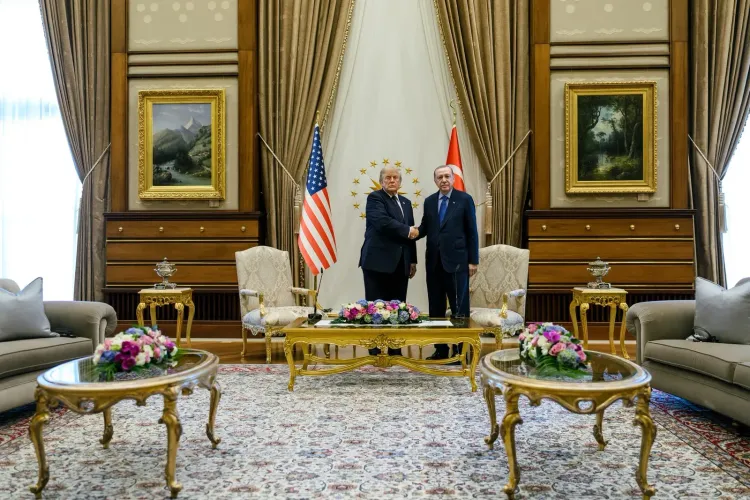
The White House posted an image of the two leaders alongside the flags of the United States and Turkey, accompanied by a handshake emoji — a deliberate visual statement of diplomatic warmth. While the post did not detail an agenda, leader-level meetings between Washington and Ankara have historically served as the primary channel for managing the complex and often friction-laden alliance between the two countries.
Erdogan has led Turkey since 2014, steering the country through a period of deepened NATO obligations alongside periodic tensions with Western partners. Trump, now serving his second term as the 45th and 47th President, previously met Erdogan at the White House in 2017 and on the sidelines of the G20 in Osaka in 2019.
Policy Backdrop
US-Turkey relations have long balanced strategic cooperation with recurring disputes. Turkey's acquisition of the Russian S-400 missile defence system triggered the country's removal from the F-35 fighter jet programme and led to sanctions under the Countering America's Adversaries Through Sanctions Act (CAATSA). These unresolved tensions have shadowed every high-level bilateral meeting since 2019.
Beyond arms procurement, the two nations have diverged on policy toward Kurdish forces in Syria, where the United States partnered with the Syrian Democratic Forces (SDF) — a grouping Turkey designates as a terrorist organisation linked to the PKK. Turkey's geographic position on NATO's southeastern flank, bordering Syria, Iraq, Iran, and the Black Sea, makes Ankara an indispensable partner even when bilateral ties are strained.
Stakeholders and Impact
NATO allies across Europe and North America will watch this meeting closely, particularly given ongoing debates about burden-sharing and alliance cohesion. Turkey holds a critical vote in any NATO expansion or policy consensus, and its relationship with Washington directly shapes the alliance's posture toward Russia and the Middle East.
For India, the meeting carries indirect significance: both Turkey and the United States are major actors in the Middle East and Central Asia, regions where New Delhi has expanding strategic and energy interests. Any recalibration of US-Turkey ties on Syria, energy corridors, or counterterrorism could ripple through regional security calculations.
What's Next
Follow-up statements from the US State Department and the Turkish Foreign Ministry are expected to provide further detail on the meeting's outcomes. Observers will watch for any joint communique, scheduling of bilateral security consultations, or signals on the long-standing S-400 dispute.
The meeting reinforces a pattern in which direct presidential engagement remains the primary mechanism for keeping US-Turkey relations functional despite structural disagreements — a dynamic that is likely to persist as long as Ankara remains a pivotal NATO member with an independent foreign policy posture.
Point of View
The optic of White House access reinforces his standing as an indispensable — if difficult — partner in the Western alliance. The broader pattern suggests Washington continues to prioritise functional bilateralism with Ankara over resolving the structural disputes that have festered since 2019.
NationPress
6 Oct 2026
Frequently Asked Questions
Why did Trump meet Erdogan in July 2026?
The White House confirmed the meeting on 8 July 2026 but did not specify a formal agenda. Historically, Trump-Erdogan meetings have addressed NATO commitments, Syria policy, and bilateral defence disputes including Turkey's acquisition of the Russian S-400 system.
What are the main issues between the US and Turkey?
The primary disputes include Turkey's purchase of Russia's S-400 missile defence system — which led to Turkey's removal from the F-35 programme — and disagreements over US support for Kurdish forces in Syria that Turkey designates as terrorist organisations.
Is Turkey a NATO member?
Yes. Turkey has been a NATO member since 1952 and occupies a strategically critical position on the alliance's southeastern flank, bordering Syria, Iraq, Iran, and the Black Sea.
Have Trump and Erdogan met before?
Yes. President Trump hosted Erdogan at the White House in 2017 and the two leaders met at the G20 summit in Osaka in 2019, among other interactions during Trump's first term.
What does the Trump-Erdogan meeting mean for India?
While the meeting is a US-Turkey bilateral, India has indirect stakes: both nations are major actors in the Middle East and Central Asia, regions where New Delhi has expanding energy and strategic interests. Any shift in US-Turkey alignment on Syria or counterterrorism could affect regional security dynamics.