Trump Addresses NATO Summit on U.S. Strikes Against Iran
Synopsis
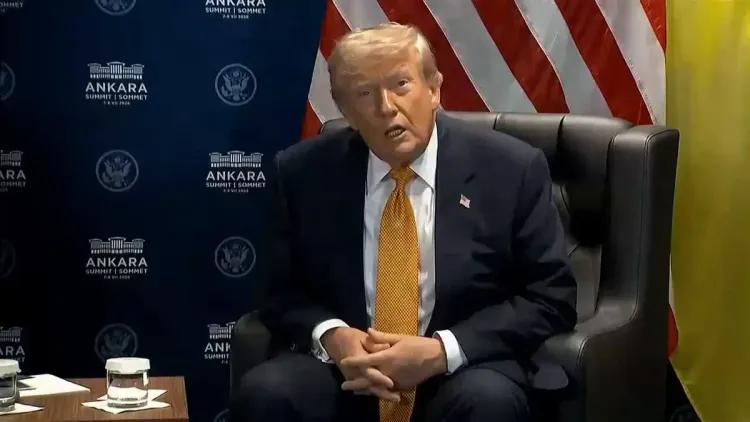
President Donald J. Trump addressed the NATO Summit in Ankara, Turkey, on U.S. military strikes against Iran, with the White House sharing the video on 8 July 2026. The statement marks a significant moment in U.S.-Iran tensions and raises questions about alliance posture and regional stability.
Key Takeaways
President Trump spoke at the NATO Summit in Ankara, Turkey on 8 July 2026 about U.S. strikes against Iran.
The White House officially published the video, signalling a deliberate, public communication of U.S. military action.
U.S.-Iran tensions escalated sharply during Trump's first term, including the 2018 JCPOA withdrawal and the 2020 Soleimani strike .
Turkey , a NATO member since 1952 , hosted the summit, underscoring its strategic role bridging Europe and the Middle East.
The Strait of Hormuz , through which a large share of India's oil imports transit, faces potential disruption risk amid any Gulf escalation.
NATO allies and the U.S.
Congress are expected to seek clarification on rules of engagement and burden-sharing obligations.
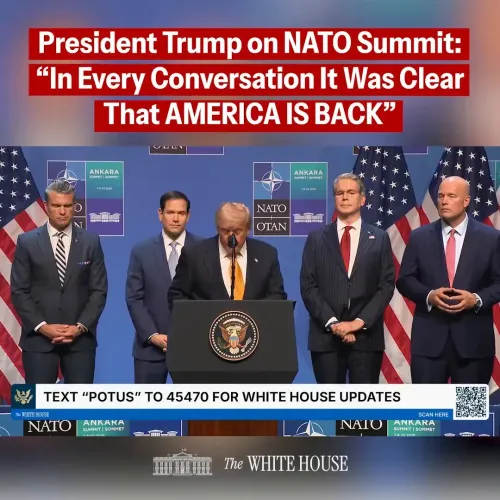
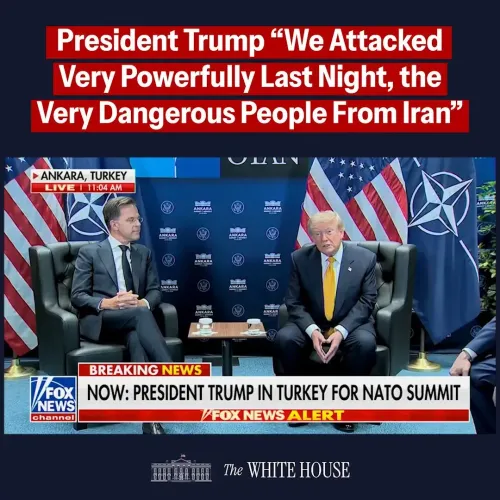
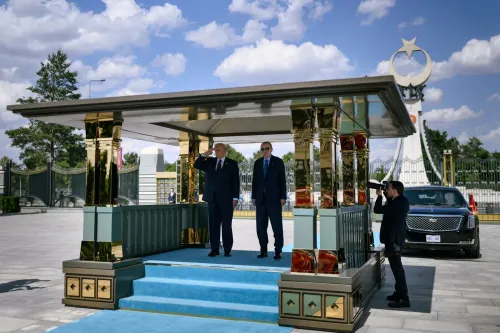
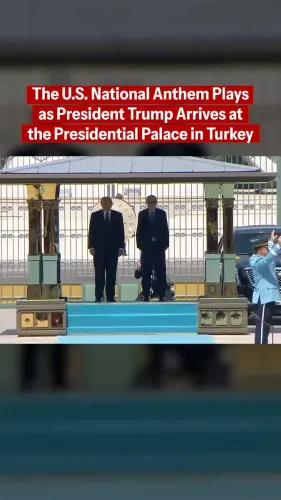
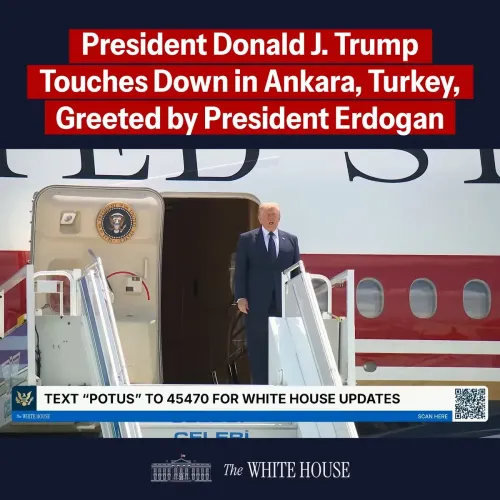
The White House on Wednesday, 8 July 2026 shared a video of President Donald J. Trump speaking at the NATO Summit in Ankara, Turkey, addressing U.S. military strikes against Iran — a statement that signals a significant escalation in American engagement with one of the most volatile flashpoints in the Middle East.
Context
The White House posted the video clip without accompanying text beyond identifying the speaker, the venue, and the subject: 'President Donald J. Trump, speaking at the NATO Summit in Ankara, Turkey, on U.S. strikes against Iran.' The brevity of the caption underscored the gravity of the moment — a sitting U.S. president publicly addressing military action against Iran from the stage of a NATO summit.
Ankara, the Turkish capital, is not a traditional host city for NATO summits, making the choice of venue itself diplomatically significant. Turkey has been a NATO member since 1952 and occupies a unique strategic position bridging European alliance commitments and Middle Eastern security dynamics.
Policy Backdrop
U.S.-Iran tensions have a long and layered history under Trump's leadership. During his first term, the administration withdrew from the Joint Comprehensive Plan of Action (JCPOA) nuclear agreement in May 2018, replacing diplomacy with a 'maximum-pressure' sanctions campaign designed to force Tehran back to the negotiating table on more restrictive terms.
That posture culminated in the January 2020 airstrike in Baghdad that killed Iranian Major General Qasem Soleimani, commander of the Islamic Revolutionary Guard Corps' Quds Force — the most direct U.S. kinetic action against Iranian leadership in decades. Any fresh U.S. strikes against Iran in 2026 would represent a continuation and intensification of that strategic line.
Trump's decision to address the matter at a NATO summit is also notable for what it signals to allies: the United States is framing its Iran operations within the context of transatlantic security, even if NATO as a collective body is not formally party to the strikes.
Stakeholders and Impact
NATO allies, many of whom have significant economic ties with Iran or host U.S. military assets in the region, will be watching the statement closely for any indication of alliance burden-sharing expectations or requests for overflight and basing rights. European members have historically been more cautious about direct military confrontation with Tehran.
Iran's leadership will be assessing the public nature of Trump's remarks — a NATO-stage address is a deliberate signal, not a back-channel communication. For Indian policymakers, who have long maintained energy and trade relationships with Iran while managing their strategic partnership with Washington, any escalation in the Gulf carries direct implications for oil supply chains and diaspora communities in the region.
U.S. Central Command, which oversees American military operations across the Middle East, will be the operational arm of any declared or ongoing strikes, and its posture in the Gulf will be scrutinised by regional actors from Saudi Arabia to Israel.
What's Next
Analysts will be watching for follow-on statements from NATO capitals, particularly from Germany, France, and the United Kingdom, on whether European allies endorse or distance themselves from the U.S. action. Congressional briefings on rules of engagement and legal authorisation for the strikes are also expected to be demanded by lawmakers on both sides of the aisle.
For the broader Indo-Pacific and Gulf region, the trajectory of U.S.-Iran hostilities in 2026 may redefine energy security calculus, with crude oil prices and shipping lanes through the Strait of Hormuz — through which a significant share of India's oil imports pass — at immediate risk of disruption.
Point of View
Where maximum-pressure on Iran was paired with demands that allies align or risk being seen as soft on Tehran. For India, which has walked a careful line between its Iran energy ties and its Washington partnership, the escalation narrows diplomatic manoeuvrability. The broader pattern suggests Trump's second-term Iran policy is moving from economic coercion to kinetic action, with NATO as the legitimising backdrop.
NationPress
7 Oct 2026
Frequently Asked Questions
What did Trump say about U.S. strikes against Iran at the NATO Summit?
The White House released a video of President Trump speaking at the NATO Summit in Ankara, Turkey on 8 July 2026 addressing U.S. military strikes against Iran, though the full text of his remarks was not included in the social media post.
Where is the 2026 NATO Summit being held?
According to the White House post, the 2026 NATO Summit is being held in Ankara, Turkey — an unusual choice, as Turkey's capital is not a traditional NATO summit venue.
What is the history of U.S. military action against Iran under Trump?
During his first term, Trump withdrew the U.S. from the JCPOA nuclear deal in May 2018 and ordered the airstrike that killed Iranian General Qasem Soleimani in Baghdad in January 2020.
How do U.S. strikes on Iran affect India?
India imports a significant share of its crude oil through the Strait of Hormuz, which could face disruption in the event of a broader U.S.-Iran military conflict, directly impacting fuel prices and energy security.
Is NATO involved in U.S. strikes against Iran?
There is no indication that NATO as a collective body has authorised or is party to the U.S. strikes; Trump's address at the summit appears to be an informational briefing to allies rather than a request for collective action.